What Is Real Bamboo Fiber in Wet Wipes?
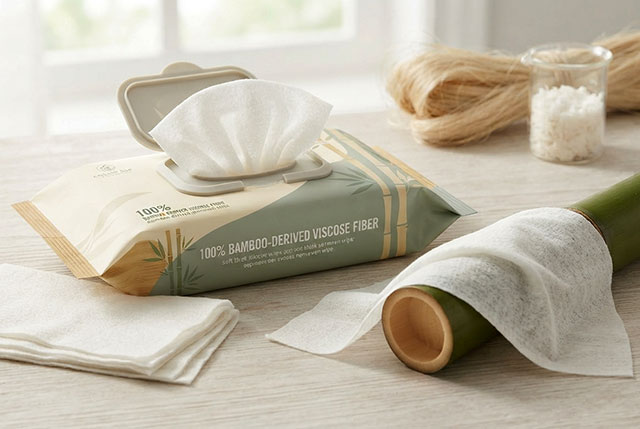
Bamboo has attracted growing attention in the personal care industry as brands look for plant-derived materials for everyday hygiene products. From baby care to facial cleansing, bamboo-based nonwoven fabrics have become an interesting option for developing modern wet wipes.
However, the term “bamboo fiber” is not always used consistently. Some materials are made through mechanical processing of bamboo, while others are produced by extracting cellulose from bamboo and converting it into regenerated fibers. Although both originate from the same plant, their manufacturing processes and material characteristics are different.
For a wet wipes manufacturer, understanding these differences is essential when developing products that meet brand specifications and market expectations.
So, what does real bamboo fiber actually mean? How does it differ from bamboo-derived viscose, and what characteristics make bamboo-based materials relevant to the wet wipes industry?
What Does Real Bamboo Fiber Actually Mean?
The expression “real bamboo fiber” is commonly used in the textile and hygiene industries, but it does not always refer to one clearly defined commercial material.
Bamboo is a natural plant containing cellulose, which can be processed into different types of fibers. The manufacturing method determines how the original plant material is transformed into a usable textile or nonwoven substrate.
There are two important processing routes to understand.
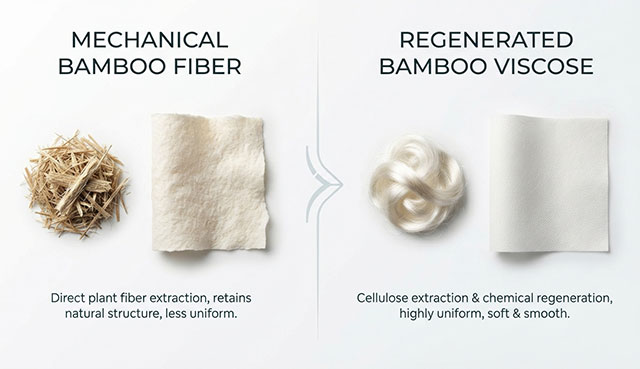
Mechanically processed bamboo fiber is obtained by physically separating fibers from bamboo plant material. This method aims to retain the original fiber structure, although producing fine, soft fibers suitable for commercial nonwoven applications can be technically challenging.
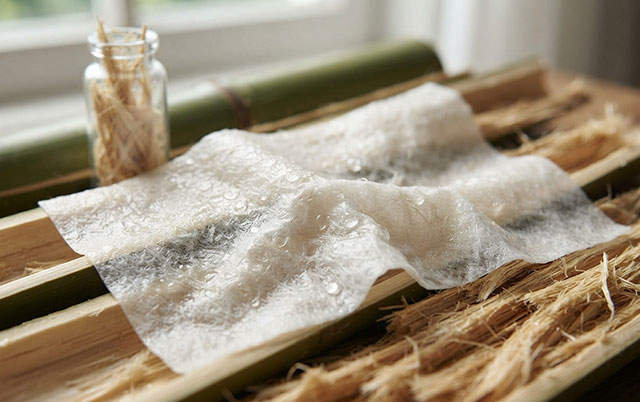
Bamboo-derived viscose follows a different process. Cellulose is extracted from bamboo, processed into pulp, and then regenerated into fibers through chemical manufacturing. The resulting material is classified as viscose or rayon made from bamboo.
This distinction matters because the finished viscose fiber does not automatically retain the natural properties of the original bamboo plant.
For this reason, brands should look beyond the word “bamboo” and understand the actual fiber composition used in their wet wipes.
Bamboo Fiber vs. Bamboo Viscose: Understanding the Difference
Although both materials originate from bamboo, their production methods are not the same.
Mechanically processed bamboo fiber retains a more direct connection to the original plant structure. However, its relatively complex extraction process can limit its suitability for certain fine nonwoven applications.
Bamboo viscose is produced through regenerated cellulose technology. This process creates fibers with properties suitable for many textile and hygiene applications, including soft nonwoven fabrics.
In the commercial wet wipes market, bamboo-derived viscose is an important material option because it can be engineered into fabrics with different weights, textures, and absorbency characteristics.
The distinction is also important for product labeling.
According to the US Federal Trade Commission, textile products made from regenerated bamboo cellulose should be identified using the appropriate fiber name, such as rayon or viscose made from bamboo, rather than being represented as mechanically processed bamboo fiber.
Brands selling into the United States should review the FTC guidance on bamboo textiles to understand the relevant labeling requirements.
What Makes Bamboo-Based Fibers Useful for Wet Wipes?
The value of a wet wipe material is determined by how it performs in the finished product. Fiber origin is only one part of the overall material specification.
Bamboo-derived cellulose fibers offer several characteristics that can make them suitable for selected wet wipes applications.
1. Soft Texture for Everyday Skin Contact
A comfortable wiping experience is particularly important for baby wipes, facial cleansing wipes, and personal hygiene products.
Bamboo-derived viscose can be processed into nonwoven fabrics with a soft surface texture. Depending on the fiber construction and bonding method, these fabrics can provide a comfortable feel during everyday cleansing.
For personal care brands, softness is not simply a marketing feature. It contributes to the overall user experience and influences how consumers perceive product quality.
The final texture depends on factors such as fiber composition, fabric weight, fiber arrangement, and manufacturing technology.
2. Moisture Absorption and Liquid Retention
A wet wipe needs to hold an appropriate amount of cleansing solution while releasing moisture during use.
Cellulose-based fibers are widely used in absorbent materials because of their affinity for water. Bamboo-derived viscose can therefore be considered when developing nonwoven substrates that require good liquid absorption.
However, absorption performance depends on more than the fiber source. Fabric structure, density, basis weight, and liquid formulation all influence how moisture is distributed and retained.
For manufacturers, the objective is to achieve a balance between absorbency, moisture release, and wet strength.
3. Plant-Derived Material Options
Bamboo is a rapidly renewable plant resource, which makes it relevant to brands interested in plant-derived raw materials.
Using bamboo as a cellulose source can support product concepts built around alternative fiber sourcing.
Nevertheless, the environmental performance of a finished material depends on the entire manufacturing process, including cellulose extraction, fiber regeneration, fabric production, and other processing stages.
A bamboo-derived label alone is not sufficient evidence that a finished wet wipe has a lower environmental impact.
Brands should evaluate the available material documentation and supporting evidence before making sustainability claims.
4. Flexible Nonwoven Fabric Applications
Bamboo-derived fibers can be incorporated into nonwoven fabrics with different specifications.
This flexibility allows manufacturers to consider different fabric weights, textures, and constructions according to the intended product.
For example, a baby wipe may prioritize softness and moisture absorption, while a general-purpose cleansing wipe may require a different balance of strength and durability.
The right substrate is therefore determined by the product’s intended use rather than the raw material name alone.
Does Bamboo Fiber Have Natural Antibacterial Properties?
One of the most common claims associated with bamboo products is that they are naturally antibacterial.
Although bamboo plants contain compounds that have been studied for antimicrobial properties, these characteristics should not automatically be attributed to every fiber manufactured from bamboo.
In particular, bamboo-derived viscose undergoes a regeneration process that changes the original cellulose into a manufactured fiber. There is no automatic scientific basis for assuming that the finished viscose retains the antimicrobial properties of the bamboo plant.
The US Federal Trade Commission has addressed this issue in its guidance on bamboo textiles, explaining that claims about natural antimicrobial properties must be supported by reliable evidence.
For wet wipes brands, it is important to distinguish between the material’s physical characteristics and the performance of the finished product.
If a product is intended to make antibacterial or antimicrobial claims, those claims should be supported by appropriate testing and comply with the regulations of the target market.
Softness, absorbency, and plant-derived fiber content should not be presented as proof of antibacterial performance.
Are Bamboo Fiber Wet Wipes Biodegradable?
Bamboo-derived cellulose is often discussed in connection with biodegradable materials, but the environmental performance of a finished wet wipe requires a more complete evaluation.
A wet wipe is not made from fabric alone. Its construction may include different fiber blends, bonding materials, cleansing liquids, preservatives, and packaging components.
These elements can influence the product’s behavior under different environmental conditions.
For example, a nonwoven fabric containing cellulose fibers may have different biodegradation characteristics from a fabric containing synthetic fibers.
The testing environment also matters. Results obtained under industrial composting conditions cannot automatically be applied to home composting, soil, or wastewater environments.
Another important distinction is that biodegradability does not mean flushability.
A material that breaks down under certain conditions is not necessarily suitable for toilet disposal. Flushability requires separate consideration of the finished wipe’s dispersibility and relevant performance testing.
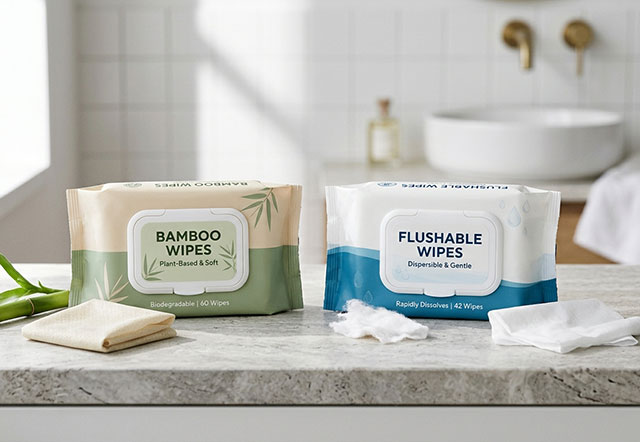
Brands interested in the environmental aspects of different substrates can also read our guide to bamboo wipes vs. flushable wipes, which explains why material origin and disposal performance are two different considerations.
Why Material Transparency Matters to Wet Wipes Brands
As consumers become more familiar with plant-derived materials, brands need to communicate product composition accurately.
Simply describing a wipe as natural bamboo or eco-friendly does not explain how the material was manufactured or how the finished product performs.
For a brand developing a new personal care range, material transparency helps establish realistic product expectations.
It also reduces the risk of making unsupported claims about antibacterial performance, biodegradability, or environmental benefits.
A clear understanding of fiber composition makes it easier to develop product descriptions, packaging information, and marketing messages that accurately reflect the finished product.
This is particularly relevant for brands selling across international markets, where textile labeling and environmental advertising requirements may differ.
How Bamboo-Based Materials Fit into Modern Wet Wipes Development
Bamboo-derived materials are one of several options available to wet wipes manufacturers. Their suitability depends on the intended product, target consumers, and required performance characteristics.
For example, personal care brands may consider bamboo-derived viscose for baby wipes, facial wipes, and body cleansing products where softness and liquid absorption are important.
However, selecting a material is only the beginning of product development. The substrate must work together with the cleansing formulation, fabric specifications, and packaging to create a consistent finished product.
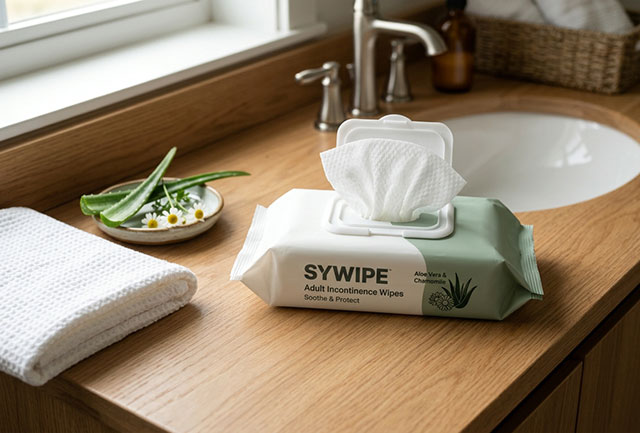
At SYWIPE, material selection is considered alongside product formulation and manufacturing requirements when supporting customized wet wipes projects.
Brands planning a bamboo-based product line can also review our guide on how to choose a bamboo wet wipes manufacturer, which covers supplier capabilities, material documentation, product development, and manufacturing considerations.
The objective is not simply to select a material with an attractive name, but to develop a product that delivers the expected performance throughout its intended use.
Frequently Asked Questions About Real Bamboo Fiber
What is the difference between natural bamboo fiber and bamboo viscose?
Natural bamboo fiber is obtained through mechanical processing of the bamboo plant, while bamboo viscose is produced by extracting bamboo cellulose and regenerating it into fibers through chemical processing. Their manufacturing methods and final fiber characteristics are different.
Is bamboo viscose a natural fiber?
Bamboo is the original plant source, but viscose is a regenerated manufactured fiber. For accurate product descriptions, it should be identified as viscose or rayon made from bamboo, where applicable.
Is bamboo viscose suitable for wet wipes?
Yes. Bamboo-derived viscose can be used in nonwoven fabrics for wet wipes. Its suitability depends on fabric construction, absorbency, wet strength, and compatibility with the selected cleansing formulation.
Are bamboo wet wipes naturally antibacterial?
Not automatically. Bamboo-derived viscose should not be assumed to retain the natural antimicrobial properties of the original bamboo plant. Any antibacterial claims require appropriate supporting evidence.
Are all bamboo wet wipes biodegradable?
No. The biodegradability of a finished wipe depends on its complete material composition, manufacturing process, and the conditions under which it is tested. Bamboo content alone does not establish that the entire product is biodegradable.
Why do brands choose bamboo-derived materials for wet wipes?
Brands may consider bamboo-derived materials because they offer a plant-based cellulose source and can be processed into soft, absorbent nonwoven fabrics. The final material specification should match the intended application and product requirements.
Final Thoughts
Bamboo is an interesting raw material for the evolving wet wipes industry, but understanding the difference between the original plant, mechanically processed fibers, and regenerated viscose is essential.
For brands developing personal care and hygiene products, the best material decision comes from evaluating actual fiber composition, finished fabric performance, and the evidence behind any product claims.
With accurate material information and appropriate product development, bamboo-derived substrates can become a useful option in a broader range of modern wet wipes applications.