What Is the Manufacturing Cost of Wet Wipes?
When a brand begins developing a new wet wipe, the first cost question is often surprisingly difficult to answer: how much does it actually cost to manufacture one pack?
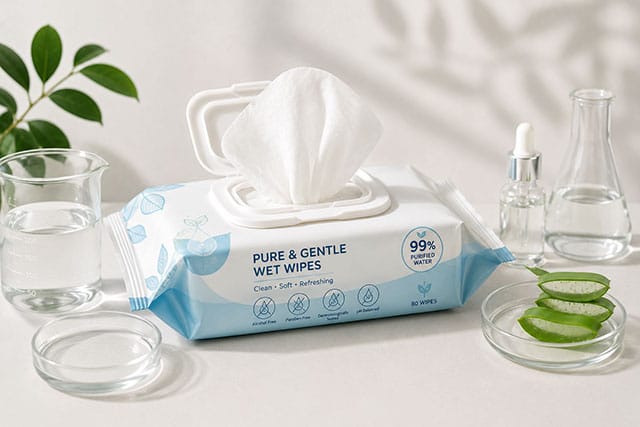
The answer is not simply a matter of counting the sheets. Before an 80-count pack reaches a carton, the manufacturer has already selected the nonwoven substrate, prepared the liquid formula, arranged the packaging, run the production line, inspected the finished product, and accounted for the materials and resources used throughout the process.
For brands working with a wet wipes manufacturer, understanding how these costs come together provides a much more realistic starting point for product development and OEM quotation.
Where Does the Cost of Wet Wipes Start?
The manufacturing cost begins with the wipe itself.
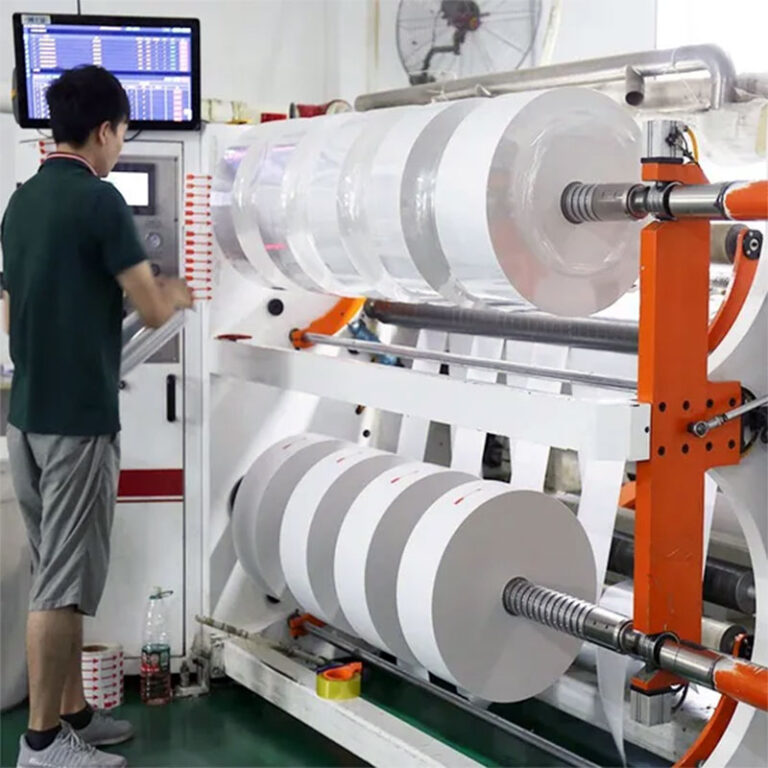
Imagine a brand developing a new personal care wipe. The first decision may be the size and feel of the sheet. A soft spunlace substrate may be suitable for everyday use, while cotton, bamboo fiber, viscose, or another specialty material may be selected when the product requires a particular level of softness, absorbency, strength, or biodegradability.
The physical size matters too. A larger sheet uses more material than a smaller one, and a higher GSM means more fiber is used in every wipe. Once the sheet count is added, the amount of substrate required for one finished pack becomes much easier to calculate.
This is why selecting the right wet wipes materials is not only a product-performance decision. It is also one of the first steps in determining the manufacturing cost.
The Liquid Formula Becomes Part of the Calculation
The next part of the product is the liquid itself.
For a basic personal care wipe, the formula may be built around purified water, moisturizing ingredients, cleansing agents, and a suitable preservation system. A baby wipe may call for a gentler formulation, while household, antibacterial, medical, or industrial wipes can require completely different functional ingredients.
The amount of lotion applied to each sheet matters as well. Two products made from the same nonwoven material can have different manufacturing costs simply because their liquid formulations and lotion loading are different.
There can also be costs before the production line even starts. A customized formula may require sample development, adjustments, testing, and stability evaluation before the final specification is approved. Brands still refining their formula can work with SYWIPE on wet wipes product development before moving into mass production.
Packaging Is Part of the Manufacturing Cost
Once the wipe and formula have been defined, the product still needs a package.
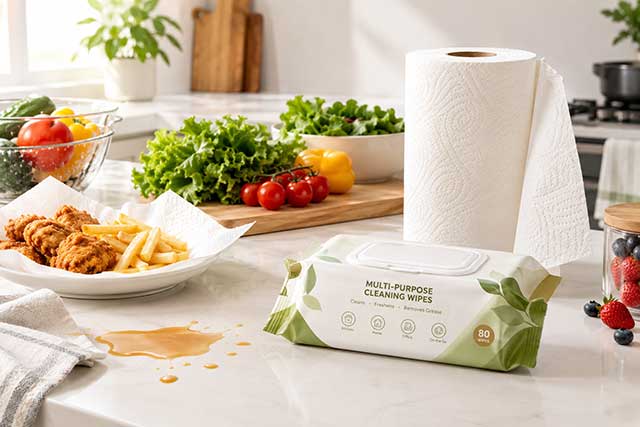
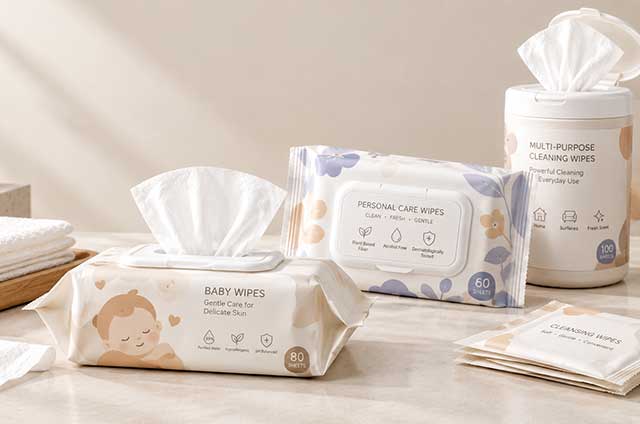
A simple soft pack, a refill pouch, a single sachet, and a rigid canister may all contain the same number of wipes, but their manufacturing requirements are very different. The packaging material, printing, closure components, dimensions, and production process all contribute to the finished cost.
The relationship between the wipe and its package also matters.
A larger folded wipe needs more space inside the pack. That can affect film consumption, package dimensions, carton configuration, and the number of finished units that can be packed and shipped efficiently.
This is why packaging decisions are best made alongside the wipe specification rather than treated as a final cosmetic choice. For brands developing their own packaging, SYWIPE can support custom packaging options as part of the product development process.
Why an 80-Count Wipe Does Not Have One Fixed Cost
Sheet count is one of the easiest specifications to compare, but it does not tell the whole story.
Suppose two brands are both developing an 80-count wet wipe. One uses a relatively small standard spunlace sheet in a simple soft pack. The other uses a larger, heavier biodegradable substrate with a customized formula and a canister.
Both products contain 80 wipes, but the manufacturer is not using the same amount of material, lotion, packaging, or production resources.
This is why manufacturing cost is normally evaluated from the complete product specification rather than from sheet count alone.
It can also be useful to look at the cost in two ways. Cost per pack tells a brand how much it costs to produce one finished package, while cost per wipe shows how that production cost is distributed across the individual sheets.
Neither figure makes sense without knowing what the actual wipe contains.
What Happens on the Production Line?
Once the specifications are approved, the product moves from development into manufacturing.
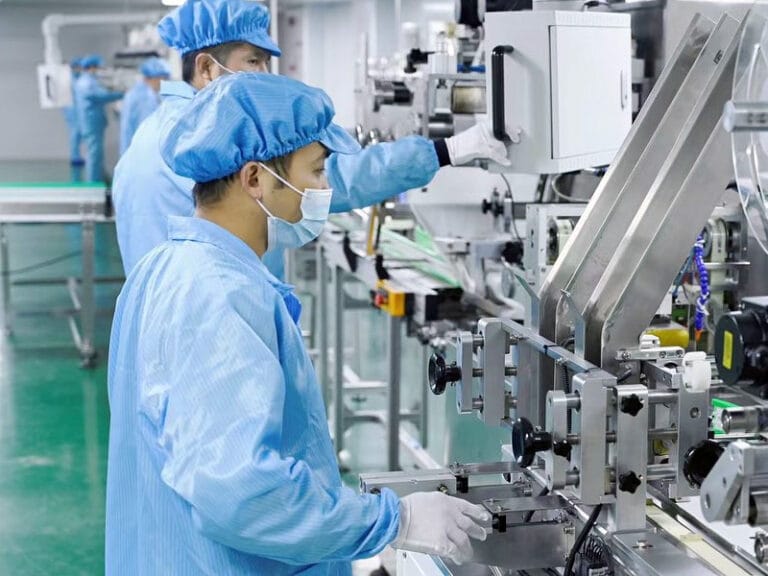
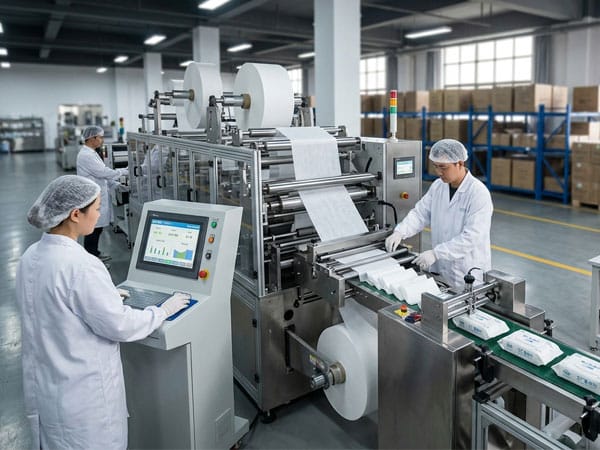
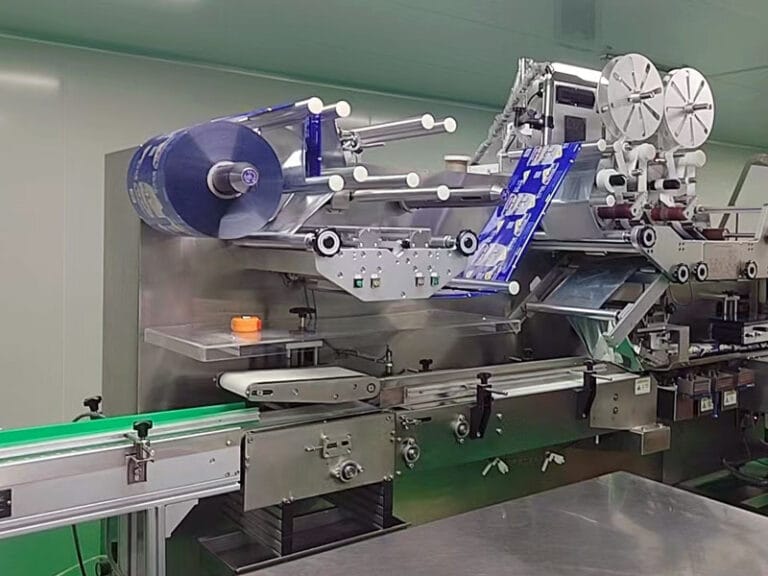
The nonwoven material is fed into the production equipment, the liquid solution is applied, and the material is folded and cut according to the required dimensions. The sheets are then counted and arranged before being transferred into the selected packaging.
From there, the packs are sealed, coded, inspected, and prepared for carton packing.
Every stage uses factory resources. Machines consume electricity and require maintenance. Production equipment needs to be prepared and cleaned. Operators and quality personnel are needed throughout the process, while materials must be received, stored, moved, inspected, and managed.
These costs may not appear as separate items on a finished product, but they are part of the real manufacturing cost behind each pack.
A Small Amount of Material Can Still Affect the Final Cost
Manufacturing also involves some degree of material loss.
During cutting, folding, machine setup, packaging adjustment, or production changes, not every gram of raw material necessarily becomes part of a finished product. Packaging materials can also require setup quantities before a production run reaches normal operating conditions.
For a manufacturer, controlling this loss is part of production efficiency. The actual level depends on the product design, equipment, packaging format, and production conditions.
This is another reason why a theoretical calculation based only on raw material prices may not represent the actual cost of producing a finished wet wipe.
Why Order Quantity Matters
The quantity of an order can change the economics of manufacturing without changing the product itself.
A small trial run still requires material preparation, machine setup, production planning, quality checks, and other work before finished goods can be produced. When the same specification is manufactured in a larger continuous run, some of these preparation costs can be distributed across more units.
Material purchasing can also work differently at higher volumes, depending on the substrate, packaging, formula, and supplier arrangements.
However, larger quantities do not automatically make every product cheaper to manufacture. The specification still matters. A complicated packaging format or specialty substrate may remain a significant part of the cost regardless of order size.
For brands planning recurring production rather than a one-time order, OEM wet wipes manufacturing can provide a more structured way to align the product specification, production volume, packaging, and supply requirements.
Manufacturing Cost Is Not the Same as the Final Selling Price
It is useful to make one distinction when discussing wet wipe costs: manufacturing cost is not the same as the price a customer eventually pays.
Manufacturing cost is concerned with what is required to produce the finished product. A factory quotation may also reflect product development, quality management, packaging preparation, export operations, order management, and the commercial terms agreed with the buyer.
After the product leaves the factory, the buyer may also have freight, customs duties, insurance, warehousing, and distribution costs.
Understanding these different stages helps prevent a common mistake in product planning: treating a factory manufacturing cost as if it were the final landed cost of the product.
So, What Is the Manufacturing Cost of Wet Wipes?
There is no single manufacturing cost for wet wipes because the cost is determined by the product specification.
Wipe material, dimensions, GSM, formula, lotion loading, sheet count, packaging, production requirements, quality control, and order quantity can all affect the calculation. A small personal care wipe made with a standard substrate and simple packaging has a different cost structure from a large biodegradable wipe using a specialty fiber, customized formula, and premium packaging.
For the same reason, a manufacturer cannot accurately calculate the production cost from “80 wipes per pack” alone.
The more useful approach is to start with the actual product specification. Once the wipe size, material, GSM, formula, sheet count, packaging format, and target quantity are defined, the manufacturer can estimate the materials and production resources required to make the finished product.
What Does a Manufacturer Need to Calculate the Cost?
A brand does not need to have every detail finalized before contacting a factory. A clear product concept is usually enough to begin the discussion.
The manufacturer will normally want to understand the intended application, approximate wipe size, preferred substrate, sheet count, formula requirements, packaging format, and expected production quantity. If some specifications are still open, the manufacturer can discuss available options and explain how those choices may affect the final product.
This is much more useful than asking for a generic “wet wipes price,” because the resulting quotation can be based on the product the brand actually wants to manufacture.
From Product Concept to Production
Manufacturing cost is ultimately connected to product design.
A successful wet wipe needs to do more than meet a target cost. It needs to have the right feel, absorbency, moisture level, packaging performance, shelf-life requirements, and production consistency for its intended market.
That means the substrate, formula, folding method, packaging, equipment, and production volume need to work together.
For an OEM manufacturer, this is where product development and manufacturing become closely connected. Instead of selecting the cheapest individual component, the goal is to build a specification that delivers the required performance while remaining practical to manufacture at the intended production volume.
For brands preparing a new wet wipe line, this approach provides a more useful foundation than relying on a generic manufacturing cost estimate.
Get a Wet Wipes Manufacturing Cost Based on Your Specifications
If you already have a target wipe size, material, sheet count, formula concept, packaging format, or order quantity, SYWIPE can review the requirements and help determine the appropriate manufacturing configuration.
As an OEM and private label wet wipes manufacturer, SYWIPE works with brands, distributors, importers, and retailers on customized wipe materials, formulas, specifications, and packaging.
Request an OEM Quote to discuss your product concept and receive a quotation based on the actual manufacturing requirements.
Frequently Asked Questions About Wet Wipes Manufacturing Cost
How much does it cost to manufacture wet wipes?
There is no fixed manufacturing cost for wet wipes. The cost depends on the wipe material, size, GSM, formula, sheet count, packaging format, production requirements, and order quantity. A manufacturer needs these specifications to provide a meaningful cost estimate.
What is the biggest cost in wet wipe manufacturing?
The nonwoven substrate and packaging are often significant parts of the manufacturing cost, but their impact varies by product. A large or high-GSM wipe uses more substrate, while specialty fibers, customized formulas, or more complex packaging can increase the overall production cost.
Does a higher sheet count always mean a higher cost per wipe?
Not necessarily. Adding more sheets normally increases the material and lotion required per pack, but packaging and some production costs do not increase at the same rate. The cost per pack and cost per individual wipe should therefore be considered separately.
Can a wet wipes manufacturer calculate the cost from the sheet count alone?
No. Sheet count alone is not enough for an accurate calculation. The manufacturer normally also needs the wipe dimensions, material, GSM, formula, packaging format, and expected order quantity. These specifications determine how much material and production capacity the finished product requires.