How to Choose the Right Lens Wipes?
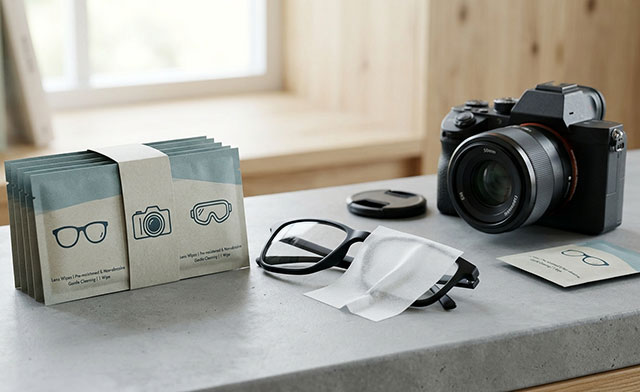
Choosing the right lens wipes depends on the lens material, coating compatibility, cleaning performance, and intended application. Whether you need wipes for eyeglasses, sunglasses, or safety glasses, the right product should remove fingerprints and smudges without leaving excessive residue or damaging compatible lens surfaces.
For businesses sourcing lens wipes for retail, distribution, or private-label brands, additional factors include substrate quality, cleaning formula, individual sachet packaging, and manufacturing consistency. Understanding these requirements helps buyers compare products and select specifications that meet their target market’s needs.
SYWIPE provides customizable lens wipes for businesses seeking tailored product specifications and packaging options. This guide explains how to evaluate lens wipes, check compatibility, and choose suitable products for personal use or commercial sourcing.
1. Match Lens Wipes to the Intended Application
Before comparing products, identify the type of lens and the contaminants you need to remove.
Eyeglasses and sunglasses
Everyday eyewear commonly accumulates fingerprints, facial oils, dust, and smudges. Pre-moistened lens wipes can provide a convenient cleaning solution for travel, commuting, and daily use.
If the lenses have anti-reflective, scratch-resistant, or other specialized coatings, check the manufacturer’s care instructions before selecting a cleaning product.
Safety glasses and protective eyewear
Safety eyewear is used in factories, workshops, laboratories, construction sites, and other working environments. Frequent handling and exposure to dust or grease can reduce visibility.
Choose cleaning wipes specifically confirmed as compatible with the eyewear. For workplaces where condensation is a concern, an appropriate anti-fog product may also be necessary.
Camera lenses and optical equipment
Camera lenses and other precision optical surfaces may have delicate coatings. Use products approved by the equipment manufacturer and follow its cleaning recommendations.
For sensitive optical equipment, remove loose particles using an appropriate method before wiping. This helps reduce the risk of scratching the surface during cleaning.
2. Understand the Differences Between Lens Wipe Formulas
Lens wipes can be formulated for different purposes. Understanding the intended function helps prevent buyers from choosing a product that does not meet their requirements.
Standard cleaning wipes
Standard lens wipes are designed to remove common contaminants, including fingerprints, light oils, and smudges. Their performance depends on the cleaning solution, substrate, moisture level, and surface being cleaned.
For everyday eyewear, prioritize a formula that cleans effectively without leaving excessive streaks or visible residue when used as directed.
Anti-fog wipes
Anti-fog wipes are designed to help reduce condensation on compatible surfaces. They may be useful for eyewear exposed to changing temperatures, humid environments, or differences between indoor and outdoor conditions.
However, performance varies by formulation and environmental conditions. Check whether the product is suitable for your lenses and whether its anti-fog claims have been supported by appropriate testing.
For more information about application methods and anti-fog performance, see our guide to using anti-fog wipes for glasses.
Anti-static wipes
Anti-static wipes are intended to help reduce static-related dust attraction on compatible surfaces. They may be useful for selected optical and protective eyewear applications.
Cleaning, anti-fog, and anti-static performance are separate functions. A product offering one benefit should not automatically be assumed to provide the others.
3. Check Lens Coating Compatibility
Lens compatibility is one of the most important considerations when selecting cleaning wipes.
Some lenses feature anti-reflective coatings, scratch-resistant layers, tinted finishes, or other surface treatments. A cleaning formula that is suitable for one lens may not be appropriate for another.
Before purchasing lens wipes, check three things:
• Lens material: Determine whether the lenses are made from glass, polycarbonate, or another material.
• Surface coating: Confirm whether the lenses have special coatings that require specific cleaning products.
• Formula compatibility: Follow the lens manufacturer’s instructions and verify that the wipe is suitable for the intended surface.
Avoid assuming that a wipe is universally safe simply because its packaging says it is designed for glasses.
For brands developing their own lens wipes, compatibility testing should be part of product evaluation. Any claims concerning coating safety or specialized cleaning performance should be supported by suitable evidence.
4. Evaluate Wipe Material and Cleaning Performance
The wiping substrate affects how the solution is distributed and how the wipe performs during use.
A suitable substrate should have appropriate softness, strength, absorbency, and surface characteristics for the intended application. It should remain intact during normal use and minimize unwanted fibers or residue.
When comparing samples, consider:
• Texture and softness: The material should be appropriate for the intended lens surface.
• Absorbency and moisture: The wipe should hold enough solution for its intended use without being excessively wet.
• Strength: The substrate should resist tearing during normal handling.
• Cleaning consistency: Test whether the wipe removes typical contaminants without leaving excessive streaks or visible residue.
For commercial sourcing, ask suppliers for the substrate material, basis weight, wipe dimensions, folding format, and relevant product specifications.
Sample testing is particularly important when the product will be sold under your own brand or used in a specific industrial environment.
5. Choose Packaging for Convenience and Distribution
Packaging affects portability, moisture retention, shelf life, and retail presentation.
Individually wrapped sachets
Single-use sachets are suitable for travel kits, retail multipacks, workplace distribution, and promotional products. Each wipe remains sealed until opened, helping protect it from premature drying when the packaging remains intact.
Retail multipacks
Boxes containing individually wrapped wipes can provide a convenient format for supermarkets, pharmacies, optical retailers, and e-commerce brands.
Packaging design should communicate the intended application, usage instructions, and relevant product information clearly.
Customized private-label packaging
Brands and distributors may require customized sachets, printed cartons, pack quantities, or other packaging configurations.
Before confirming a design, discuss the required specifications, artwork, minimum order quantity, production lead time, and shipping arrangements with the manufacturer.
Businesses comparing substrates and packaging formats can review SYWIPE’s materials and packaging options to identify relevant customization possibilities.
6. What Should Businesses Look for in a Lens Wipes Manufacturer?
For importers, retailers, distributors, and private-label brands, choosing a lens wipes manufacturer requires more than comparing prices.
Formula development
Confirm whether the supplier can support the intended cleaning function and provide information about formula compatibility and relevant testing.
Material and specification options
Ask about substrate choices, wipe dimensions, folding methods, solution specifications, and packaging formats. These details help determine whether the product fits your target market.
Quality control
Review the manufacturer’s quality-control procedures, batch consistency, packaging integrity, and applicable documentation. Any certifications or compliance claims should be verified against the actual product and manufacturing scope.
Private-label capabilities
Determine whether the supplier can support branded sachets, retail cartons, customized pack quantities, and other agreed specifications.
Sampling and production planning
Request samples before approving the final product. Confirm the minimum order quantity, sample approval process, production schedule, shelf-life requirements, and shipping terms.
A structured evaluation helps businesses compare suppliers using practical criteria rather than relying on broad claims such as premium quality or professional grade.
SYWIPE supports OEM and private-label wet wipe projects. Businesses considering a customized optical cleaning product can discuss their intended application, packaging requirements, and target market with the manufacturing team.
7. How to Maintain Lens Wipes During Storage and Use
Even a well-formulated lens wipe can lose performance if it dries out or is stored incorrectly.
Keep individually wrapped wipes sealed until use. Store them according to the manufacturer’s instructions and avoid excessive heat or direct sunlight when these conditions are prohibited by the product specifications.
Before opening a wipe, check that the sachet is intact and the product remains within its stated shelf life.
During use, follow the cleaning instructions and avoid excessive pressure. Do not reuse a disposable wipe after it has collected substantial dirt or debris.
If the lens remains cloudy after cleaning, do not continue rubbing aggressively. Check for incompatible cleaning products, persistent deposits, or existing coating damage.
Frequently Asked Questions
What should I look for when buying lens wipes?
Consider the lens material, coating compatibility, cleaning performance, wiping substrate, moisture retention, and packaging. For specialized applications, verify that the formula is suitable for the intended surface.
Are lens wipes suitable for safety glasses?
Some lens wipes are designed for safety glasses, but compatibility depends on the eyewear material, coatings, and cleaning formula. Follow the protective eyewear manufacturer’s cleaning instructions.
Are anti-fog wipes the same as regular lens wipes?
No. Regular lens wipes primarily remove contaminants, while anti-fog wipes are formulated to help reduce condensation on compatible surfaces. Some products combine both functions, but performance should be evaluated separately.
What packaging is best for private-label lens wipes?
Individually wrapped sachets are a common option for retail, travel, and workplace use. The best format depends on the target market, required pack quantity, shelf-life expectations, and distribution channel.
What information should I request from a lens wipes supplier?
Request the product specifications, substrate details, formula information, compatibility evidence, packaging options, shelf-life information, sample availability, minimum order quantity, and production lead time.
Final Thoughts
Choosing the right lens wipes requires matching the cleaning formula and substrate to the intended lens surface. Compatibility, cleaning performance, packaging integrity, and clear product specifications are more useful decision criteria than broad marketing claims.
For brands, retailers, and distributors, sample evaluation and supplier verification are essential steps before placing a production order. A well-defined specification can also make private-label development and long-term product supply easier to manage.