How to Use Anti-Fog Wipes for Glasses?
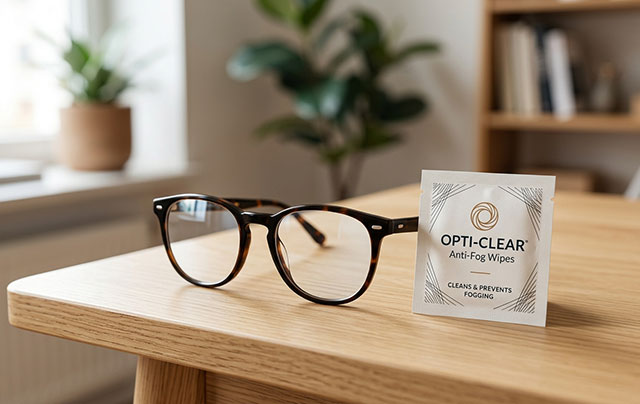
Foggy glasses can make everyday activities frustrating, especially when moving between cold outdoor air and warm indoor spaces, exercising, or wearing a face mask. Anti-fog wipes for glasses offer a convenient way to reduce condensation and maintain clearer vision when used correctly. However, choosing the right product and following the correct application method are essential for achieving consistent results.
For consumers, the main concerns are clarity, convenience, and lens compatibility. For eyewear brands and distributors, developing a reliable product also involves formulation, substrate selection, and packaging. Understanding how anti-fog wipes work helps both users and businesses make better decisions.
How Do Anti-Fog Wipes Work?
Glasses fog up when water vapor condenses on a cooler lens surface and forms tiny droplets that scatter light. This often occurs when temperatures change or warm breath reaches the lenses while wearing a face mask.
Anti-fog wipes contain a specialized solution designed to change how moisture behaves on the treated surface. Depending on the formulation, the solution can help moisture spread more evenly instead of forming numerous visible droplets.
Unlike ordinary lens cleaning wipes, which primarily remove fingerprints, dust, and smudges, anti-fog wipes are formulated to help reduce condensation. Their effectiveness and protection time vary by product, humidity, and usage conditions. Always check the manufacturer’s specifications rather than assuming every product provides the same level of protection.
How to Use Anti-Fog Wipes for Glasses
Using anti-fog wipes correctly is straightforward, but preparation matters. Dirt, fingerprints, and excess residue can affect the final result.
Step 1: Check Lens Compatibility
Before using a wipe, confirm that it is suitable for your glasses. Prescription lenses may have anti-reflective, scratch-resistant, blue-light-filtering, or other specialized coatings. Some lenses and eyewear materials require specific cleaning products.
Read the product label and follow the eyewear manufacturer’s care recommendations. If compatibility is unclear, contact the lens manufacturer before applying the solution.
Step 2: Clean the Lenses First
If your glasses have visible dust or dirt, remove it before applying the anti-fog solution. Use a lens-safe cleaning method recommended by the eyewear manufacturer.
Applying a wipe directly to gritty lenses may drag particles across the surface and cause scratches. If the lenses are already clean, proceed according to the anti-fog wipe instructions.
Step 3: Wipe the Lens Surfaces Evenly
Open the individual sachet and gently wipe the designated lens surfaces. Follow the product directions to determine whether one wipe should be used on both lenses and whether both sides require treatment.
Use gentle, even strokes rather than pressing hard. Avoid touching the treated surfaces with your fingers afterward, as fingerprints may affect clarity and leave visible marks.
Step 4: Allow the Solution to Dry
Let the lenses dry for the period specified on the packaging. Some products require natural drying, while others may have different application instructions.
Avoid polishing or rinsing the lenses immediately unless the manufacturer specifically recommends it. Removing the solution too soon may reduce the intended anti-fog effect.
Step 5: Check Clarity Before Wearing
Once the lenses are ready, check them under normal lighting for streaks, haze, or residue. If the result is unsatisfactory, follow the product instructions rather than applying additional solution indiscriminately.
For driving, cycling, industrial work, or other activities where clear vision is essential, confirm that your glasses provide an unobstructed view before proceeding.
How to Get Better Results from Anti-Fog Wipes
Correct application is only part of effective fog prevention. Keeping your lenses clean and addressing the source of excess moisture can also help.
If your glasses fog up while wearing a mask, improve the fit around the nose to reduce warm breath escaping toward the lenses. Anti-fog wipes can complement this adjustment, but they do not replace a properly fitted mask.
Store individually wrapped wipes in their original sealed packaging to help prevent premature drying. Follow the stated reapplication instructions because protection may diminish with repeated handling, cleaning, high humidity, or demanding environmental conditions.
There is no universal protection time that applies to every anti-fog wipe. For the most reliable results, choose a product designed for your eyewear and intended conditions.
Anti-Fog Wipes vs. Regular Lens Cleaning Wipes
Although both products are used on eyewear, they serve different purposes.
Regular lens cleaning wipes are primarily intended to remove smudges, fingerprints, and everyday dirt. Anti-fog wipes are designed to provide an additional condensation-reducing effect through their specialized formulations.
A standard cleaning wipe should not automatically be treated as an anti-fog product. Similarly, an anti-fog wipe should not be assumed to remove heavy contamination effectively unless its specifications support that use.
For consumers, the right choice depends on whether the main concern is lens cleanliness, fog prevention, or both. For brands and distributors, this distinction also affects product positioning, formula selection, packaging claims, and customer expectations.
What Should Brands Consider When Developing Anti-Fog Wipes?
For eyewear brands, optical accessory distributors, and retailers, developing an anti-fog wipe involves more than selecting a convenient sachet. The formulation, substrate, packaging, and intended application all influence the final product.
Formula development should begin with the target lens types and expected use conditions. Compatibility testing is particularly important for products intended for coated prescription lenses, safety glasses, or other specialized eyewear. Businesses evaluating new formulas and substrates can review SYWIPE’s wet wipes product development capabilities to understand how product requirements can be assessed during development.
The wipe substrate should distribute the solution consistently without leaving unwanted lint or residue. Packaging must also help maintain moisture content and protect individually wrapped wipes during storage and transportation. For businesses creating their own eyewear-care product lines, private label wet wipes provide a route to developing branded products around specific market requirements, packaging preferences, and target customers.
Product claims should be supported by appropriate testing. Statements about protection duration, coating compatibility, streak-free performance, or environmental benefits should not be used without suitable evidence. Testing should reflect the intended eyewear, application conditions, and product specifications.
Frequently Asked Questions
How often should I use anti-fog wipes on my glasses?
Follow the product’s instructions for reapplication. Frequency depends on the formula, environmental conditions, lens handling, and how often the glasses are cleaned. Reapply when needed and permitted by the product directions.
Can I use anti-fog wipes on prescription glasses?
Some products are suitable for prescription glasses, but compatibility varies. Check the label and consult your eyewear manufacturer if your lenses have specialized coatings.
Why do my glasses still fog up after using anti-fog wipes?
Possible reasons include incompatible lenses, uneven application, residual dirt, premature wiping, high humidity, or protection that has worn off. Review the instructions and verify that the product is designed for your specific eyewear.
Can ordinary lens cleaning wipes prevent fogging?
Not necessarily. Ordinary cleaning wipes are generally designed to remove dirt and smudges, whereas anti-fog wipes contain formulations intended to reduce condensation. Choose a product specifically labeled for the intended purpose.
Are anti-fog wipes suitable for safety glasses and goggles?
Some are, but suitability depends on the product formulation and the eyewear manufacturer’s requirements. For workplace protection, use only compatible products and inspect the lenses before returning to work.
Final Thoughts
Anti-fog wipes can be a practical addition to an eyewear care routine when the product is compatible with the lenses and applied according to its instructions. Clean surfaces, even application, adequate drying, and realistic expectations all contribute to better results.
For brands and distributors, consistent formulation, verified performance, suitable packaging, and clear instructions are equally important. Working with an experienced wet wipes manufacturer can help businesses evaluate formulation requirements, material options, packaging formats, and production needs when planning a customized wipes product for their target market.