Wet Wipes Raw Materials: A Manufacturer’s Guide
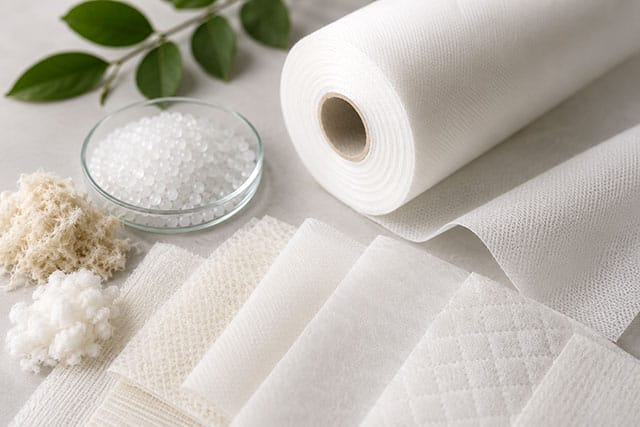
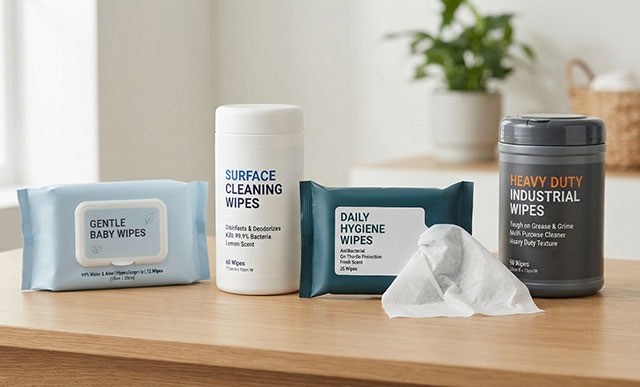
Every wet wipe begins with a material choice that influences how the finished product feels, performs, and holds up during use. A soft facial wipe, a durable industrial cleaning wipe, and a biodegradable baby wipe may look similar in their packaging, but their substrates can be very different.
As an experienced wet wipes manufacturer, SYWIPE works with different nonwoven materials to develop products for baby care, personal hygiene, household cleaning, pet care, and industrial applications. Across these product categories, one principle remains consistent: choosing the right raw material requires understanding the complete product, not simply selecting a particular fiber.
For brands, distributors, and purchasing managers, understanding wet wipes raw materials is an important part of product development. Fiber composition, fabric construction, absorbency, wet strength, and manufacturing compatibility all influence the final result.
So, what materials are used to manufacture wet wipes, and how do manufacturers determine which option is right for a particular product?
The answer starts with understanding the substrate.
Every Great Wet Wipe Starts Before Production
One of the most common requests from a new customer is surprisingly simple: “We need a soft wet wipe.”
But softness alone does not determine whether a material is suitable.
A substrate that feels exceptionally soft against the skin may not provide enough strength for heavy-duty cleaning. A durable fabric designed for industrial applications may feel too rough for facial care. A plant-based material may support a sustainability-focused product concept but require a different cost structure or production setup.
Every material represents a balance between performance, manufacturing efficiency, sustainability, and commercial objectives.
This is why professional material selection begins with questions about the finished product:
Who will use the wipes?
Will they be used on babies, adults, pets, or household surfaces?
Is softness, cleaning performance, absorbency, or durability the main priority?
Will the product be positioned as a standard, premium, or environmentally focused option?
What packaging format and target price does the brand require?
These questions help determine which materials deserve consideration before sampling and production begin.
For private label brands, material selection should be considered alongside formulation, packaging, product specifications, and applicable market requirements. Treating these decisions as one development process makes it easier to achieve consistent product performance.
What Exactly Is a Wet Wipes Substrate?
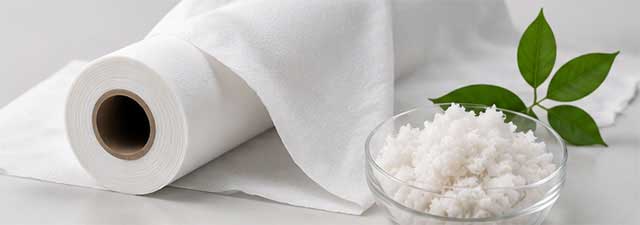
A wet wipes substrate is the nonwoven fabric that forms the physical structure of the wipe. It is responsible for much of the product’s texture, flexibility, strength, and liquid absorption.
Unlike woven textiles, nonwoven fabrics are produced without weaving yarns together. Instead, fibers are arranged and bonded through mechanical, thermal, or chemical processes, depending on the manufacturing technology.
For wet wipes, spunlace nonwoven fabric is widely used because it combines flexibility, softness, and useful strength.
The finished substrate can be made from one fiber type or a blend of different fibers. Common materials include:
• Viscose
• Polyester
• Bamboo-derived regenerated cellulose
• Cotton
• Lyocell
• Wood pulp
Each fiber has different characteristics, but the final performance also depends on fabric weight, fiber proportions, bonding technology, and production conditions.
For example, two substrates may both contain viscose but still feel different because of variations in GSM, fiber quality, and hydroentanglement.
This explains why manufacturers evaluate the complete fabric structure rather than choosing materials based on fiber names alone.
How Different Fibers Affect Wet Wipes Performance
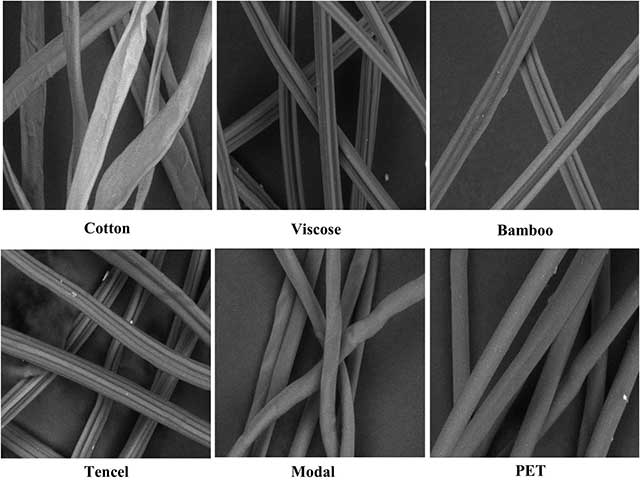
Selecting a suitable fiber is one of the first technical decisions in wet wipes development. Each material offers a different combination of softness, absorbency, strength, processing characteristics, and cost.
Understanding these differences helps brands make more informed decisions.
Viscose
Viscose is a regenerated cellulose fiber commonly manufactured from wood pulp. It is widely used in wet wipes because of its softness and ability to absorb liquids.
Its smooth texture makes it suitable for products that require a gentle feel against the skin.
Common applications include:
• Baby wipes
• Facial cleansing wipes
• Personal care wipes
• General hygiene wipes
Viscose can also be blended with other fibers to adjust strength, texture, and manufacturing performance.
For brands developing soft personal care products, viscose is often an important substrate option to evaluate.
Polyester
Polyester is a synthetic fiber known for its durability and resistance to tearing.
Unlike cellulose-based fibers, polyester generally has lower natural liquid absorbency. However, it can contribute useful structural strength when combined with absorbent fibers.
It is commonly considered for:
• Household cleaning wipes
• Industrial cleaning wipes
• Heavy-duty surface cleaning products
Polyester blends can help create fabrics that maintain their structure during wiping and cleaning.
For industrial applications, the balance between strength, absorbency, and cleaning performance is often more important than softness alone.
Bamboo-Derived Fibers
Bamboo-derived fibers have attracted attention from brands developing products with plant-based material positioning.
Bamboo can be processed into regenerated cellulose fibers, including bamboo viscose. These materials can provide a soft texture and good absorbency.
Potential applications include:
• Baby care wipes
• Personal care wipes
• Plant-based hygiene products
• Environmentally focused wipe ranges
However, brands should understand the difference between bamboo as a plant source and the fiber produced through industrial processing.
Bamboo viscose is a regenerated cellulose fiber, not simply untreated bamboo material. Its environmental characteristics depend on the manufacturing process, chemical recovery systems, final fabric composition, and end-of-life conditions.
Therefore, bamboo-based materials should be evaluated according to their actual specifications rather than relying on the word “bamboo” alone.
Cotton
Cotton is a natural cellulose fiber valued for its softness and absorbency.
It can be used in selected personal care and specialty wipe products where natural fiber content is an important consideration.
However, cotton has different processing requirements and cost characteristics compared with other nonwoven fibers.
Manufacturers need to evaluate whether its performance and commercial cost are suitable for the intended application.
Lyocell
Lyocell is a regenerated cellulose fiber commonly produced from wood pulp using a solvent-based manufacturing process.
It offers a combination of softness, absorbency, and fiber strength, making it suitable for premium personal care and hygiene products.
Brands considering higher-end wipes may evaluate lyocell when they want to balance a soft feel with good substrate performance.
As with other cellulose-based fibers, the final environmental profile depends on the complete manufacturing and product lifecycle.
Wood Pulp
Wood pulp is an important source of cellulose used in tissue products and selected nonwoven materials.
It can also be incorporated into specialty wipe substrates, depending on the required fabric construction.
Wood pulp should not be confused with viscose or lyocell. Although these materials can share a wood-derived cellulose source, their processing methods and final fiber structures are different.
Understanding this distinction is particularly useful for brands comparing different cellulose-based materials.
Why Fabric Construction Matters as Much as Fiber Composition
Choosing the right fiber is only part of the material selection process. The way fibers are converted into a nonwoven fabric also has a significant influence on the finished wipe.
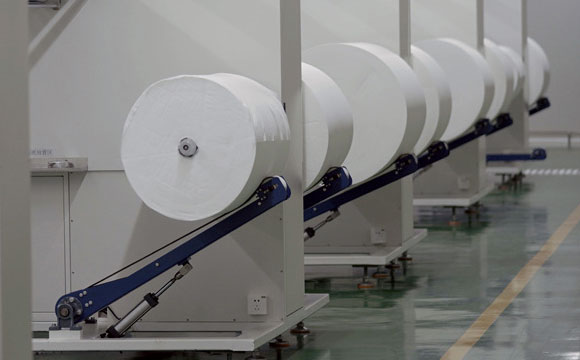
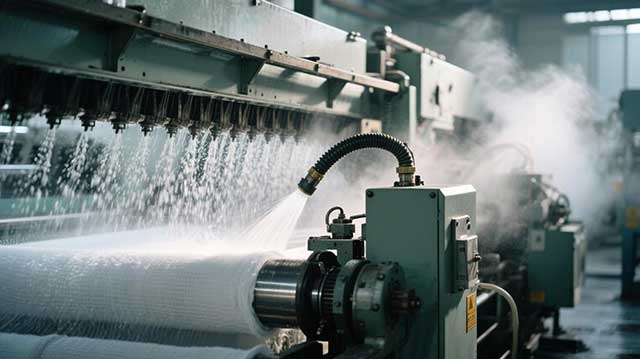
Spunlace technology is widely used in wet wipes manufacturing. During hydroentanglement, high-pressure water jets entangle fibers to create a coherent fabric structure.
This process helps produce flexible materials with different combinations of softness, strength, and absorbency.
Several technical factors influence the final substrate.
Fabric weight (GSM)
GSM refers to grams per square meter. It indicates how much fabric material is present in a given area and is commonly used to specify wet wipes substrates.
A higher GSM may produce a thicker or more substantial wipe, but it does not automatically mean better quality. Fiber composition and fabric construction also matter.
Fiber composition
The proportion of different fibers influences the balance between softness, strength, and liquid absorption.
For example, a viscose-polyester blend can combine cellulose-based absorbency with additional structural strength.
Hydroentanglement quality
The consistency of fiber entanglement influences fabric integrity, surface texture, and resistance to tearing.
Poorly controlled fabric construction may affect both production stability and the finished wipe experience.
Fabric uniformity
Consistent fiber distribution and fabric weight help manufacturers maintain more predictable performance across production batches.
Surface texture
The fabric structure influences how a wipe feels against the skin or interacts with a surface during cleaning.
Two fabrics with similar fiber compositions may provide noticeably different wiping experiences because of differences in their construction.
Brands comparing available wet wipes materials and packaging options should therefore consider complete substrate specifications rather than comparing fiber names alone.
How Manufacturers Evaluate Wet Wipes Raw Materials
A material may look suitable on a specification sheet but perform differently during actual production or everyday use.
For this reason, manufacturers evaluate raw materials through a combination of technical specifications, sample testing, and production compatibility.
Several factors deserve particular attention.
1. Fiber composition
The first step is confirming the actual fiber content.
Brands should understand whether the substrate consists of viscose, polyester, cotton, bamboo-derived cellulose, lyocell, or a combination of materials.
This information is important for product positioning, performance evaluation, and sustainability claims.
2. Fabric weight and thickness
GSM and thickness influence how substantial a wipe feels and how much material is used in each sheet.
These specifications should match the intended product category and target price.
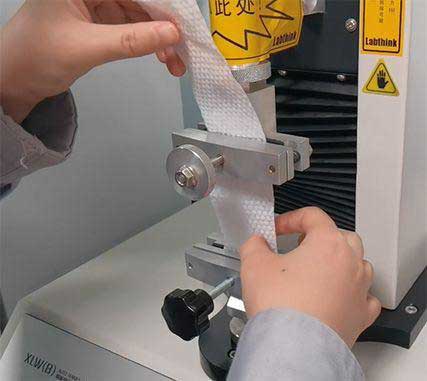
3. Wet strength and tensile performance
Wet wipes are used in a saturated condition, so dry fabric strength alone is not enough.
Manufacturers should evaluate whether the substrate maintains its structure when wet and during normal wiping movements.
4. Absorbency and liquid retention
Different fibers absorb and retain liquids differently.
The substrate needs to hold an appropriate amount of solution without excessive dripping or uneven saturation.
Absorbency and liquid release should be evaluated together because a wipe that holds too much liquid may not necessarily provide the best user experience.
5. Lint generation
Excessive lint can affect cleaning performance and product perception, particularly in applications involving smooth surfaces or sensitive cleaning tasks.
6. Production compatibility
The substrate must also run consistently through folding, cutting, saturation, and packaging equipment.
A material that performs well in a laboratory test may still create difficulties if it is unsuitable for the intended converting process.
7. Cost and supply consistency
Material selection must remain commercially practical.
Brands should consider not only the initial material price but also availability, batch consistency, production efficiency, and long-term sourcing reliability.
A reliable manufacturing partner can help evaluate these factors before final material approval.
Natural Fibers and Sustainability in Wet Wipes
Consumer expectations have changed significantly over recent years. Many brands now pay closer attention to the materials used in their wipes, particularly when developing environmentally focused product ranges.
Cellulose-based materials such as viscose, lyocell, cotton, and bamboo-derived fibers are frequently considered as alternatives to conventional synthetic fibers.
These materials can support different product positioning strategies, but natural or plant-derived does not automatically mean biodegradable, plastic-free, or environmentally superior.
Several factors need to be considered.
Fiber source and processing
The original plant source is only one part of the material’s environmental profile. Processing methods, chemical management, energy consumption, and water use also matter.
Complete fabric composition
A wipe containing cellulose fibers blended with synthetic materials should not automatically be described as fully biodegradable or plastic-free.
Brands need to confirm the complete fiber composition before making environmental claims.
End-of-life conditions
Biodegradability depends on the material and the conditions under which it is tested or disposed of. A biodegradable substrate does not automatically mean that the finished wipe is suitable for flushing.
Supporting documentation
Material specifications, supplier declarations, and relevant test reports help brands substantiate environmental claims.
For businesses developing environmentally focused products, biodegradable wet wipes require careful evaluation of the complete substrate rather than simply choosing a plant-derived fiber.
Responsible material selection means balancing product performance, manufacturing requirements, and verifiable environmental characteristics.

Choosing the Right Substrate for Different Wet Wipes Applications
There is no universally best raw material for every wet wipe. The most suitable substrate depends on how the finished product will be used.
The following comparison provides a practical starting point for product developers.
Product Application | Materials to Consider | Main Selection Priorities |
Baby wipes | Viscose, lyocell, suitable cellulose blends | Softness, absorbency, skin-contact suitability |
Facial wipes | Viscose, lyocell, cotton blends | Soft texture, absorbency, low lint |
Personal hygiene wipes | Viscose, cellulose blends | Comfort, flexibility, liquid retention |
Household wipes | Polyester-viscose blends, other suitable nonwovens | Strength, cleaning performance |
Industrial wipes | Polyester blends, durable nonwoven substrates | Wet strength, durability, cleaning efficiency |
Eco-focused wipes | Suitable cellulose-based substrates | Fiber composition, verified environmental claims |
These are material options rather than fixed specifications. The final choice should be based on sample testing and the performance requirements of the complete product.
For example, a brand developing baby wipes may prioritize softness and a gentle formulation, while an industrial cleaning product may require a more durable substrate that maintains its strength during heavy-duty use.
The best solution is the one that matches the intended application, customer expectations, and production requirements.
Frequently Asked Questions About Wet Wipes Raw Materials
What are the main raw materials used in wet wipes?
The main material used to make the physical structure of most wet wipes is nonwoven fabric. Common fibers include viscose, polyester, bamboo-derived cellulose, cotton, lyocell, and wood pulp. Manufacturers also consider the liquid formulation and packaging when developing the complete product.
What is the best fabric for wet wipes manufacturing?
There is no single best fabric for all wet wipes. Viscose and lyocell are often considered for soft personal care products, while polyester blends can be suitable for applications requiring additional strength. The best option depends on softness, absorbency, wet strength, cost, and intended use.
What is the difference between viscose and polyester in wet wipes?
Viscose is a regenerated cellulose fiber known for softness and good liquid absorption. Polyester is a synthetic fiber valued for durability and structural strength. Manufacturers often combine these materials to balance absorbency and resistance to tearing.
Are bamboo wet wipes biodegradable?
Bamboo-derived cellulose fibers can be biodegradable under suitable conditions. However, the biodegradability of a finished wipe depends on its complete fiber composition, processing, and testing conditions. Brands should verify product-specific claims rather than assuming that every bamboo-based wipe is biodegradable.
What does GSM mean in wet wipes fabric?
GSM means grams per square meter. It measures the weight of the nonwoven fabric over a specified area and is commonly used to describe wet wipes thickness and material specifications. A higher GSM does not automatically guarantee better quality because fiber composition and fabric construction also influence performance.
Why do two wet wipes made from the same material feel different?
The final feel depends on more than the main fiber. GSM, fiber fineness, blending ratios, hydroentanglement quality, surface texture, and liquid formulation can all influence softness and overall performance.
How do manufacturers test wet wipes raw materials?
Manufacturers may evaluate fiber composition, GSM, thickness, tensile strength, absorption capacity, liquid retention, lint generation, and production compatibility. Sample testing and incoming material inspections help confirm whether a substrate meets the required specifications.
How should brands select raw materials for private label wet wipes?
Brands should begin by defining the intended application, target market, performance expectations, packaging format, and target cost. They can then compare substrate samples, review technical specifications, evaluate formulation compatibility, and approve the material through product testing before mass production.
Develop Better Wet Wipes Through Smarter Material Selection
The quality of a wet wipe is not determined by one fiber or one technical specification. It comes from the way the substrate, formulation, manufacturing process, and packaging work together.
For brands developing a new product, selecting the right materials early can help improve product consistency, reduce manufacturing challenges, and create a better experience for end users.
At SYWIPE, we support brands, distributors, and importers with OEM and private label wet wipes development, including substrate selection, formulation customization, packaging design, sample approval, and mass production.
Whether you are developing baby care wipes, personal hygiene wipes, household cleaning wipes, or industrial products, our team can help evaluate suitable material options according to your product requirements.
Contact SYWIPE to discuss your next wet wipes project and find the right material solution for your brand.