Why Wet Wipes Samples Differ from Mass Production?
It usually starts with confidence.
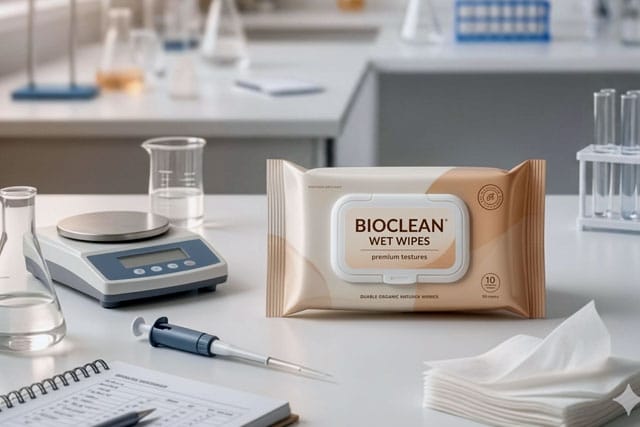
A buyer receives a wet wipes sample from a manufacturer. The packaging looks clean, the wipes feel soft, and the moisture level seems exactly right. Everything feels ready for production approval.
The order moves forward.
But weeks later, when the bulk shipment arrives, something feels slightly different. The wipes may be a bit drier, the texture slightly firmer, or the packaging not as tightly sealed as expected.
It is not a failure—but it is not exactly the same experience as the sample.
This is one of the most common questions in OEM wet wipes sourcing, and the reason is not simple. It is the result of how wet wipes change when they move from controlled sampling into full industrial production.
From Sample to Mass Production: The Real Transition
A wet wipes sample is usually produced in a quiet and highly controlled environment.
Technicians work slowly, focusing on precision rather than speed. Every detail—mixing, folding, cutting, filling, sealing—is carefully adjusted by hand or under close supervision. The goal is not efficiency. The goal is perfection.
In this stage, everything is optimized to present the best possible version of the product.
But mass production is completely different.
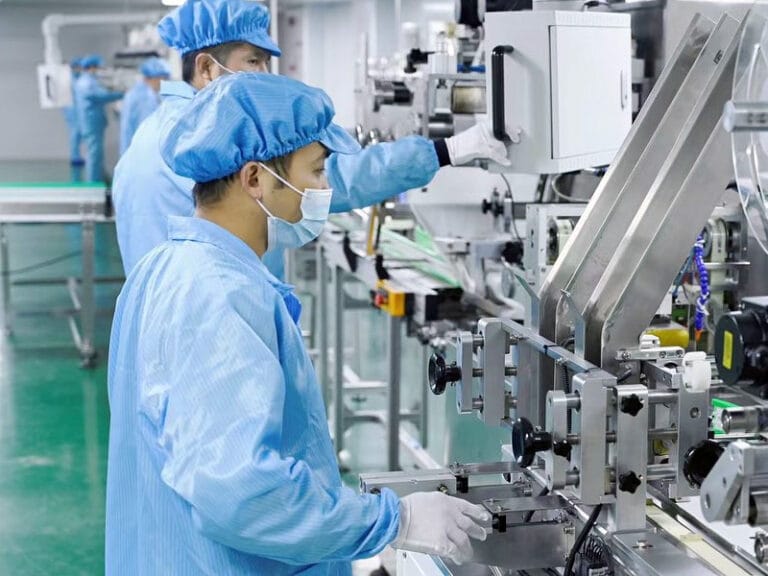
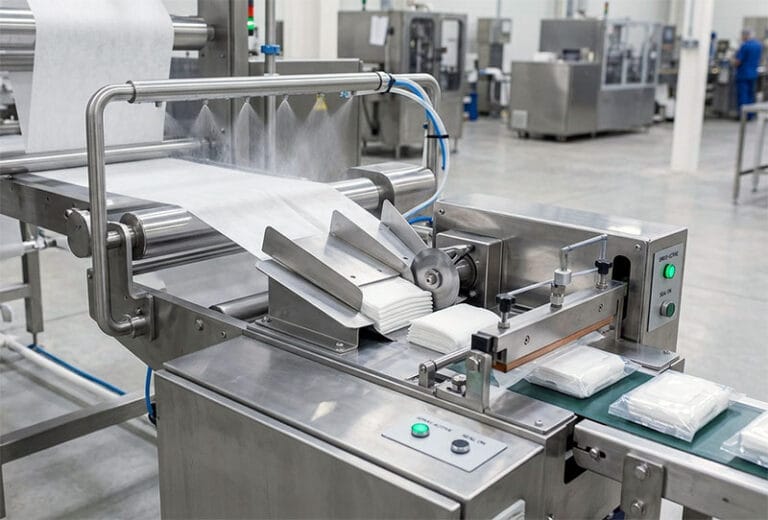
Once production begins at scale, machines must run continuously. Speed becomes essential. Raw materials are consumed in large volumes. Even small variations in temperature, humidity, or machine tension begin to influence the final result.
At this point, the product is no longer shaped by “ideal conditions,” but by “stable industrial conditions.”
This shift alone explains why samples and mass production rarely feel identical.
Raw Material Differences That Are Hard to Notice
On paper, the materials may look exactly the same.
Same nonwoven specification. Same GSM. Same supplier. Same formula.
But in real production, no raw material is perfectly identical across every batch.
One batch of fiber may feel slightly softer. Another may have slightly tighter bonding. These differences still fall within acceptable industrial standards, but they can be felt when the product is held in hand.
In sample production, manufacturers often select the most stable or best-performing batch of material available at that time.
In mass production, however, materials must be supplied continuously across multiple production cycles. Even small batch-to-batch variations naturally appear.
Over time, these small differences can create a noticeable change in texture or thickness.
At this stage, many brand owners start to understand why choosing a stable OEM partner is critical. Learn more about our approach as a wet wipes manufacturer here: https://sywipe.com/
How Formula Behavior Changes at Scale?
The wetting solution is another key factor.
In sample production, the lotion is prepared in small quantities. Mixing is uniform and slow. Each wipe receives highly consistent moisture distribution.
However, scaling this process introduces new variables.
Large mixing tanks behave differently. Flow dynamics change. Temperature differences become more noticeable. High-speed filling systems slightly affect how evenly liquid is distributed across the substrate.
Even if the formula remains unchanged, its physical behavior changes when processed at industrial scale.
This is why experienced manufacturers always conduct pilot runs before mass production. The goal is not to test the formula in theory, but to observe how it behaves in real production conditions.
This pilot validation step is part of our OEM wet wipes manufacturing process, designed to reduce scaling risk before full production begins.
Packaging and Sealing: A Hidden Source of Variation
Packaging is often underestimated, but it plays a major role in final product consistency.
In sample production, sealing is usually slow and carefully adjusted. Operators focus on achieving a tight and stable closure. The result often feels “perfect.”
In mass production, sealing must match high-speed output. Heat, pressure, and timing must remain perfectly synchronized while machines operate continuously.
Even a slight deviation in sealing strength or timing can affect moisture retention over time.
This is not a defect. It is a natural consequence of scaling from manual precision to automated production stability.
Why Mass Production Will Never Be 100% Identical?
At industrial scale, the goal is not perfect replication of a sample.
The goal is controlled consistency within an acceptable tolerance range.
A professional OEM manufacturer does not aim to reproduce a lab sample under perfect conditions. Instead, the goal is to ensure stable performance across thousands or millions of units.
This is achieved through structured systems such as:
• Standardized production processes
• Strict raw material control
• Batch traceability systems
• Multi-stage quality inspections
Variation is not completely eliminated—but it is controlled, monitored, and kept predictable.
How Professional Buyers Reduce Risk?
Experienced buyers understand that small differences are part of scaling production.
Instead of expecting identical results, they focus on process validation.
Before mass production, they often request:
• Pre-production approval samples (PPS)
• Pilot production batches
• Packaging sealing tests
• Stability or shelf-life evaluations
These steps help confirm that the product remains stable under real manufacturing conditions—not just laboratory conditions.
What Reliable OEM Manufacturing Really Means?
A reliable wet wipes manufacturer is not defined by a perfect sample.
It is defined by the ability to maintain stable performance across repeated production cycles.
At SYWIPE, every OEM project goes through structured validation before mass production begins. This ensures that approved samples are not only visually correct, but also technically stable when scaled into full production.
Conclusion
Differences between wet wipes samples and mass production are normal.
They are not a sign of poor quality—they are a natural result of moving from controlled testing to industrial manufacturing.
The real measure of a manufacturer is not whether differences exist, but whether those differences are controlled, predictable, and stable over time.
In the end, consistency in wet wipes production is not about making everything identical.
It is about making everything reliably consistent at scale.
FAQ
Why do wet wipes samples differ from mass production?
Because samples are produced under controlled small-batch conditions, while mass production involves high-speed machinery, raw material variation, and industrial-scale processing.
Can mass production be exactly the same as samples?
Not exactly. However, professional OEM manufacturers can ensure consistent performance within a controlled tolerance range.
What causes the biggest difference between samples and production?
The most common factors are raw material batch variation, moisture distribution during scaling, and packaging sealing differences.
How can buyers reduce quality differences?
By confirming pilot samples, validating raw materials, and working with manufacturers that use strict quality control systems and batch traceability.
Does packaging affect wet wipes quality?
Yes. Sealing strength and film quality directly affect moisture retention and shelf stability.
How does SYWIPE ensure consistency?
Through standardized production processes, pilot runs, strict quality inspection, and full batch-level traceability control systems.
Related Reading
To better understand wet wipes production and material selection, you may also read:
How Wet Wipes Are Manufactured
What Are Wet Wipes Made Of
How to Choose Wet Wipes Material