How Does Pumice Hand Cleaner Remove Grease and Oil?
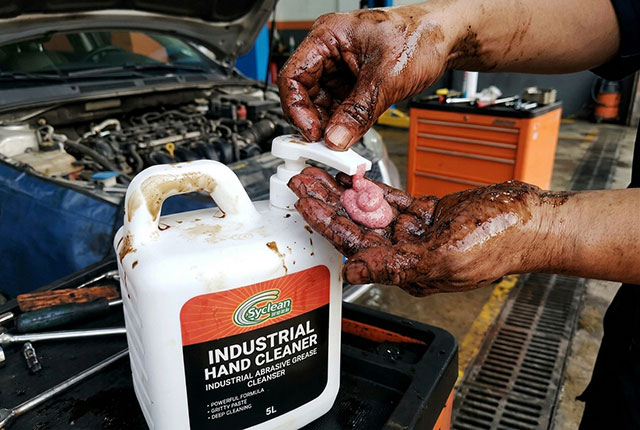
After several hours in an automotive repair shop, a mechanic’s hands can tell the story of the day’s work. Engine oil settles into the lines of the skin, grease builds around the fingertips, and dirt mixes with lubricants and other workshop residues. A quick wash with ordinary soap may remove surface dirt, but heavier contamination often takes more effort.
This is where pumice hand cleaner can be useful. Instead of relying only on cleansing agents, a pumice-based formula combines cleaning ingredients with fine abrasive particles to help loosen stubborn grease, oil, and grime from heavily soiled hands.
Why Grease and Oil Can Be Difficult to Wash Away
Grease and oil behave differently from ordinary dirt. They can spread across the skin and remain around fingernails, fingertips, and skin folds. When combined with dust, metal particles, or workshop grime, they can form a stubborn layer that is difficult to remove with a standard hand soap.
For mechanics and maintenance workers, this can happen repeatedly throughout the day. A person working on engines in the morning may handle lubricants, move on to brake components, and finish the day cleaning parts covered with accumulated grime.
The challenge is therefore not simply washing the hands. It is removing contamination that has become firmly attached to the skin.
How Pumice Helps With Heavy-Duty Hand Cleaning
Pumice is a naturally abrasive mineral that has long been used in cleaning products to provide mechanical scrubbing. In a hand cleaner, finely processed pumice particles can help loosen stubborn residues while the cleansing ingredients work to break down and lift oils and other contaminants.
The two functions work together.
The cleansing agents help separate grease and oil from the skin, while the fine pumice particles provide additional scrubbing action. As the cleaner is rubbed over heavily soiled areas, this combination can help release contamination that ordinary soap may struggle to remove.
The goal is not simply to make the formula more abrasive. The formulation needs to balance cleaning performance with a suitable skin feel for the intended application.
For products designed for demanding industrial environments, this is why the formulation itself matters as much as the presence of pumice.
Why Mechanics Often Need More Than Regular Hand Soap
Consider a typical automotive repair environment. A technician may spend part of the day changing engine components, handling lubricants, inspecting mechanical parts, and working underneath vehicles. Each task can leave a different combination of oil, grease, dirt, and residue on the hands.
Regular hand soap is useful for everyday hand washing, but it is not necessarily designed around this level of contamination.
A heavy-duty hand cleaner for mechanics is intended for a different situation. The focus is on helping remove persistent workshop soils while still providing a practical hand-cleaning experience for people who wash their hands frequently.
This makes pumice-based hand cleaners particularly relevant to automotive repair shops, garages, maintenance departments, manufacturing workshops, and other workplaces where heavy contamination is part of the job.
Pumice Hand Cleaner for Automotive Repair and Workshop Use
Automotive repair is one of the clearest applications for this type of hand cleaner. Engine oil, grease, lubricants, dirt, and accumulated workshop grime can become part of a mechanic’s daily routine.
A pumice hand cleaner can be positioned near workshop sinks or hand-washing stations, giving technicians a dedicated solution when ordinary soap is not enough for the job.
The same concept also applies beyond automotive repair. Maintenance technicians, machine operators, equipment service teams, and industrial workers can encounter similar contamination during routine work.
For brands developing products for these professional markets, the intended application also influences the formula, abrasive level, fragrance, texture, packaging, and dispensing format.
Choosing a Pumice Hand Cleaner for Professional Use
Not every pumice hand cleaner is formulated in exactly the same way. For professional applications, buyers typically need to consider more than whether the product contains pumice.
Cleaning performance is one consideration, but the type and level of contamination matter as well. A product intended for automotive mechanics may need to handle grease and engine oil, while an industrial maintenance application may involve a broader combination of oil, grime, lubricants, and other residues.
The texture of the formula is also important. Pumice particles need to provide useful scrubbing action without making the product unnecessarily harsh for its intended use.
Packaging is another practical consideration. Repair shops and industrial workplaces may require tubs, bottles, dispensers, or other formats depending on how the cleaner will be stored and used.
For brands and distributors, these requirements can also become part of the product development process.
From Formula Development to Private Label Production
A professional hand cleaner is not always a one-formula-fits-all product. Different markets may require different cleaning strength, abrasive levels, fragrance profiles, packaging formats, and positioning.
SYWIPE supports OEM and private label development for brands looking to create pumice hand cleaner products for automotive, industrial, maintenance, and professional cleaning markets. Formula requirements, texture, fragrance, packaging, and other product specifications can be discussed according to the intended application.
For companies developing a wider industrial cleaning range, pumice hand cleaner can also complement other industrial wipes used for quick cleaning and maintenance tasks.
When Pumice Hand Cleaner Makes Sense
The difference becomes easiest to understand when looking at the working environment.
Someone washing ordinary dirt from their hands after a normal day’s activities may only need a conventional hand soap. A mechanic working with engine oil and grease faces a different cleaning challenge.
When hands are repeatedly exposed to heavy workshop contamination, a dedicated heavy-duty formula with controlled scrubbing action can provide a more application-focused solution.
That is the role of pumice hand cleaner: combining cleansing ingredients with fine abrasive particles to help tackle the stubborn grease, oil, and grime commonly found in automotive and industrial working environments.
If you are developing a private label hand cleaner for mechanics, automotive repair shops, distributors, or industrial users, you can view the Pumice Hand Cleaner product or contact SYWIPE to discuss your formula and packaging requirements.
Frequently Asked Questions
Is pumice hand cleaner suitable for mechanics?
Pumice hand cleaners are commonly designed for heavy-duty hand cleaning applications where mechanics and other workers encounter grease, oil, grime, and similar stubborn residues.
What does pumice do in hand cleaner?
Fine pumice particles provide mechanical scrubbing action. Combined with cleansing ingredients, they can help loosen and remove stubborn contaminants from heavily soiled hands.
Can pumice hand cleaner remove engine oil?
A properly formulated heavy-duty hand cleaner can help remove engine oil and other automotive residues. Cleaning performance depends on the overall formula, contamination level, and how the product is used.
Is pumice hand cleaner only for automotive repair?
No. It can also be used in workshops, equipment maintenance, manufacturing, construction-related maintenance, and other professional environments where workers regularly deal with grease, oil, and grime.
Can pumice hand cleaner be made for private label brands?
Yes. Private label products can be developed around different formula, abrasive, fragrance, packaging, and market requirements. SYWIPE provides OEM and private label manufacturing support for professional cleaning products.