How to Choose Facial Wipes for Your Skin?
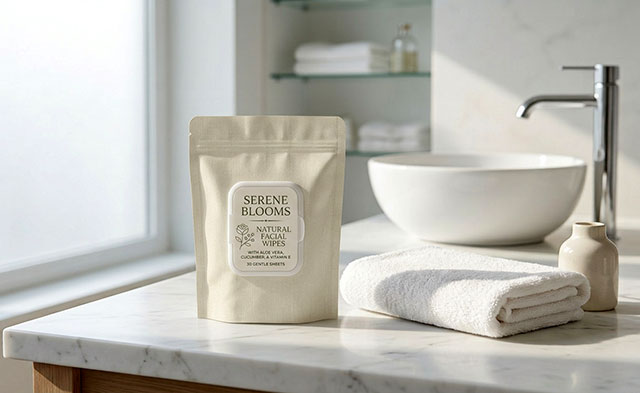
Choosing facial wipes involves more than finding a soft sheet or a convenient package. The right product should match your skin’s needs, provide appropriate cleansing, and fit the way you use it. For brands developing facial cleansing wipes, material selection, cleansing formulation, and packaging also influence the finished product’s performance and market positioning.
Whether you need wipes for daily refreshing, post-workout cleansing, travel, or makeup removal, understanding a few key selection criteria can help you make a more informed decision.
What Should You Look for in Facial Wipes?
Good facial wipes should be designed specifically for facial use. Products intended for household cleaning, disinfecting surfaces, or other applications are not interchangeable with facial care wipes.
Before choosing a product, consider four factors: the intended cleansing purpose, the formula, the wiping material, and the packaging.
The formula should suit the intended application without causing unnecessary discomfort. The substrate should feel comfortable against the skin and remain intact during use. Packaging should keep the wipes moist and protect them from contamination during normal storage and handling.
For manufacturers and brands developing a new product line, these factors need to work together rather than being considered separately.
How to Choose Facial Wipes for Different Skin Types
Different skin types can respond differently to cleansing ingredients, fragrances, and wiping friction. Start by identifying your primary concern instead of assuming that one formula works equally well for everyone.
Facial Wipes for Sensitive Skin
If your skin is easily irritated, look for facial wipes with a simple, clearly disclosed ingredient list. Fragrance-free options may be worth considering if you are sensitive to fragrance.
Pay attention to the cleansing formula as well as the fabric. A soft substrate and a suitable lotion can improve the experience, but neither guarantees that a product will not cause irritation.
Check the product label and discontinue use if redness, burning, itching, or other irritation develops. People with known ingredient sensitivities should review the full ingredient list before use.
Facial Wipes for Oily or Combination Skin
Oily skin may benefit from wipes designed to remove excess surface oil, sweat, and everyday impurities without leaving an uncomfortable residue.
However, a strong cleansing sensation does not necessarily mean better cleansing. Products that leave the skin feeling excessively dry or tight may not suit your routine.
If you have persistent acne or another skin condition, do not assume that ordinary facial wipes will treat it. Choose products according to their intended use, and follow professional advice when necessary.
Facial Wipes for Dry Skin
For dry skin, consider products designed to provide gentle cleansing without an excessively drying after-feel.
Some formulas include humectants such as glycerin to help maintain moisture in the product and improve skin feel. The overall formulation matters more than the presence of any single ingredient.
Avoid rubbing repeatedly over the same area. If your skin feels tight after cleansing, follow your usual skincare routine with an appropriate moisturizer.
Facial Wipes for Normal Skin
People with normal skin can focus on their main use case. A simple cleansing formula may suit occasional refreshing, while a product designed for makeup removal may be more appropriate at the end of the day.
There is no need to select a complicated formula simply because it contains more ingredients. Comfort, cleansing performance, and suitability for the intended use are more useful criteria.
Can Facial Wipes Help Keep Skin Clear?
Facial wipes can help remove surface oil, sweat, makeup, and everyday impurities, but they cannot guarantee clear skin or prevent acne. The result depends on the cleansing formula, your skin’s tolerance, and how the product is used.
If you have oily or acne-prone skin, choose facial wipes designed for facial cleansing and avoid excessive rubbing. Look for clear ingredient information and consider whether the formula leaves an uncomfortable residue. A wipe marketed for deep cleansing or oil control should not automatically be treated as an acne treatment.
For sensitive or blemish-prone skin, fragrance-free options may be worth considering if fragrance is a known trigger for you. However, individual reactions vary, and even a gentle formula may not suit everyone.
Facial wipes are most useful when convenient cleansing is needed away from home. For regular skincare, use an appropriate facial cleanser and follow a routine suited to your skin. Persistent acne, irritation, or other skin concerns may require advice from a qualified healthcare professional.
Which Ingredients Matter in Facial Cleansing Wipes?
The ingredient list helps explain how a facial wipe is intended to work. Rather than choosing products based on marketing claims alone, consider the role of the main ingredients.
Purified water commonly serves as the base of the cleansing lotion. Its quality and the manufacturing process matter because the finished product remains moist throughout storage.
Mild cleansing agents may help loosen oil, makeup, sweat, and everyday impurities. Their suitability depends on the formula, concentration, and intended application.
Humectants such as glycerin can help retain moisture and improve the feel of the formula. Their effects depend on the complete formulation rather than the presence of glycerin alone.
Fragrance and botanical extracts may influence a product’s scent and positioning. However, naturally derived ingredients are not automatically non-irritating, and fragrance may not suit every user.
Preservative systems are also important in water-based wipes. A suitable system helps control microbial growth throughout the product’s intended shelf life. A product should not be assumed to be safer simply because its formula is marketed as natural or preservative-free.
For brands developing a new facial wipe, ingredient selection should be supported by appropriate formulation work, stability assessment, and microbiological quality controls.
How Does Wipe Material Affect Facial Cleansing?
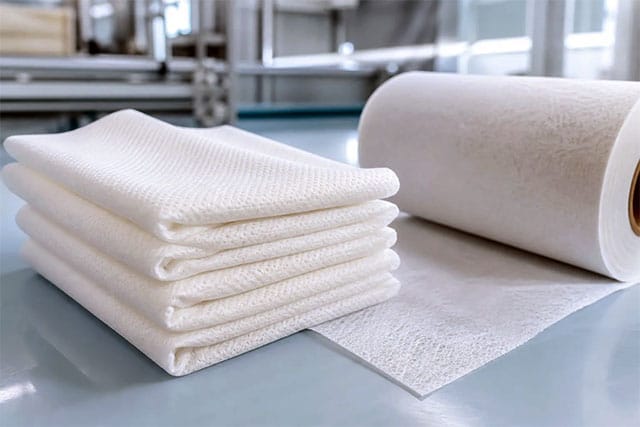
The substrate affects softness, absorbency, strength, lotion distribution, and the overall wiping experience. Material selection should reflect the product’s intended use rather than relying on a single claim such as natural or eco-friendly.
Common options include:
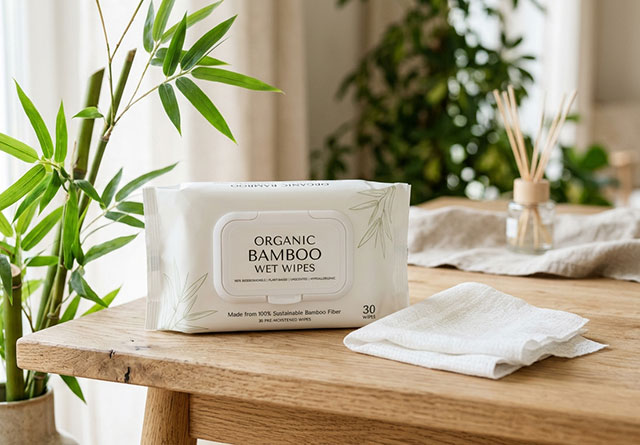
• Bamboo fiber: A plant-derived material that can be considered for facial care products. Its actual softness, strength, and environmental profile depend on how the fiber is processed and how the finished substrate is constructed.
• Viscose: A regenerated cellulose fiber often used in nonwoven wipes. It can offer a soft, absorbent substrate, depending on its specifications and construction.
• Cotton: A familiar natural fiber that may be used in facial care products where a soft wiping surface is desired.
• Blended nonwoven materials: Different fibers can be combined to balance strength, softness, absorbency, and cost. The performance of the finished wipe depends on the blend and manufacturing process.
For product developers, the choice should also account for wet strength, sheet dimensions, basis weight, lotion loading, and compatibility with the selected packaging.
Brands evaluating different substrates can review SYWIPE’s wipe material options when planning a customized product.
Facial Cleansing Wipes vs. Makeup Remover Wipes
Although the two product types overlap, they are not necessarily designed for the same purpose.
Facial cleansing wipes generally focus on removing everyday impurities, sweat, and surface oil. Makeup remover wipes are formulated specifically for cosmetic removal, and some products are developed to handle long-wear or waterproof makeup.
If makeup removal is your primary requirement, choose a product formulated and tested for that purpose rather than assuming every facial wipe can remove all types of cosmetics.
For brands planning a dedicated cosmetic cleansing line, SYWIPE’s makeup remover wipes offer a separate product category to consider.
Whichever product you choose, avoid aggressive rubbing around the eyes. Follow the product instructions, especially when removing eye makeup, and rinse afterward if directed or if residue causes discomfort.
When Are Facial Wipes Most Useful?
Facial wipes are convenient when a sink or a full cleansing routine is temporarily unavailable. Common situations include:
• After exercise: Removing surface sweat and oil when showering is not immediately possible.
• During travel: Keeping a compact pack available for refreshing on long journeys.
• At work or outdoors: Freshening up during a busy day.
• For makeup removal: Using a product specifically designed for cosmetic cleansing when a conventional cleanser is unavailable.
Convenience should not be confused with complete skincare. Facial wipes may leave residue, and they do not necessarily provide the same cleansing results as a properly performed wash with a suitable facial cleanser.
For routine facial care, use wipes according to their instructions and maintain a cleansing routine appropriate for your skin.
How to Use Facial Wipes Without Unnecessary Irritation
Even a well-formulated product can be uncomfortable if used incorrectly.
First, wash your hands before handling the wipe. Gently sweep it across the intended area without repeatedly scrubbing the same patch of skin. Use a fresh wipe when needed instead of continuing with a heavily soiled sheet.
Be particularly careful around the eyes and avoid direct contact with the eyes unless the product is specifically intended for that use.
After use, close the package securely to reduce moisture loss and follow the manufacturer’s storage instructions. Do not use wipes that have dried out unexpectedly, show signs of contamination, or are past their stated shelf life.
If a wipe causes persistent discomfort, stop using it. Facial wipes should support your routine, not replace appropriate care for ongoing skin problems.
What Should Brands Consider When Developing Facial Wipes?
For skincare brands, retailers, and distributors, product selection involves more than choosing a formula from a catalogue. The final product needs to match the target customer, intended use, packaging requirements, and target market.
Key development decisions include:
• Target application: Everyday facial cleansing, sensitive-skin positioning, or makeup removal.
• Substrate: Fiber type, basis weight, softness, absorbency, and wet strength.
• Formula: Cleansing performance, skin feel, ingredient requirements, and preservation.
• Sheet specifications: Dimensions, texture, and the number of wipes per pack.
• Packaging: Resealable soft packs, tubs, or other suitable formats.
• Quality requirements: Product stability, microbiological controls, and substantiated product claims.
These decisions should be assessed together. For example, changing the substrate may affect lotion absorption, while changing the formula can influence the wipe’s feel and compatibility with the package.
SYWIPE supports customized facial cleansing wipe development for brands seeking to establish or expand a personal care product line. Depending on project requirements, development discussions can cover material selection, formula options, wipe specifications, packaging, and private label branding.
Brands planning a new product can review SYWIPE’s private label wet wipes solutions to understand the available customization approach.
Frequently Asked Questions
Are facial wipes suitable for everyday use?
It depends on the product formulation, your skin’s tolerance, and how you use the wipes. Follow the label instructions and avoid excessive rubbing. If a wipe causes irritation, discontinue use.
Which facial wipes are best for sensitive skin?
Look for products specifically designed for facial use, with a clearly disclosed ingredient list and a formula suited to your sensitivities. Fragrance-free options may be helpful for people who react to fragrance, but no product can be guaranteed to suit everyone.
Can facial wipes replace a regular facial cleanser?
Not always. Wipes are convenient for occasional cleansing, but they may leave residue and may not provide the same results as washing with a suitable facial cleanser. Use them according to their intended purpose.
What is the difference between facial cleansing wipes and makeup remover wipes?
Facial cleansing wipes generally target everyday impurities and surface oil, while makeup remover wipes are formulated for cosmetic removal. Choose according to your main cleansing requirement.
Can brands customize facial cleansing wipes?
Yes. Depending on production capabilities and project requirements, customization may include substrate materials, formula, sheet dimensions, sheet count, packaging, and branding. Final specifications should be confirmed with the manufacturer.
Choose Facial Wipes That Match Your Needs
The best facial wipes are not necessarily the ones with the longest ingredient list or the most impressive marketing claims. They are the products designed for the intended cleansing task, made with suitable materials, and packaged to maintain product quality.
For consumers, the priority is finding a product that fits their skin and routine. For brands, it is developing a consistent product specification that meets customer expectations and applicable market requirements.
SYWIPE works with brands, retailers, and distributors on customized facial cleansing wipes, with development options covering materials, formulations, specifications, and packaging. Contact our team to discuss your product requirements and private label project.