How to Clean Industrial Grease from Workshop Floors?
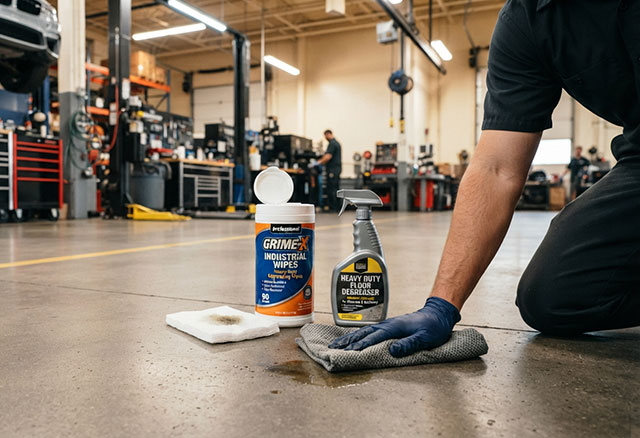
Oil and grease are common problems in automotive workshops, manufacturing plants, and industrial maintenance facilities. A small leak from a hydraulic system, an engine oil spill, or accumulated lubricant around machinery can quickly leave a slippery layer on the floor. As an experienced wet wipes manufacturer, SYWIPE understands the importance of effective cleaning solutions for demanding industrial environments. If it is not handled properly, floor contamination can spread across the work area and increase the risk of slips and falls.
Cleaning industrial grease from workshop floors requires more than ordinary mopping. The right approach depends on the type of oil, the floor material, the size of the spill, and how long the grease has remained on the surface. For facilities that also need convenient solutions for equipment and maintenance cleaning, industrial cleaning wipes can complement a broader workplace cleaning routine.
Why Industrial Grease Is Difficult to Remove from Workshop Floors
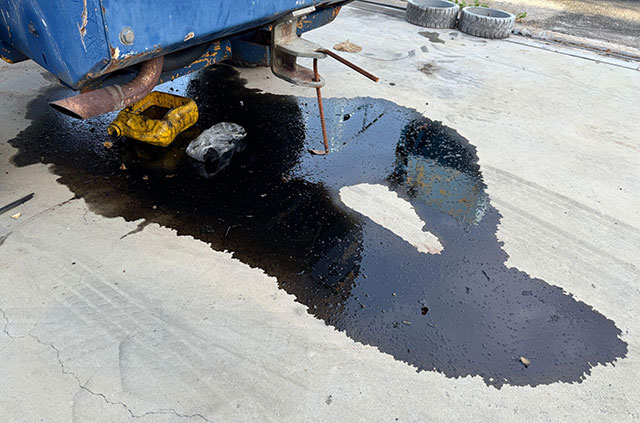
Industrial grease behaves differently from ordinary dust and dirt. Lubricating oil, hydraulic fluid, engine oil, and heavy machinery grease can adhere to concrete, penetrate porous surfaces, and leave behind a persistent film.
Concrete floors are particularly challenging because their porous structure allows oil to penetrate below the visible surface. Even after the surface has been wiped, dark stains may remain.
Other workshop floors, including sealed concrete, epoxy-coated floors, and industrial tiles, have different cleaning requirements. A cleaning agent that works on untreated concrete may not be appropriate for a coated or painted surface.
The first step is therefore to identify the type of contamination and floor material before choosing a cleaning method.
How to Clean Industrial Grease from Workshop Floors
A practical cleaning process should address the spill before it spreads, remove excess oil, break down the remaining residue, and leave the floor safe for normal operations.
1. Contain the Oil Spill Immediately
Fresh oil spills should be addressed as soon as possible. First, stop the source of the leak if it is safe to do so. Keep workers away from the affected area and use appropriate warning signs or barriers to prevent accidental contact.
For small spills, absorbent pads, oil-absorbent materials, or suitable cleaning cloths can help collect excess oil.
For larger spills, use an appropriate industrial spill kit with absorbent materials designed for the substance involved. Do not spread the oil by immediately mopping it across a larger floor area.
Oil should also be kept away from floor drains and stormwater systems. Spilled oil and contaminated cleaning materials must be collected and handled according to applicable environmental and waste-management requirements.
2. Remove Excess Grease Before Washing
Before applying a degreasing cleaner, remove as much free oil and grease as possible.
For fresh oil, use absorbent pads or other suitable oil-absorbing materials. For thicker grease deposits, carefully collect the excess using appropriate tools without spreading contamination.
This step is important because applying large amounts of water or detergent directly to heavy oil deposits can make the cleaning process less effective.
Once the excess contamination has been collected, the remaining film can be treated with a suitable industrial floor degreaser.
3. Apply a Suitable Industrial Floor Degreaser
Industrial floor degreasers are formulated to loosen oily residues and make them easier to remove.
Select a cleaning product according to the type of oil, the floor material, and the manufacturer’s instructions. Some formulations are intended for concrete, while others are designed for sealed or coated industrial flooring.
Apply the cleaner at the recommended dilution and allow the appropriate contact time. Use a suitable floor brush or cleaning machine when additional mechanical action is needed.
Avoid using highly concentrated chemicals without checking their compatibility with the floor. Strong alkaline cleaners, acids, and solvents may damage certain coatings or create additional workplace hazards.
Always follow the product’s safety data sheet (SDS), dilution instructions, and personal protective equipment requirements.
4. Scrub Stubborn Oil Stains on Concrete Floors
Old grease stains can be more difficult to remove because oil may have penetrated the pores of the concrete.
For these areas, use a concrete-compatible degreasing cleaner and a suitable scrubbing brush or mechanical floor-cleaning equipment.
Allow the cleaning solution to work according to the manufacturer’s instructions, then collect the loosened residue using an appropriate wet vacuum or other approved recovery method.
Some deeply absorbed oil stains may require repeated treatment. It is important not to assume that a single cleaning cycle will completely remove every old stain.
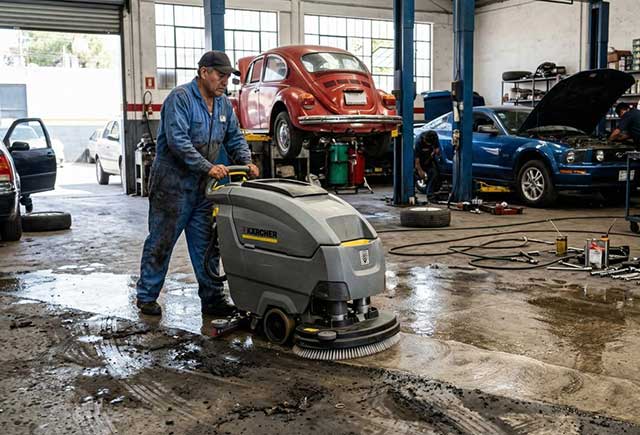
For large industrial floors, a mechanical scrubber may provide more consistent results than manual cleaning.
5. Remove Cleaning Residue and Dry the Floor
After degreasing, collect the cleaning solution and loosened contamination using suitable equipment.
If the cleaning product requires rinsing, follow its instructions and collect the resulting wastewater appropriately. Do not discharge oily wastewater or chemical cleaning residues into storm drains.
The floor should be left clean and sufficiently dry before workers return to the area.
A floor that looks clean but still has a slippery detergent or oil film can remain a serious safety hazard. Use warning signs or temporary barriers until the surface is safe for normal use.
How to Prevent Grease from Accumulating on Workshop Floors
Regular maintenance is more efficient than repeatedly dealing with heavy oil contamination.
In automotive workshops, manufacturing facilities, and machinery maintenance areas, several simple practices can reduce floor-cleaning requirements.
Inspect machinery and equipment regularly. Check hydraulic connections, lubrication points, oil containers, and equipment seals for leaks. Repairing small leaks early can prevent larger spills.
Use drip trays and collection containers. Place suitable trays beneath equipment or maintenance areas where oil leakage is more likely to occur.
Keep spill-control materials accessible. Store absorbent pads, spill kits, cleaning tools, and suitable protective equipment near areas with a higher risk of oil contamination.
Establish a routine cleaning schedule. Remove accumulated dirt and minor grease residues before they become difficult to manage. High-traffic maintenance areas may require more frequent inspections.
Train employees in spill response. Workers should understand how to isolate a spill, select suitable absorbents, use cleaning chemicals safely, and report incidents.
These measures help maintain a cleaner working environment while reducing the time and resources required for industrial floor maintenance.
Where Industrial Cleaning Wipes Fit into Workshop Maintenance
Industrial floor cleaning and equipment wiping are related tasks, but they require different cleaning methods.
A floor degreaser, absorbent pad, and mechanical scrubber are generally more appropriate for larger floor areas and substantial oil spills. Pre-moistened industrial wipes, on the other hand, are useful for smaller cleaning tasks involving tools, compatible equipment surfaces, and localized grease residues.
For example, maintenance technicians may need to wipe oil from a tool handle, remove grease from an equipment exterior, or clean a small amount of residue after servicing machinery.
In these situations, industrial degreasing wipes offer a convenient ready-to-use option. The cleaning formula and nonwoven material can be selected according to the intended surface and contamination.
The cleaning mechanism also depends on the combination of the wipe substrate and formulation. For a closer explanation, see our guide on how industrial wipes remove grease and grime.
It is equally important to distinguish surface-cleaning wipes from hand-cleaning products. Industrial surface degreasers should never be used on workers’ skin unless the product is specifically formulated and approved for that purpose. For personal cleaning after workshop tasks, purpose-designed industrial hand wipes are a separate product category.
Choosing the right cleaning method for each task helps prevent unnecessary chemical exposure and improves workplace cleaning efficiency.
Frequently Asked Questions
What is the best way to remove heavy grease from a workshop floor?
Start by containing the spill and absorbing excess oil. Apply a floor-compatible industrial degreaser according to its instructions, scrub where necessary, and collect the loosened residue. For larger spills or heavily contaminated areas, use suitable industrial spill-control and floor-cleaning equipment.
How do you remove old oil stains from concrete floors?
Old oil stains may require a concrete-compatible degreaser and repeated scrubbing. Because concrete is porous, some oil can penetrate beneath the surface. Deeply absorbed stains may not disappear completely after one treatment.
Can wet wipes clean industrial workshop floors?
Wet wipes are suitable for localized cleaning tasks involving small amounts of residue on compatible surfaces. They are not a replacement for absorbent materials, floor degreasers, or mechanical equipment when dealing with large spills or extensive floor contamination.
How can workshops prevent grease from building up on floors?
Regular equipment inspections, drip trays, accessible spill kits, routine cleaning, and employee training can help reduce oil accumulation. Addressing leaks early is generally easier than removing old, deeply embedded grease stains.
How should oily absorbent materials be disposed of?
Used absorbents, rags, and cleaning materials should be collected and assessed according to the type of substance they contain and applicable local waste regulations. Materials contaminated with used oil, solvents, or other hazardous substances may require special handling and disposal.
Supporting Cleaner and Safer Industrial Work Environments
Keeping a workshop floor clean requires a combination of spill prevention, appropriate degreasing products, effective absorbent materials, and regular maintenance.
For equipment and localized cleaning tasks, the right industrial wiping product can also make daily maintenance more convenient.
SYWIPE supports OEM and private-label development of industrial cleaning wipes, including customized materials, cleaning formulations, sheet dimensions, and packaging options for different professional applications.
If you are developing an industrial cleaning wipes product for your brand or distribution business, contact SYWIPE to discuss your product requirements.