How to Choose Makeup Remover Wipes?
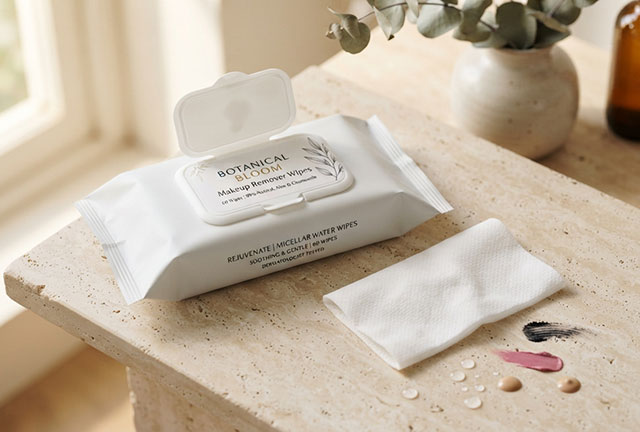
Developing a successful makeup remover wipe requires more than selecting a cleansing lotion and a soft piece of fabric. The finished product must deliver consistent makeup removal, maintain a comfortable skin feel, and perform reliably throughout its intended shelf life.
For beauty brands, retailers, and importers, these requirements make product selection an important part of the purchasing process. Working with an experienced wet wipes manufacturer helps buyers evaluate formulation options, nonwoven materials, sheet specifications, and packaging before committing to mass production.
So, how should you evaluate makeup remover wipes before choosing a product or manufacturing partner? The answer starts with understanding the technical details behind the finished wipe.
Evaluate Makeup Removal Performance First
The most important requirement is whether the wipe can remove the type of makeup it is designed for.
Different cosmetics create different cleansing challenges. Lightweight foundation and everyday face makeup may be easier to remove than waterproof mascara, long-wear lipstick, or transfer-resistant foundation.
A product designed for general facial cleansing should not automatically be considered suitable for removing heavy makeup.
When evaluating samples, consider several performance factors.
Makeup removal efficiency: Check how effectively the wipe removes foundation, lipstick, sunscreen, and other cosmetic residues within a reasonable number of wiping motions.
Residue after cleansing: Observe whether the wipe leaves excessive oily or sticky residue on the skin.
Sheet integrity: The wipe should remain intact during normal use rather than stretching excessively, tearing, or losing its structure.
Cleansing consistency: The formulation should be distributed evenly so that different wipes from the same pack deliver a consistent experience.
For products targeting waterproof cosmetics, conduct separate performance evaluations using representative waterproof makeup products. Do not rely on general cleansing tests to support waterproof removal claims.
Choose a Formula That Matches the Target Product
The cleansing formula determines how makeup is loosened and removed from the skin. It also influences the wipe’s overall texture, residue, preservation requirements, and compatibility with the nonwoven substrate.
For brands developing makeup remover wipes, the formula should be selected according to the intended application rather than simply following popular ingredient trends.
Surfactants and Cleansing Ingredients
Surfactants help loosen cosmetic residues, oil, and surface impurities so they can be lifted away by the wipe.
Different surfactant systems offer different cleansing characteristics. Their selection should consider cleansing efficiency, skin compatibility, formulation stability, and the intended product positioning.
Solubilizers and Emollients
Some makeup remover formulations include solubilizers to help incorporate oil-based components into water-based systems.
Emollients may also be used to improve the skin feel after cleansing.
The balance between cleansing ingredients and conditioning components is important. A formula that leaves excessive residue may not suit consumers who prefer a lightweight finish, while a formula that removes makeup too aggressively may create an uncomfortable cleansing experience.
Humectants and Moisturizing Ingredients
Glycerin and other humectants are commonly used in personal care formulations to help retain moisture.
Other ingredients may be selected to support the desired product characteristics.
However, ingredient selection should be based on the complete formulation. Including glycerin, aloe vera, or another familiar ingredient does not automatically establish a specific moisturizing or soothing benefit.
Preservative Compatibility
Because makeup remover wipes contain water, an appropriate preservation system is essential.
The preservation system must be compatible with the formulation, substrate, packaging, manufacturing process, and intended storage conditions.
Finished products should undergo suitable microbiological testing and stability evaluation before commercial release.
Select the Right Nonwoven Material
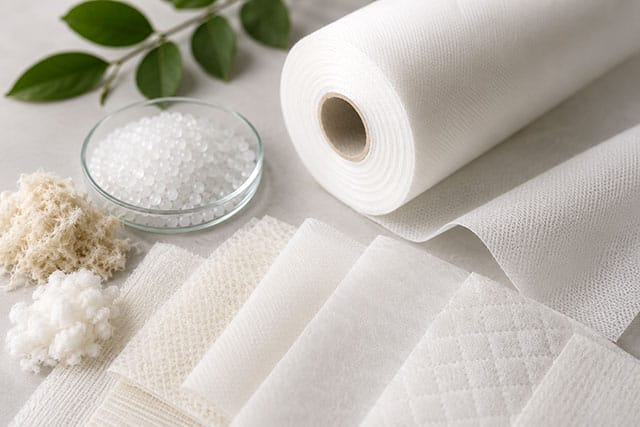
The nonwoven substrate is another important consideration when developing makeup remover wipes.
It directly affects softness, liquid absorption, surface texture, wet strength, and the way the cleansing lotion is released during use.
Different materials can produce noticeably different finished products, even when the same cleansing formula is used.
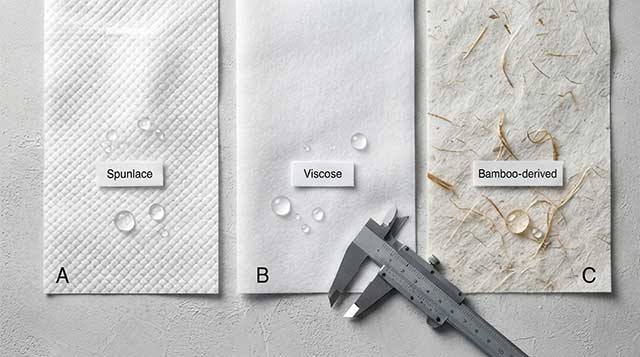
Spunlace Nonwoven
Spunlace nonwoven is widely used in personal care wipes because it can provide a soft surface, flexibility, and good absorbency.
It is available in different fabric weights and fiber compositions, allowing manufacturers to adjust the material according to the intended product specifications.
For makeup remover wipes, buyers should evaluate whether the selected fabric feels comfortable during repeated wiping and maintains sufficient strength when wet.
Viscose-Based Nonwoven
Viscose is a regenerated cellulose fiber commonly used in wet wipes.
Its softness and liquid absorption characteristics make it suitable for many facial cleansing applications.
The final performance depends on the fiber composition, fabric construction, and manufacturing specifications.
Bamboo-Derived Materials
Bamboo-derived fibers are another option for brands interested in plant-based material positioning.
However, buyers should distinguish between different bamboo processing methods and verify the actual composition of the finished substrate.
Environmental claims should be supported by appropriate evidence. Bamboo-derived viscose should not automatically be marketed as mechanically processed natural bamboo fiber or as fully biodegradable without supporting documentation.
For a broader comparison of available substrates, review SYWIPE’s wet wipes materials options.
Determine the Right Product Specifications
Once the formula and material have been selected, the next step is to establish the physical specifications of the finished product.
These details influence consumer experience, production efficiency, packaging requirements, and overall product cost.
Sheet Size
Sheet dimensions should match the intended application.
Larger sheets may offer more coverage for full-face makeup removal, while smaller formats may be suitable for compact travel products or targeted cleansing applications.
The selected dimensions should also work with the folding method and packaging design.
Fabric Weight
Fabric weight, generally expressed in grams per square meter (GSM), affects the thickness and physical characteristics of the wipe.
A heavier fabric may provide a more substantial feel, but higher GSM does not automatically mean better cleansing performance.
The appropriate specification should balance softness, strength, absorbency, and production cost.
Lotion Loading
The amount of cleansing liquid absorbed by each wipe is another important specification.
Insufficient lotion may result in uneven moisture distribution and reduced cleansing comfort. Excessive lotion may cause dripping, unnecessary material consumption, or packaging challenges.
The target lotion loading should be evaluated together with the substrate’s absorption characteristics and the product’s intended use.
Sheet Count and Folding Format
The number of wipes per pack influences retail positioning and packaging dimensions.
Common configurations include compact travel packs and larger everyday-use packs.
Folding methods should also be considered because they affect dispensing convenience, sheet presentation, and packaging compatibility.
Evaluate Packaging and Product Stability
Packaging is not simply a branding decision. It plays an important role in protecting the moisture content and maintaining product quality during storage and distribution.
The most suitable packaging format depends on the target market, retail channel, sheet count, and product positioning.
Resealable soft packs are widely used for everyday retail products. A reliable resealing system helps reduce moisture loss after opening.
Travel packs provide a compact format for consumers who need smaller quantities.
Individual sachets are suitable for single-use applications and promotional samples.
Canisters and tubs may be considered for specific product concepts where dispensing and storage requirements justify the format.
When evaluating packaging, pay attention to sealing performance, material compatibility, opening and closing convenience, and protection against moisture loss.
Product stability should also be assessed under appropriate storage conditions. Changes in temperature, packaging integrity, and formula compatibility can affect the finished product over time.
Brands developing customized products can review available packaging options before finalizing their specifications.
What Should Buyers Check Before Choosing a Manufacturer?
A suitable manufacturing partner should be able to support more than basic wet wipe production.
For makeup remover wipes, buyers should assess the manufacturer’s ability to coordinate formulation, material selection, production, quality control, and packaging.
Formulation Development Capability
Ask whether the manufacturer can support different cleansing formula requirements, including fragrance preferences, ingredient restrictions, and target product positioning.
The supplier should also be able to explain how formula changes may affect product stability and compatibility with the selected nonwoven material.
Material Selection and Customization
A manufacturer should provide clear information about available substrates, fiber compositions, fabric weights, and sheet specifications.
Request samples of different materials when necessary rather than selecting a substrate based only on its name.
Quality Control Procedures
Ask how the manufacturer manages incoming materials, lotion preparation, liquid distribution, production hygiene, sealing, and finished-product inspection.
Relevant documentation and test results should be available according to the product requirements and applicable regulations in the destination market.
Sampling and Mass Production Consistency
A product sample is useful for evaluating initial performance, but mass production must maintain the approved specifications.
Before placing a large order, establish clear acceptance criteria for the formula, material, dimensions, lotion loading, packaging, and finished-product quality.
The approved sample and final production specifications should serve as the reference for subsequent manufacturing batches.
A Practical Checklist Before Placing an Order
Before confirming a makeup remover wipes project, buyers should review the following points:
The target makeup types and cleansing performance are clearly defined.
The cleansing formula has been evaluated and approved.
The nonwoven composition and fabric weight are confirmed.
Sheet dimensions and folding specifications are finalized.
Lotion loading and moisture distribution are checked.
Packaging materials and sealing performance are evaluated.
Stability and microbiological requirements are established.
Product claims are supported by suitable evidence.
The approved sample and mass production specifications are aligned.
Minimum order quantity, lead time, and shipping requirements are confirmed.
This process helps reduce misunderstandings between brands and manufacturers and provides a clearer basis for product approval.
Developing Private Label Makeup Remover Wipes
For beauty brands planning to launch their own makeup remover wipes, product customization should begin with a clear understanding of the target market and desired product positioning.
Some brands prioritize a lightweight daily cleansing formula, while others focus on waterproof makeup removal, fragrance-free formulations, or alternative nonwoven materials.
These differences influence formula development, material selection, packaging, and manufacturing costs.
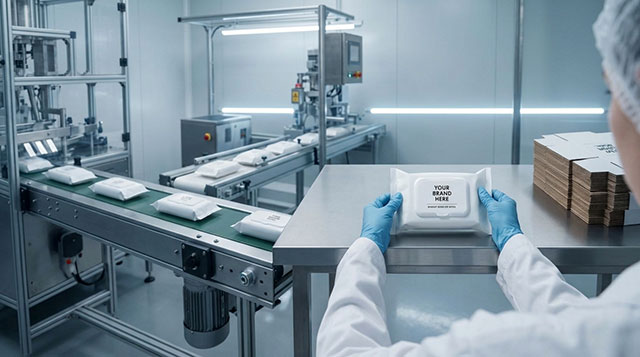
SYWIPE supports customized wet wipes development for brands, retailers, and distributors. Depending on project requirements, customization can cover cleansing formulations, nonwoven substrates, sheet dimensions, sheet counts, packaging formats, and private label branding.
Our private label wet wipes service provides a starting point for discussing product specifications and manufacturing requirements.
You can also review our makeup remover wipes product range when considering a new beauty and personal care project.
Frequently Asked Questions
What is the most important factor when choosing makeup remover wipes?
Makeup removal performance should be the first consideration. The formula and substrate should work together to remove the intended cosmetics while maintaining suitable softness, wet strength, and cleansing comfort.
Which material is suitable for makeup remover wipes?
Spunlace nonwoven and viscose-based materials are common options. The best choice depends on softness, absorbency, fabric weight, wet strength, cost, and the product’s intended application.
Does higher GSM always mean better makeup remover wipes?
No. Higher GSM generally means more fabric weight per unit area, but it does not automatically indicate better cleansing performance. The substrate structure, fiber composition, and formulation also influence the finished product.
How can brands test makeup remover wipes before mass production?
Brands should evaluate makeup removal performance, residue, sheet integrity, moisture distribution, skin feel, packaging compatibility, and product stability. Testing should use representative cosmetics that match the product’s intended claims.
Can makeup remover wipes be customized for private label brands?
Yes. Private label products can be customized through formula selection, nonwoven material, sheet dimensions, sheet count, packaging, and branding. Final specifications should be confirmed through sample approval.
What information should buyers provide when requesting a quotation?
Buyers should provide the intended application, target formula, material preferences, sheet size, GSM, sheet count, packaging format, estimated order quantity, and destination market. These details help manufacturers assess the project and prepare a more accurate quotation.
Conclusion
Choosing makeup remover wipes is a product development decision that requires careful evaluation of formulation, substrate, physical specifications, packaging, and manufacturing consistency.
For buyers, the most reliable approach is to assess the complete finished product rather than focusing on a single ingredient, material, or specification.
By defining product requirements early, testing samples, and working with a manufacturer capable of supporting customization and quality control, beauty brands can establish a stronger foundation for a successful makeup remover wipes product.