What Wipes Are Safe for Dogs and Cats?
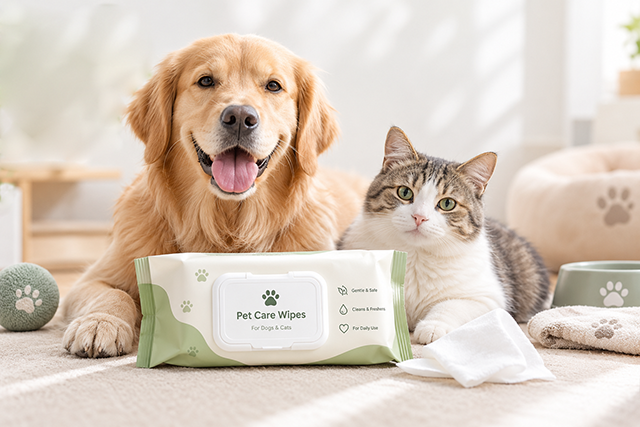
Not all wet wipes are suitable for pets. The safest choice is usually a wipe specifically formulated for dogs or cats, with a gentle formula, suitable nonwoven material, and clear instructions for its intended use.
Pet wipes can be useful for cleaning paws after a walk, removing dirt from the coat, freshening up between baths, or caring for specific areas such as the ears, eyes, and teeth. However, the right wipe depends on where it will be used and what your pet needs.
For brands developing pet hygiene products, pet care wipes can also be customized by material, formula, size, and packaging for different applications.
What Makes a Pet Wipe Safe?
A pet wipe should be designed around the animal’s intended use rather than simply adapted from a human cleansing wipe.
When choosing wipes for dogs or cats, pay attention to four basic factors: the formula, wipe material, intended application, and packaging.
A suitable formula should be gentle enough for the intended area and should not contain unnecessary ingredients that could cause irritation. The wipe itself should also be soft enough for the application while providing enough strength to clean effectively.
It is equally important to check the product label. A wipe designed for cleaning a dog’s paws is not necessarily suitable for cleaning around the eyes or for oral care.
For products intended for sensitive areas, the formulation and testing requirements should be considered during product development rather than relying on a general-purpose wipe.
Which Ingredients Should You Look For?
There is no single ingredient that makes a pet wipe safe for every dog or cat. Instead, the overall formulation should match the intended application.
Depending on the product concept, pet wipes may be developed with ingredients such as purified water, aloe vera, chamomile, glycerin, vitamin E, or other skin-conditioning ingredients.
For example, a grooming wipe intended for paws and fur may focus on gentle cleansing and moisture retention, while a wipe designed for the eye area requires a formulation and material suitable for more delicate use.
Fragrance is another consideration. Some pet owners prefer fragrance-free products, particularly when developing products for pets with sensitive skin. If fragrance is used, the formulation should be developed specifically for the intended pet-care application.
For commercial pet products, formula selection should also consider stability, microbiological quality, packaging compatibility, and the requirements of the target market. SYWIPE provides wet wipes product development support covering formulation evaluation, pH balancing, microbiological testing, stability assessment, and packaging compatibility.
What Ingredients Should You Avoid?
The answer depends on the animal, the application, and the formulation, but pet wipes should not simply be judged by whether an ingredient sounds “natural.”
Avoid products that provide unclear ingredient information or are not intended for animal use.
Strong fragrances, harsh cleansing agents, and ingredients that may cause irritation can be inappropriate for sensitive areas. Products containing alcohol or other strong cleansing systems may also be unsuitable for routine grooming when a gentler formulation is more appropriate.
Cats require particular attention because they frequently groom themselves by licking their fur. Any residue left on the coat may therefore be ingested.
For this reason, it is better to choose wipes specifically developed for pets and follow the manufacturer’s instructions instead of assuming that a human cleansing wipe is automatically suitable for cats or dogs.
Are Baby Wipes Safe for Dogs and Cats?
Baby wipes are designed for human skin, so they should not automatically be considered suitable for pets.
Dogs and cats have different grooming habits and product-use requirements from humans. Cats, in particular, may lick their fur after a wipe has been used.
Some baby wipes may contain fragrances, cleansing ingredients, preservatives, or other components that are unnecessary for pet grooming. Even when a product is gentle enough for babies, that does not mean it has been formulated or tested for animals.
If you need wipes for routine pet care, a product specifically labeled and formulated for dogs or cats is generally a more appropriate choice.
Choosing the Right Wipe for Different Areas
The best pet wipe depends on what you are trying to clean.
Paws
Paws often collect dirt, dust, mud, and outdoor residues. A paw wipe should provide enough strength for effective cleaning while remaining comfortable for regular use.
For brands developing a broader grooming range, dog grooming wipes can be customized for coat and paw cleaning, including different materials, sheet sizes, moisture levels, formulas, and packaging formats.
Coat and Skin
General grooming wipes are useful for quick cleaning between baths or after outdoor activities.
A soft nonwoven substrate can help provide a comfortable wiping experience, while the formulation can be adjusted according to the intended grooming application.
For long-haired dogs and cats, the wipe should be strong enough to handle the coat without easily tearing during use.
Eyes and Ears
The area around the eyes and ears requires more care than general body cleaning.
Do not use a general-purpose grooming wipe around the eyes simply because it is labeled “gentle.” Products intended for sensitive areas should be developed specifically for that purpose.
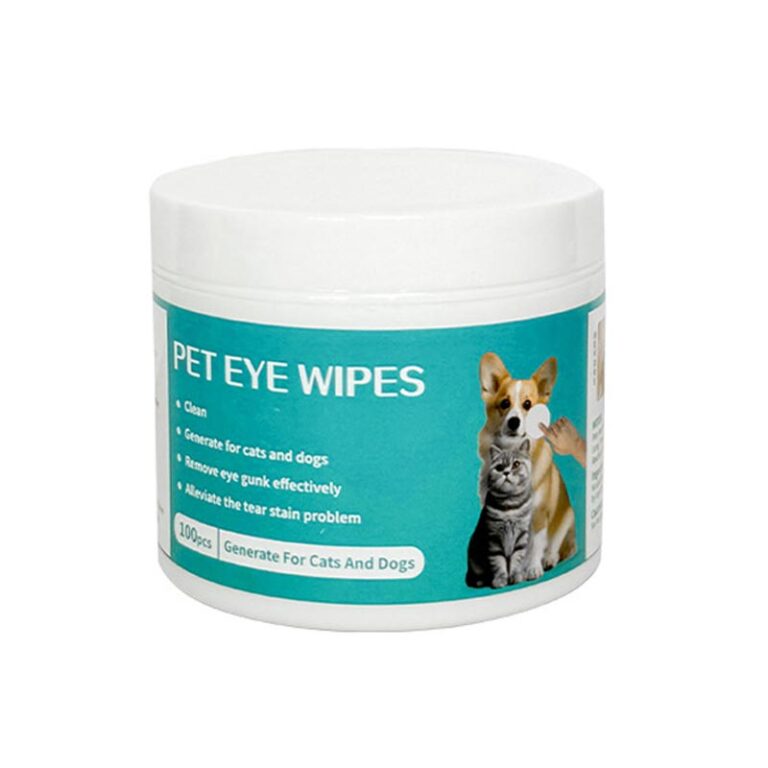
Dedicated pet ear and eye wipes can be developed with suitable materials and formulations for these applications.
When cleaning around the eyes, avoid direct contact with the eyeball and stop using the product if irritation or discomfort occurs.
Teeth and Gums
Oral care requires a different type of wipe because the product is used inside the mouth.
Dental wipes are designed for cleaning teeth and gum areas and may be used as part of a regular oral-care routine.
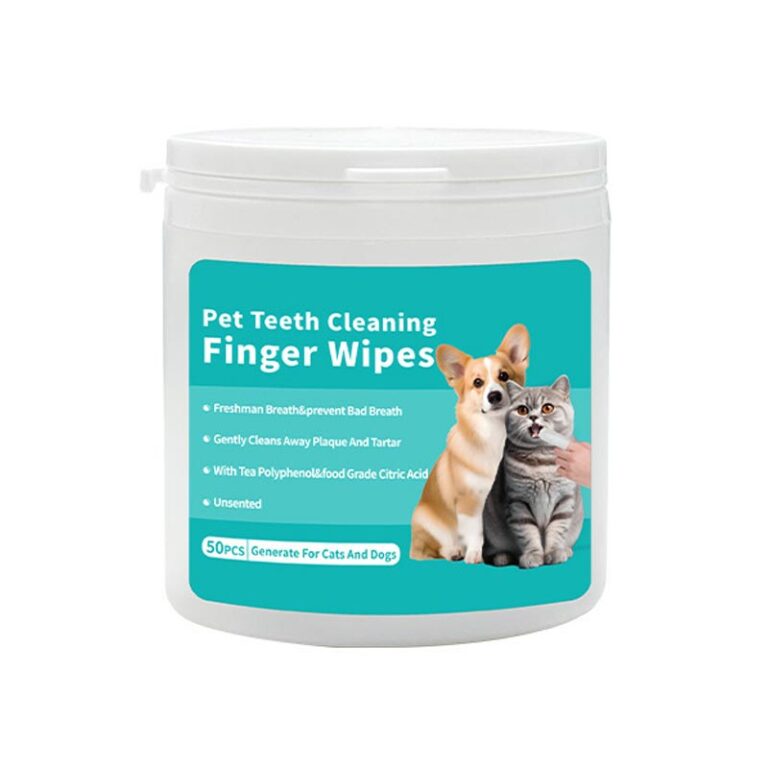
For dogs and cats, pet teeth wipes for cats and dogs can be developed with pet-specific formulas, soft materials, and packaging formats suited to daily oral care.
A dental wipe should not be treated as the same product as a general grooming wipe.
What Wipe Material Is Best for Pets?
The right material depends on the application.
Soft spunlace nonwoven fabric is commonly used for pet grooming products because it can provide a balance of softness, strength, and absorbency. Other options may include bamboo fiber, viscose, cotton fiber, or blended nonwoven materials.
For an eco-focused product line, biodegradable materials can also be considered. However, “biodegradable” does not automatically mean that a wipe is suitable for every pet or every application. Material performance and formula compatibility still need to be evaluated.
The material can also influence the final product’s texture, moisture retention, strength, and overall wiping performance.
How to Use Pet Wipes Safely
Even a well-formulated pet wipe should be used according to its intended purpose.
Before using a new product, check the label and follow the manufacturer’s directions. Use a separate area of the wipe when cleaning different parts of the body, and avoid wiping irritated or injured skin unless the product is specifically intended for that application.
When cleaning paws, gently wipe between the pads and toes without excessive rubbing.
For the face, use extra care around the eyes, nose, and mouth. Specialized wipes should be used when the product is intended for these sensitive areas.
After introducing a new wipe, watch your pet for signs of discomfort such as redness, excessive scratching, licking, or other unusual reactions. If a reaction occurs, discontinue use and consult a veterinarian when appropriate.
How Should Brands Develop Safe Pet Wipes?
For pet-care brands, safety begins before manufacturing.
The product concept should first define the target animal, application area, formula requirements, wipe material, sheet size, moisture level, packaging, and intended market.
A grooming wipe for dogs may require a different product specification from a cat eye wipe or a dental wipe. These differences should be reflected in the formulation, substrate, packaging, and product testing.
At SYWIPE, pet wipe projects can be developed around customized materials, formulas, sheet specifications, packaging formats, and private label requirements. Product development can include formula evaluation, microbiological testing, stability assessment, and liquid-to-nonwoven compatibility testing.
This approach allows brands to develop a product around a specific pet-care application instead of using one general-purpose formula for every need.
Frequently Asked Questions
What wipes are safest for dogs and cats?
Pet-specific wipes formulated for dogs or cats are generally the most appropriate choice. Select the product according to the intended application, such as grooming, paws, eyes, ears, or oral care.
Can I use baby wipes on my dog or cat?
Baby wipes are made for human skin and should not automatically be assumed to be suitable for pets. Pet-specific wipes are a better choice, especially for cats that may lick their fur after cleaning.
Are pet wipes safe for daily use?
It depends on the formula, intended application, and manufacturer’s instructions. A gentle grooming wipe may be suitable for routine cleaning, while specialized wipes for sensitive areas should be used according to their specific directions.
What should I look for in dog grooming wipes?
Look for a pet-specific formula, suitable nonwoven material, clear ingredient information, and a product designed for the area you want to clean. For sensitive pets, fragrance-free or mild formulations may be preferred.
Are dog grooming wipes and pet eye wipes the same?
No. General grooming wipes are designed for areas such as the coat and paws, while eye wipes are developed specifically for the delicate area around the eyes. The material and formulation should match the intended application.
Choose the Right Pet Wipe for the Right Application
Safe pet wipes are not simply about finding the softest material or the longest ingredient list. The most important consideration is whether the formula, wipe material, and product design are appropriate for the animal and the intended use.
For pet brands, this also means developing each product around a clear application rather than treating grooming, paw care, eye care, and oral care as the same product.
SYWIPE supports customized pet wipe development for dogs and cats, from material and formula selection to packaging and private label production. Share your target application and product requirements to discuss the right specification for your market.