Biodegradable vs. Flushable Wipes: Key Differences
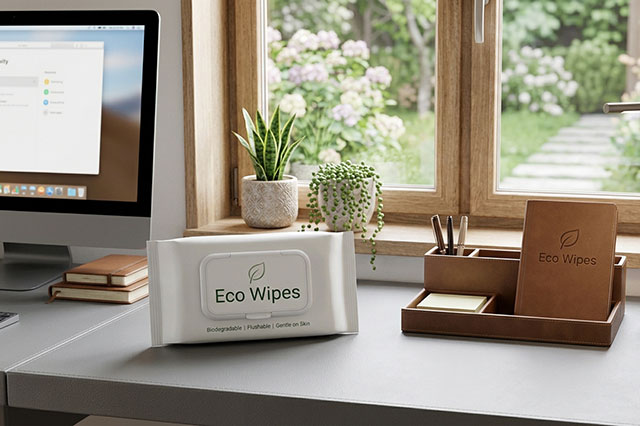
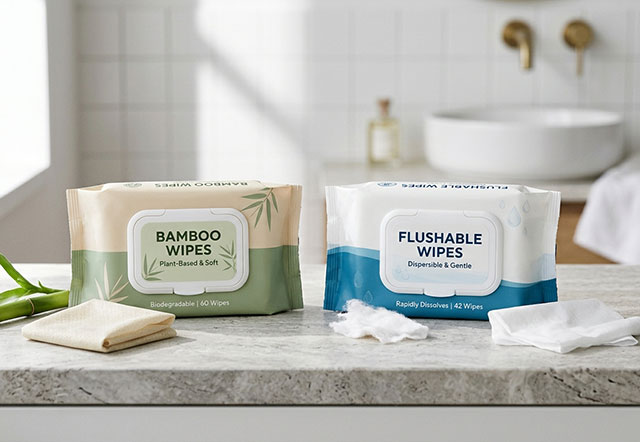
Biodegradable and flushable wipes are often marketed as eco-friendly alternatives to conventional wet wipes. However, these two terms describe different product characteristics. A wipe can be biodegradable without being suitable for flushing, and a plant-based material does not automatically meet flushability requirements.
For consumers, understanding the difference helps avoid misleading environmental claims and improper disposal. For retailers, importers, and private label brands, it is equally important when developing biodegradable wet wipes or selecting flushable wet wipes for a product range.
The key is to evaluate the finished wipe, including its fiber composition, construction, and performance under relevant testing conditions, rather than relying on a single marketing claim.
What Does Biodegradable Mean for Wet Wipes?
Biodegradability refers to a material’s ability to be broken down by microorganisms into simpler substances under specific environmental conditions.
For wet wipes, the result depends on several factors:
Fiber composition: Cellulose-based materials, such as wood pulp, cotton, and certain viscose fibers, are commonly considered for biodegradable wipe applications.
Material processing: Fiber treatments, binders, and other additives can influence how a finished material breaks down.
Environmental conditions: Temperature, moisture, oxygen availability, microorganisms, and the disposal environment all affect biodegradation.
Product construction: The substrate, lotion, and other components should be considered when evaluating the complete product.
A wipe described as biodegradable should therefore have supporting evidence that identifies the test method and conditions. A general statement that a material is plant-based or naturally derived is not sufficient to establish its biodegradability.
It is also important to distinguish between biodegradability and compostability. A biodegradable wipe is not necessarily suitable for home composting or industrial composting. Those claims require separate evidence under the relevant conditions.
Are Biodegradable Wipes Always Flushable?
No. Biodegradability does not automatically mean a wet wipe is flushable.
The two properties address different questions:
Biodegradability: Can the material break down through biological processes under specified conditions?
Flushability: Can the finished product pass through toilets and wastewater systems while meeting relevant performance and environmental criteria?
For example, a biodegradable wipe made with plant-based fibers may still retain its structure too long after disposal. If it does not disperse appropriately or meet other relevant flushability criteria, it should not be marketed as suitable for flushing.
Similarly, a wipe may be designed for dispersibility without every component necessarily meeting a particular biodegradability claim.
This distinction matters because conventional baby wipes, facial wipes, cleaning wipes, and many general-purpose wet wipes are designed to remain strong during use. That strength can create problems when these products enter drainage systems.
Consumers should follow the disposal instructions on the packaging and local wastewater guidance. If a product is not specifically intended and evaluated for flushing, placing it in a waste bin is the appropriate choice.
What Materials Are Used in Biodegradable and Flushable Wipes?
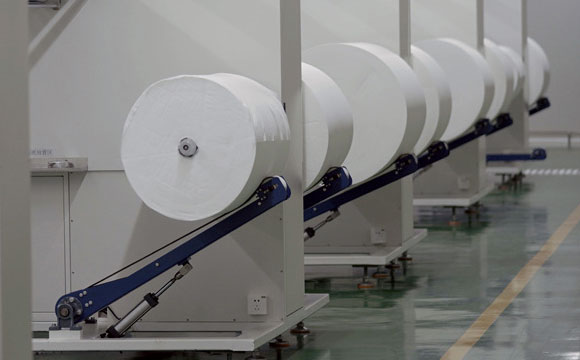
Material selection is one of the most important parts of wet wipe development. Different fibers offer different combinations of softness, absorbency, wet strength, and dispersibility.
Common options include:
Wood Pulp
Wood pulp is a cellulose-based material frequently considered for flushable and toilet tissue applications. It can provide a suitable starting point for developing dispersible wipe substrates, depending on fiber processing and sheet construction.
Viscose
Viscose is a regenerated cellulose fiber derived from cellulose sources. It offers softness and absorbency and is used in different personal care and hygiene wipe applications. Its suitability for a particular flushable product depends on the complete substrate construction and applicable test results.
Bamboo Fiber
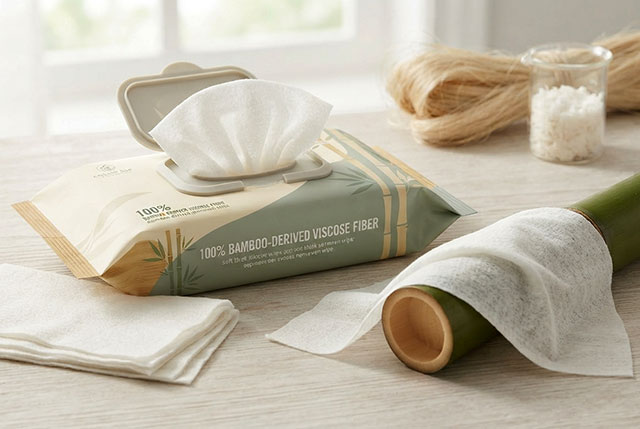
Bamboo-derived fibers are used in biodegradable wipe development because of their plant-based origin. However, bamboo content alone does not prove that a finished wipe is biodegradable under a particular standard or suitable for flushing.
Cotton
Cotton is a natural cellulose fiber valued for its softness and absorbency. It can be considered for biodegradable wipe applications, although its performance and disposal suitability depend on the finished product design.
For brands comparing substrates, GSM, sheet texture, fiber composition, and material combinations should all be evaluated together. SYWIPE provides different wet wipes materials and packaging options for product development.
How Are Flushability Claims Tested?
Flushability is not established simply by placing a wipe in water and observing whether it breaks apart.
Recognized industry frameworks evaluate how a finished product behaves under different conditions relevant to toilet disposal and wastewater infrastructure.
Two important references are:
INDA/EDANA GD4
The fourth edition of the Guidelines for Assessing the Flushability of Disposable Nonwoven Products provides testing methods and a labeling framework for evaluating flushability. It addresses the compatibility of disposable nonwoven products with wastewater infrastructure.
IWSFG Flushability Specifications
The International Water Services Flushability Group (IWSFG) provides a separate framework consisting of three Publicly Available Specifications:
PAS 1: Criteria for recognition as a flushable product.
PAS 2: Terms and definitions used in flushability assessment.
PAS 3: Disintegration test methods.
IWSFG PAS 1 addresses five important criteria: environmental protection, toilet and drain line clearance, disintegration, settling, and biodisintegration.
These frameworks are intended to assess the finished product rather than relying on the name or origin of an individual fiber.
In addition, ISO/TS 18671:2026, published in August 2026, provides test methodologies for assessing the compatibility of wet wipes and moist toilet tissue with wastewater collection and treatment systems, together with appropriate labeling.
Manufacturers and buyers should identify which testing framework is relevant to their target market and product requirements. Passing one test should not be presented as automatic compliance with every other framework.
How Can Consumers Identify More Responsible Wipe Products?
Consumers should look beyond words such as natural, green, eco-friendly, or plant-based.
Before purchasing biodegradable or flushable wipes, consider the following:
Check the material description: Look for clear information about the substrate rather than vague environmental language.
Verify biodegradability claims: Check whether the manufacturer identifies the applicable test method and environmental conditions.
Read disposal instructions: A biodegradable claim does not mean the wipe should be flushed.
Look for relevant flushability evidence: If flushing is intended, check whether the finished product has been assessed under an appropriate specification.
Consider packaging: Evaluate the packaging material and overall product design rather than judging sustainability by the wipe substrate alone.
Local wastewater requirements can also differ. For example, California’s AB 818 requires covered non-flushable premoistened wipes manufactured from July 1, 2022, to carry clear “Do Not Flush” labeling. Consumers should follow applicable local disposal requirements even when product marketing uses environmental claims.
What Should Brands Consider When Developing Biodegradable Flushable Wipes?
For wet wipe brands, developing a product that combines biodegradability, suitable cleansing performance, and flushability requires more than choosing a plant-based substrate.
The development process should begin with the intended application and target market.
First, define whether the product is intended for general personal hygiene, moist toilet tissue, or a specific flushable application. This determines the material and performance requirements.
Next, select an appropriate fiber construction and evaluate its softness, absorbency, wet strength, and dispersibility. Formula compatibility should also be considered because the finished wipe includes more than the dry substrate.
Most importantly, establish the applicable testing requirements before making product claims. Relevant evidence should relate to the finished wipe, not simply a raw material supplied by a fiber manufacturer.
Packaging and labeling should clearly communicate the intended disposal method. Environmental claims should be specific, verifiable, and consistent with the product’s actual performance.
For brands developing customized hygiene products, wet wipes product development can include material selection, formula development, packaging design, sample evaluation, and production preparation.
Frequently Asked Questions
Are biodegradable wipes better for the environment?
They may offer advantages depending on their composition, biodegradation conditions, packaging, manufacturing, and disposal route. A biodegradable claim alone does not establish that a product has a lower overall environmental impact.
Are biodegradable wipes safe to flush?
Not necessarily. Biodegradability and flushability are separate properties. Only products specifically developed and appropriately evaluated for flushing should be considered for toilet disposal.
What is the difference between biodegradable and plastic-free wipes?
Biodegradable describes the ability of a material to break down under specified conditions. Plastic-free describes material composition. A product may be plastic-free without meeting a particular biodegradability standard.
Which materials are commonly used for biodegradable flushable wipes?
Wood pulp, viscose, and other cellulose-based fibers may be considered, depending on the intended product and performance requirements. The finished substrate must be evaluated rather than assuming that a particular fiber is automatically flushable.
What should brands request from a flushable wipes manufacturer?
Brands should request detailed substrate specifications, finished-product flushability test results, biodegradability evidence where applicable, formula information, and packaging and labeling details. The documentation should match the actual product being developed.
Develop Biodegradable and Flushable Wipes with SYWIPE
Choosing the right substrate and product construction is essential when developing biodegradable or flushable wet wipes for different markets.
SYWIPE supports OEM and private label wet wipe development, including material selection, customized formulations, packaging options, and production preparation. Share your product requirements with our team to discuss a suitable solution for your brand.