Bamboo vs. Viscose Wet Wipes
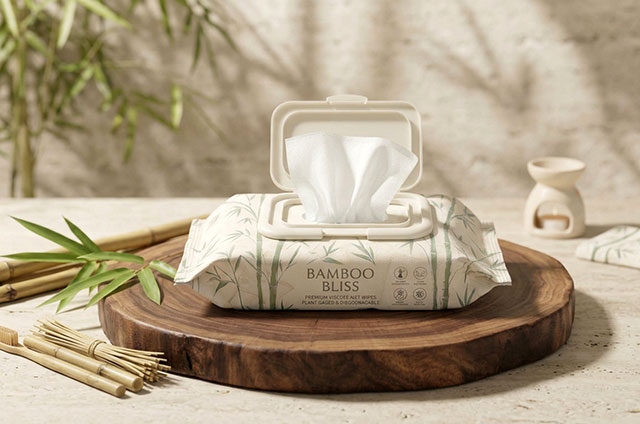
Bamboo and viscose are two cellulose-based materials used in modern wet wipes, particularly in products designed around softness, absorbency, and reduced reliance on conventional plastic fibers. However, they are not interchangeable in every application. For brands developing sustainable personal care products, choosing between them requires a closer look at fiber composition, manufacturing processes, product performance, and environmental claims. Understanding the available wet wipes materials and packaging options can help buyers select a substrate that fits their product requirements and target market.
Why Are Bamboo and Viscose Used in Wet Wipes?
Wet wipes rely on a combination of substrate, liquid formulation, and packaging to deliver consistent performance. The substrate affects how a wipe feels, absorbs moisture, holds together when wet, and performs during use.
Bamboo-derived fibers attract interest from brands seeking plant-based material options. Viscose is a regenerated cellulose fiber valued for its softness and absorbency. Both can be used in personal care and hygiene products, depending on the fabric construction and intended application.
The important distinction is that the name of a raw material alone does not determine the performance or environmental impact of a finished wet wipe. Fiber processing, nonwoven manufacturing, lotion ingredients, and packaging all influence the final product.
Bamboo Fiber vs. Viscose Fiber: What Is the Difference?
Bamboo fiber and viscose are related through their cellulose origins, but the terms describe different things.
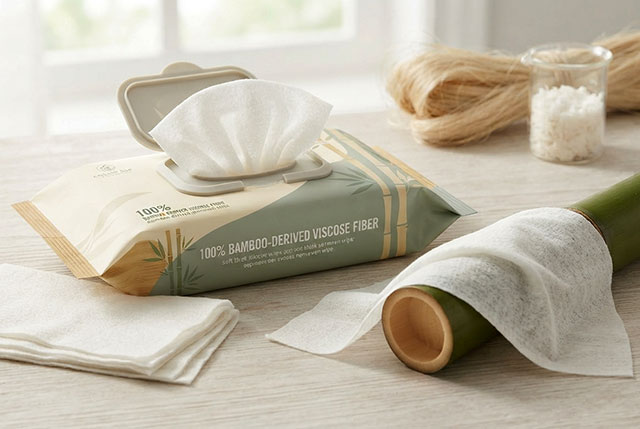
Bamboo fiber generally refers to fiber derived from bamboo. Depending on the manufacturing process, bamboo-based substrates may contain mechanically processed bamboo fibers or regenerated cellulose made from bamboo pulp.
Viscose is a regenerated cellulose fiber produced by dissolving cellulose and reforming it into fibers. The cellulose may come from bamboo or other plant-based sources, such as wood pulp.
This means that a product described as bamboo viscose may use bamboo as its cellulose source while relying on viscose processing to produce the fiber. Buyers should request the actual substrate specification rather than assuming that every bamboo-labeled wipe contains mechanically processed bamboo fiber.
For a broader explanation of substrate composition and common fiber types, see our guide to what wet wipes are made of.
Softness and Absorbency
Softness and absorbency are important considerations for baby wipes, facial cleansing wipes, and other personal care products.
Viscose is widely used in applications that require a smooth texture and effective moisture absorption. Bamboo-derived substrates can also provide a soft feel and good absorbency, depending on the fiber structure, fabric weight, and nonwoven production method.
However, neither material automatically guarantees a softer or more absorbent wipe. Fabric construction, GSM, fiber blends, and the amount of liquid added during manufacturing can all affect performance.
For product developers, the most reliable approach is to compare samples under the conditions in which customers will actually use the wipes. Evaluate the texture, liquid distribution, wet strength, and ability to maintain integrity during wiping.
Durability and Wet Strength
A wet wipe must remain functional after absorbing its liquid formulation. If the substrate tears too easily, stretches excessively, or loses its structure during use, the finished product may not meet customer expectations.
Bamboo-based and viscose-based fabrics can both be engineered for different performance requirements. The appropriate choice depends on fiber composition, fabric weight, bonding method, and the intended application.
For example, baby and facial wipes typically prioritize softness and skin comfort, while household cleaning wipes may require greater durability. Products intended for more demanding cleaning tasks need to be assessed against their specific wet-strength requirements rather than selected solely on the basis of fiber origin.
Brands should request samples and technical specifications before confirming the material for mass production.
Sustainability and Biodegradability
Sustainability is one of the main reasons brands consider bamboo and viscose for wet wipes. Both can be cellulose-based, but their environmental performance depends on more than the original plant source.
Bamboo is a rapidly renewable resource. Viscose is produced from regenerated cellulose, and its environmental profile can vary depending on the source of the pulp, chemical recovery systems, energy use, and manufacturing practices.
Neither the term bamboo nor the term viscose is sufficient proof that a finished wet wipe is biodegradable, compostable, plastic-free, or environmentally preferable in every respect.
The complete product must be considered, including the substrate, lotion, binding materials, and packaging. Brands should request supporting documentation and relevant test results before making environmental claims.
If your product strategy focuses on plant-based substrates and reduced reliance on conventional synthetic fibers, review SYWIPE’s biodegradable wet wipes solutions to understand the available material and customization options.
Which Material Is Better for Different Wet Wipe Applications?
There is no single material that is best for every wet wipe. The right substrate depends on the product’s intended use, performance requirements, price target, and market positioning.
Baby wipes: Softness, liquid retention, wet strength, and compatibility with the lotion are important. Bamboo-derived and viscose-based substrates may both be suitable, depending on the specifications.
Facial cleansing wipes: A smooth texture and comfortable wiping experience are key considerations. Viscose-based fabrics are commonly considered for products where softness and absorbency are priorities.
Personal care wipes: Both materials can be evaluated for body wipes and other hygiene applications. Buyers should consider sheet strength, absorbency, formulation compatibility, and the desired product feel.
Household cleaning wipes: Durability and cleaning performance may take priority over softness. The substrate should be tested with the intended cleaning solution and on the surfaces for which the product is designed.
Sustainability-focused product lines: Bamboo-derived and viscose-based substrates may support a plant-based material strategy. The finished product’s environmental claims should still be supported by appropriate documentation.
For a product-specific recommendation, compare the available materials against your intended use rather than relying on general claims about one fiber being superior to another.
What Should Buyers Check Before Choosing a Substrate?
Before placing an OEM or private label order, brands should confirm several details with their wet wipes manufacturer.
First, request the exact fiber composition and clarify whether the material uses bamboo-derived viscose, another bamboo-based fiber, or a blend. This helps ensure that product descriptions and packaging claims accurately reflect the substrate.
Next, compare GSM, sheet dimensions, texture, absorbency, and wet strength. These specifications influence both the user experience and the finished product’s cost.
The lotion formulation should also be evaluated alongside the substrate. A fabric that performs well with one formula may behave differently with another, so testing the complete wet wipe is more useful than assessing dry fabric alone.
Finally, confirm packaging requirements, production feasibility, minimum order quantities, and any documentation needed for the target market. These details help avoid unexpected changes between sample approval and mass production.
Brands planning to launch or expand their own product lines can also review SYWIPE’s private label wet wipes services for information about product customization and branded packaging.
Frequently Asked Questions
Are bamboo wet wipes better than viscose wet wipes?
Not necessarily. Both materials can offer softness and absorbency. The better choice depends on the fiber composition, fabric construction, wet strength, product application, cost, and environmental requirements.
Is bamboo viscose the same as natural bamboo fiber?
No. Bamboo viscose is regenerated cellulose produced from bamboo-derived pulp. Other bamboo-based fibers may be manufactured through different processes. Buyers should confirm the actual fiber type with their supplier.
Are bamboo and viscose wet wipes biodegradable?
The cellulose-based substrate may have biodegradable properties, but the performance of the finished wipe depends on its complete composition and the conditions under which it is tested. Relevant test reports should support any biodegradability or compostability claim.
Which material is suitable for baby wipes?
Both bamboo-derived and viscose-based substrates may be suitable, depending on softness, absorbency, wet strength, and compatibility with the lotion. The complete product should be evaluated for its intended use and applicable safety requirements.
Can bamboo and viscose wet wipes be customized for private label brands?
Customization may include substrate specifications, sheet size, lotion formulation, sheet count, packaging format, and branded artwork. Availability and minimum order quantities depend on the selected product and production requirements.
Develop the Right Wet Wipe for Your Market
Choosing between bamboo and viscose is not simply a matter of selecting a plant-based material. Brands need to balance product performance, manufacturing feasibility, cost, and substantiated environmental claims.
SYWIPE supports wet wipes product development with substrate selection, formula customization, packaging options, and OEM and private label manufacturing. Contact our team to discuss your target application and identify a suitable material for your next wet wipes project.