How to Prevent Glasses from Fogging Up with a Mask?
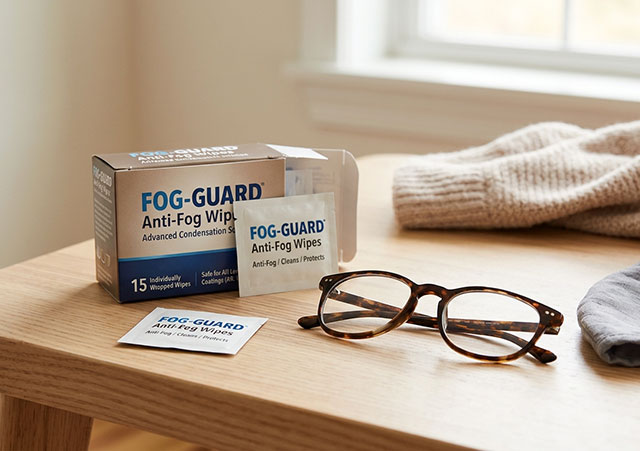
Glasses often fog up when wearing a mask because warm, moist air escapes around the nose and reaches cooler lens surfaces, causing condensation that temporarily blurs vision. Improving the fit around the nose and adjusting the position of your glasses can help reduce fogging. When these measures are not enough, anti-fog wipes for glasses may provide additional support when used according to the product instructions and lens compatibility requirements.
This problem affects people who wear prescription glasses, sunglasses, protective eyewear, and safety glasses. Although fogging cannot always be eliminated, understanding its causes and choosing appropriate solutions can make wearing a mask more comfortable and help maintain clearer vision.
Why Do Glasses Fog Up When Wearing a Mask?
The main cause is condensation. Exhaled air contains moisture, and when warm air comes into contact with a cooler lens surface, water vapor condenses into tiny droplets. These droplets scatter light, creating the cloudy appearance commonly associated with fogged glasses.
Mask fit plays an important role. If there are gaps around the nose or upper cheeks, warm air can escape upward toward the lenses. Changes in temperature, high humidity, physical activity, and moving between indoor and outdoor environments can make fogging more noticeable.
The issue is particularly frustrating when glasses fog up repeatedly while walking, commuting, working, or entering a warm building. Understanding where the moisture comes from is the first step toward reducing it.
How to Reduce Glasses Fogging When Wearing a Mask
1. Improve the Fit Around the Nose
Start by checking the fit of your mask. If it has an adjustable nose bridge, shape it gently to follow the contours of your nose and reduce gaps along the upper edge.
A closer fit can help direct exhaled air away from your glasses. However, the mask should remain comfortable and continue to provide its intended level of protection. Follow the manufacturer’s fitting instructions, especially when wearing protective or medical masks.
Avoid modifying a mask in ways that compromise its seal or protective performance.
2. Adjust the Position of Your Glasses
The position of your glasses can affect how warm air moves around the lenses. Depending on your frame design and mask fit, adjusting the glasses slightly may help reduce the amount of exhaled air reaching the lens surfaces.
Your glasses should remain stable and comfortable. Do not position them in a way that obstructs your vision or causes them to slip during movement.
If fogging continues, reassess the fit of both your mask and glasses rather than relying on eyewear adjustments alone.
3. Keep Your Lenses Clean
Fingerprints, skin oils, dust, and residue can reduce optical clarity and make fogged lenses more difficult to see through. Keeping your lenses clean helps maintain clear vision, although ordinary cleaning does not necessarily prevent condensation.
Use a cleaning method appropriate for your lens material and coatings. Avoid rubbing dusty or gritty lenses with a dry cloth, as particles may scratch the surface.
For more guidance, see our article on how to clean eyeglass lenses without scratching.
4. Consider Anti-Fog Wipes for Compatible Lenses
When mask adjustments are not enough, an anti-fog product may help reduce condensation on compatible eyewear.
Anti-fog wipes are formulated to modify how moisture behaves on a lens surface. Depending on the formulation, they may help moisture spread more evenly instead of forming numerous tiny droplets that scatter light.
However, not every lens wipe has anti-fog properties. Ordinary cleaning wipes are primarily designed to remove dirt and fingerprints, while anti-fog products are intended to address condensation.
Before using an anti-fog wipe, check the product instructions and confirm compatibility with your lenses. Some prescription glasses have anti-reflective, scratch-resistant, or other specialized coatings that require particular care.
Follow the specified application and drying instructions. Performance and protection duration vary by product, humidity, handling, and environmental conditions.
For detailed application guidance, read our article on how to use anti-fog wipes for glasses.
5. Choose a Solution for Your Daily Environment
The most suitable approach depends on where and how you wear your glasses.
For daily commuting, improving mask fit may be sufficient in many situations. People who frequently move between cold outdoor conditions and warm indoor spaces may experience recurring condensation because of temperature differences.
For healthcare workers, industrial employees, and people wearing protective eyewear, lens compatibility and unobstructed vision are especially important. Any anti-fog product should be suitable for the specific eyewear and its intended use.
Do not assume that a product designed for ordinary prescription glasses is automatically appropriate for every safety lens, protective coating, or specialized optical surface. Follow the eyewear manufacturer’s recommendations and applicable workplace requirements.
Anti-Fog Wipes and Mask Fit: Which Matters More?
Mask fit and anti-fog products address different parts of the problem.
Improving the fit around the nose helps reduce the amount of warm, moist air escaping toward the lenses. An appropriate anti-fog product works on the lens surface to help reduce the visible effects of condensation.
For many people, addressing the source of the escaping air should come first. An anti-fog product can provide additional support when condensation persists, but it should not replace correct mask fitting or other required protective measures.
The best approach depends on the mask, eyewear, environment, and frequency of fogging. No single solution guarantees completely fog-free lenses in every condition.
Frequently Asked Questions
Why do my glasses fog up immediately when I put on a mask?
Warm, moist air can escape through gaps around the nose and reach the cooler lenses. The moisture condenses into tiny droplets, causing the lenses to appear cloudy. Improving the mask fit may help reduce the problem.
Can anti-fog wipes stop glasses from fogging up with a mask?
Anti-fog wipes formulated for compatible eyewear can help reduce visible condensation. Their effectiveness depends on the product formulation, application, lens compatibility, and environmental conditions.
Do ordinary glasses cleaning wipes prevent fogging?
Not necessarily. Ordinary lens cleaning wipes are generally intended to remove dirt, fingerprints, and smudges. Choose a product specifically formulated for anti-fog performance if condensation is your main concern.
Are anti-fog wipes safe for prescription glasses?
Compatibility varies by product and lens coating. Check the manufacturer’s instructions and consult your eyewear provider if your glasses have specialized coatings.
Why do my glasses still fog up after using an anti-fog product?
Fogging may continue if the product is incompatible with the lenses, has not been applied as directed, or is exposed to conditions beyond its intended performance. Mask fit, humidity, temperature differences, and repeated handling can also affect results.
Final Thoughts
Glasses fogging up when wearing a mask is primarily a condensation problem caused by warm, moist air reaching cooler lens surfaces. Improving the fit around the nose, adjusting eyewear positioning, and keeping lenses clean can help reduce the inconvenience.
When additional protection is needed, an anti-fog product specifically designed for compatible lenses may help. Always check product instructions and lens compatibility before use, particularly for prescription glasses and safety eyewear.
For both everyday users and eyewear professionals, the goal is the same: reduce condensation while maintaining clear vision and protecting the condition of the lenses.