Wet Wipes Manufacturer Guide: How to Choose the Right Partner for Your Brand
The global wet wipes market continues to grow rapidly across baby care, personal hygiene, healthcare, and industrial applications. As demand increases, many brands are entering this space and looking for reliable production partners.
Choosing the right wet wipes manufacturer is one of the most important decisions in building a successful product line. It affects product quality, compliance, pricing, and long-term brand reputation.
If you are currently evaluating a wet wipes manufacturer, understanding how the industry works will help you make better sourcing decisions and avoid unnecessary risks. You can also explore a professional wet wipes manufacturer through our homepage to learn more about OEM and private label solutions.
How to Choose the Right Wet Wipes Manufacturer?
Selecting a manufacturer is not just about finding the lowest price. It is about finding a long-term production partner who can support your brand as it grows.
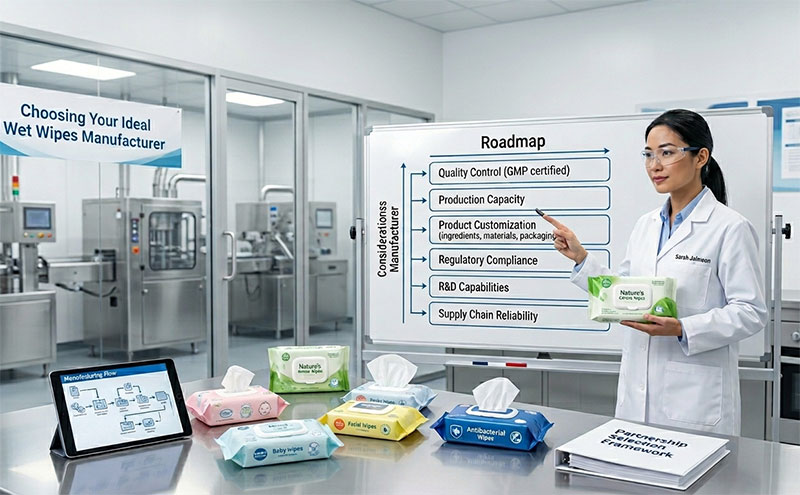
A reliable wet wipes manufacturer should have strong industry experience across multiple product categories such as baby wipes, biodegradable wipes, flushable wipes, and disinfecting wipes. This experience ensures they understand different market requirements and regulatory standards.
Production capacity is another important factor. Some manufacturers are only suitable for small orders, while others can support large-scale global distribution. A stable wet wipes manufacturer should be able to scale production without affecting consistency or delivery timelines.
Customization capability is also essential. Modern brands need differentiation in formulation, fabric selection, and packaging design. A flexible wet wipes manufacturer can help you develop unique products that match your target market positioning.
What Certifications Matter in Wet Wipes Manufacturing?
Certifications play an important role in evaluating the credibility of a manufacturer. They are not just formal documents—they represent quality control, safety standards, and regulatory compliance.
A professional wet wipes manufacturer usually operates under ISO 9001 quality management systems and ISO 22716 cosmetic GMP standards. These certifications indicate that production processes are standardized and controlled.
For brands targeting the United States, FDA compliance is required depending on product classification. A qualified wet wipes manufacturer should understand how to meet these regulatory requirements.
Environmental certifications are also becoming increasingly important. Certifications such as FSC or OEKO-TEX support sustainability claims and help brands meet growing consumer expectations for eco-friendly products.
Choosing a certified wet wipes manufacturer reduces compliance risks and helps build trust with retailers and end consumers.
How Wet Wipes Are Manufactured?
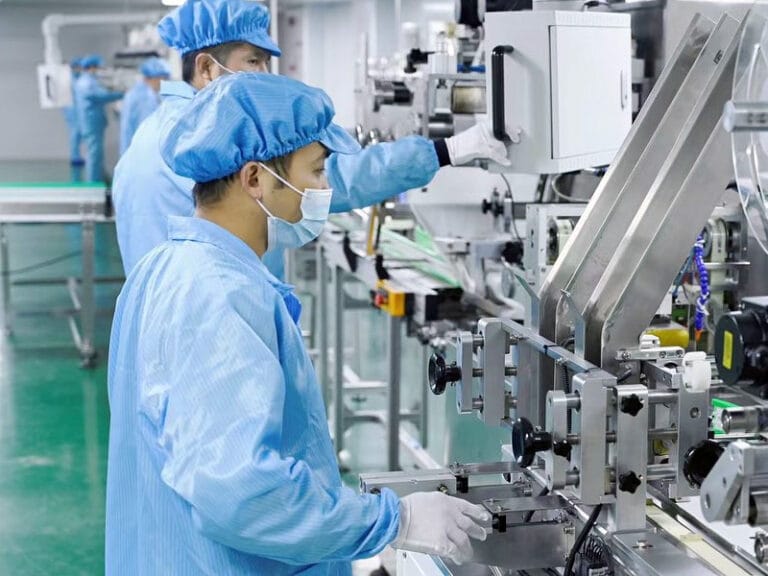
The production of wet wipes involves several carefully controlled steps, each affecting the final product quality.
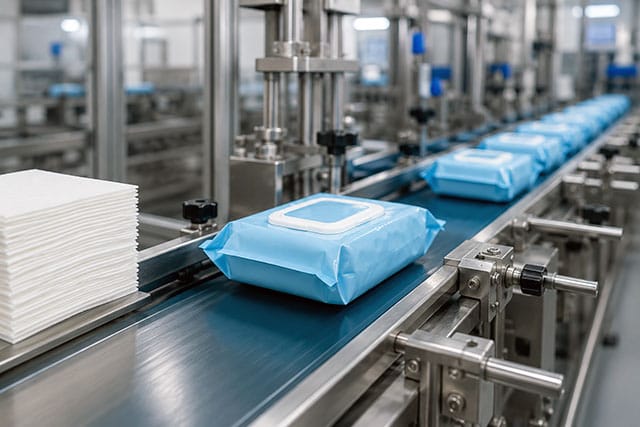
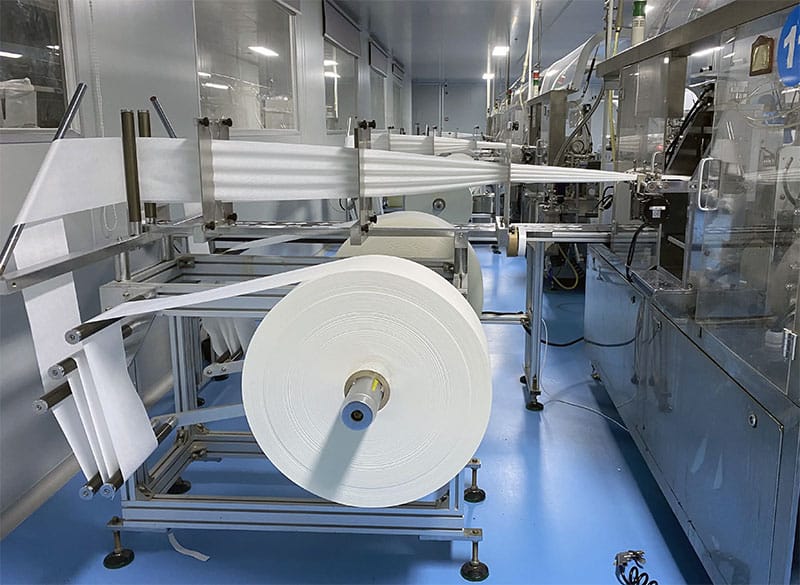
The process begins with selecting nonwoven fabric materials, commonly spunlace or biodegradable fibers. These materials are cut and folded into precise sheet formats depending on packaging requirements.
A liquid formulation is then prepared, usually consisting of purified water, preservatives, and functional ingredients. The formulation must be evenly applied to ensure consistent moisture levels across all wipes.
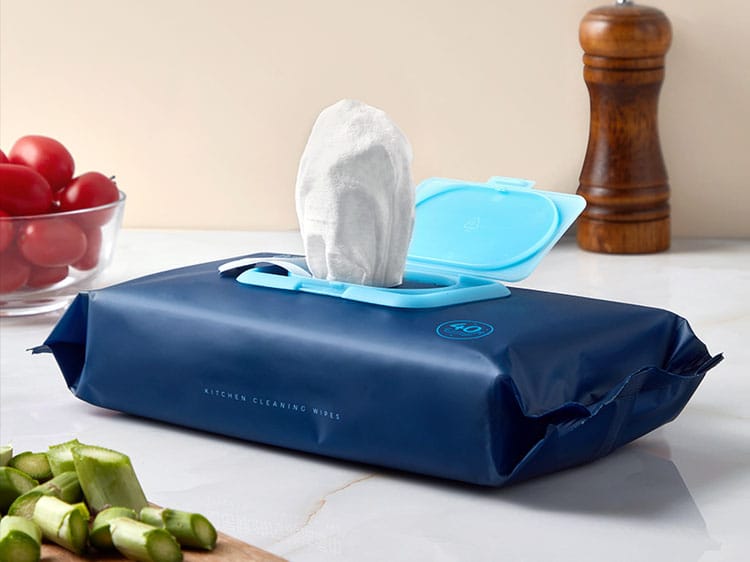
After saturation, the wipes are packed into different formats such as flow packs, canisters, or refill packs. Proper sealing is critical to prevent moisture loss and contamination.
Finally, each batch undergoes strict quality inspection, including weight checks, seal integrity testing, and microbiological safety verification. A professional wet wipes manufacturer ensures that every step meets quality standards before shipment.
What Affects the Cost of Wet Wipes Manufacturing?
The cost of wet wipes varies depending on several factors, including raw materials, packaging, and order volume.
Raw materials are one of the biggest cost drivers. Biodegradable fabrics and natural formulations typically cost more than standard nonwoven materials. However, they offer stronger market positioning and sustainability benefits.
Packaging also plays a major role in pricing. Custom-printed packaging, eco-friendly materials, and unique structural designs will increase cost but also enhance brand value.
Order quantity is another key factor. Larger production volumes usually result in lower unit costs due to economies of scale. A transparent wet wipes manufacturer will clearly explain pricing structures before production begins.
It is also important to consider hidden costs such as tooling fees, sampling charges, and logistics expenses when planning your budget.
How OEM Wet Wipes Manufacturing Works?
OEM manufacturing allows brands to launch wet wipes products without owning production facilities. It is the most common model used by private label brands.
The process usually starts with defining the product concept, including target audience, usage scenario, and product positioning. Based on this, the manufacturer recommends suitable formulations and material options.
After that, sample development begins. Samples are produced and tested to ensure they meet expectations in terms of texture, moisture, and performance.
Once the formulation is approved, packaging design is finalized. This stage includes label compliance, branding layout, and packaging format selection.
Mass production begins after approval of all details. A reliable wet wipes manufacturer will manage production, quality control, and logistics to ensure smooth delivery.
Trends Shaping the Wet Wipes Industry
The wet wipes industry is evolving quickly, driven by sustainability, safety, and consumer demand for higher-quality products.
One of the strongest trends is biodegradable materials. More brands are shifting toward eco-friendly wipes made from plant-based fibers to reduce environmental impact.
Another growing trend is sensitive-skin formulations. Alcohol-free, fragrance-free, and hypoallergenic products are becoming standard in many markets.
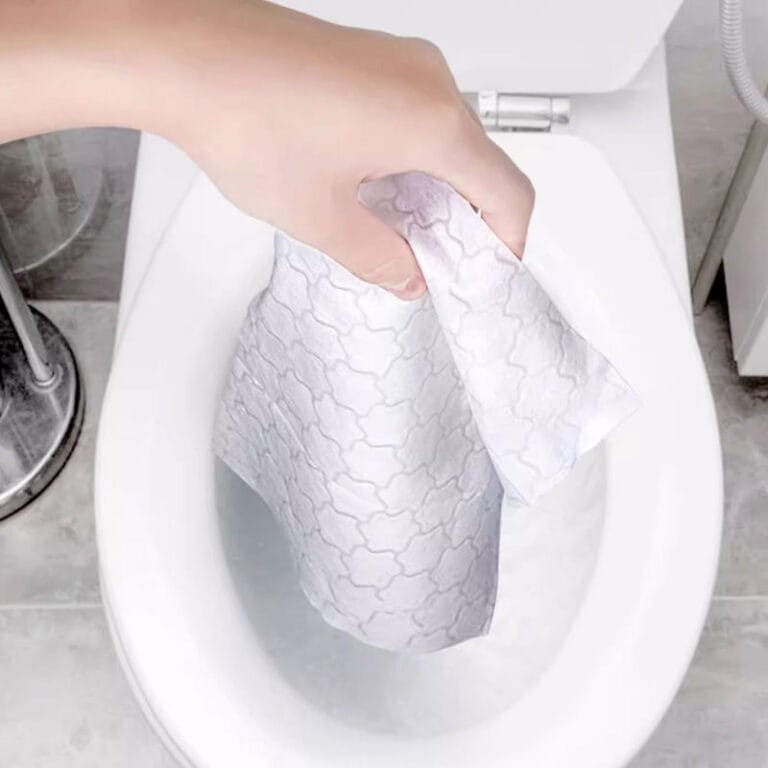
Flushable wipes are also gaining attention, although they require strict dispersibility standards to ensure safety for plumbing systems.
Packaging innovation is another important direction. Reusable packaging, travel-friendly formats, and minimalist design are increasingly popular among global consumers.
A forward-thinking wet wipes manufacturer should stay aligned with these trends and continuously update production capabilities.
Common Mistakes When Choosing a Manufacturer
Many brands make the mistake of choosing a supplier based only on price. While cost is important, it should not be the only factor. Low-cost manufacturers often lack consistency, compliance systems, or scalable production capacity.
Another common mistake is ignoring certifications and regulatory requirements. Without proper compliance, products may face issues in international markets.
Some brands also skip the sampling stage, which increases the risk of product dissatisfaction after mass production. Sampling is a critical step that should never be ignored.
Communication is another overlooked factor. A professional wet wipes manufacturer should provide clear timelines, transparent updates, and reliable support throughout the production process.
Final Thoughts
Choosing the right wet wipes manufacturer is not just a sourcing decision—it is a strategic partnership that directly impacts your brand success.
From certifications and production processes to pricing structures and OEM workflows, every detail matters when building a competitive product line.
By working with an experienced and reliable manufacturer, brands can focus on marketing, distribution, and growth while ensuring product quality and compliance remain stable.
If you are looking for a trusted wet wipes manufacturer, you can explore our homepage to learn more about OEM and private label manufacturing solutions designed for global brands.