How to Choose Flushable Wipes?
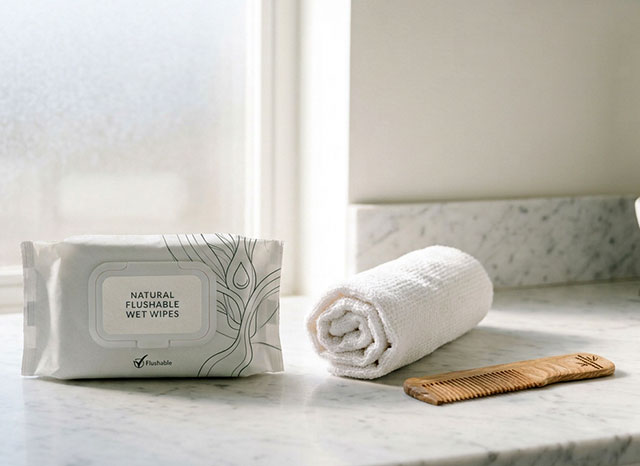
Choosing flushable wipes involves more than comparing softness, sheet count, or price. The most important factors are the finished product’s flushability evidence, fiber construction, skin compatibility, labeling, and disposal instructions.
For consumers, these details help distinguish products intended for toilet disposal from ordinary wet wipes. For retailers, importers, and private label brands, they also provide a practical framework for evaluating product specifications before placing an order.
1. Check Whether the Wipes Are Actually Designed for Flushing
The first step is to verify that the finished wipes are specifically developed and tested for flushable applications.
Some wet wipes are designed to stay strong during use and are not intended to disperse readily after disposal. Flushing these products can contribute to blockages in household plumbing and wastewater systems.
When comparing flushable wipes, check the following:
Clear disposal instructions: The packaging should identify the product’s intended disposal method.
Relevant testing evidence: Ask whether the finished product has been evaluated against a recognized flushability specification or testing protocol.
Product-specific documentation: Confirm that the evidence applies to the actual material construction and finished product, not just an individual fiber.
Local disposal requirements: Plumbing systems, wastewater guidance, and local restrictions may differ.
Terms such as “flushable,” “biodegradable,” and “plant-based” describe different product characteristics. None should be treated as automatic proof of the others.
For a technical comparison of flushability standards, see our guide to IWSFG vs. GD4 flushability standards.
2. Compare Fiber Materials and Dispersibility
The substrate is one of the most important components of a flushable wipe. It affects softness, absorbency, wet strength, and how the material behaves after use.
Cellulose-based fibers, including wood pulp and certain viscose materials, are commonly considered during the development of flushable wipes. However, the fiber name alone does not determine whether the finished product is suitable for flushing.
When reviewing materials, consider three factors.
Dispersibility: The material should be evaluated for its ability to break apart under the relevant test conditions.
Strength during use: The wipe should remain functional during handling and cleansing without relying on a construction that compromises its intended disposal performance.
Material transparency: Suppliers should identify the actual substrate composition rather than relying only on broad descriptions such as “natural fiber” or “eco-friendly material.”
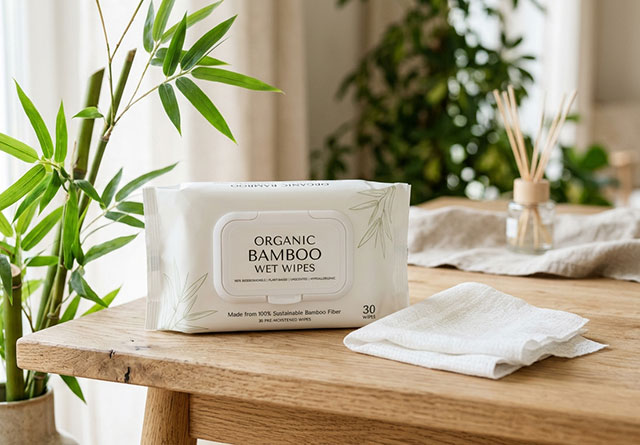
A bamboo-based or other plant-derived wipe is not automatically flushable. Likewise, a biodegradable material may break down under certain environmental conditions without being suitable for wastewater disposal.
For brands developing products with specific material requirements, the wet wipes materials and packaging options page provides a starting point for discussing substrate selection and product construction.
3. Choose a Formula That Suits Your Skin
Flushable wipes are often used for personal hygiene, so the lotion formula deserves attention alongside the substrate.
People with sensitive skin may prefer fragrance-free and alcohol-free options. These characteristics can help reduce exposure to ingredients that may irritate some users, although no formulation can guarantee that irritation will never occur.
Before choosing a product, review:
Ingredient information: Check the ingredient list and avoid known personal irritants.
Fragrance: Fragrance-free options may be preferable for people who are sensitive to scented products.
Moisture and cleansing performance: The lotion should suit the intended application without leaving an uncomfortable residue.
Skin compatibility information: Look for relevant testing or substantiated claims when available.
Ingredients such as glycerin or aloe vera may be included in some formulations, depending on the product requirements. Their presence alone does not establish that a wipe is hypoallergenic or suitable for every skin type.
For brands, formula development should take place alongside substrate selection. The lotion, fibers, preservative system, and packaging must work together to support product quality throughout the intended shelf life.
4. Distinguish Flushable, Biodegradable, and Plastic-Free Claims
These terms are often used together in product marketing, but they are not interchangeable.
Product claim | What it describes | What to verify |
Flushable | Intended suitability for disposal through a toilet | Relevant finished-product testing and disposal instructions |
Biodegradable | Ability to break down under specified environmental conditions | Test method, conditions, and supporting evidence |
Plastic-free | Absence of plastic within the scope of the stated claim | Full material composition and claim definition |
Plant-based | Use of plant-derived ingredients or fibers | Actual composition and percentage, where claimed |
A wipe can be biodegradable without being suitable for flushing. A product made from plant-derived fibers can also require additional evaluation before a flushability claim is justified.
For buyers, the practical approach is to assess each claim separately and request supporting documentation. Do not assume that a sustainability claim replaces the need for product-specific flushability evidence.
5. Consider Sheet Size, Thickness, and Packaging
The right wipe should be practical to use and easy to store. Sheet size, material weight, fold design, sheet count, and packaging all influence the user experience.
For household use, a resealable pack can help limit moisture loss after opening. Smaller packs may be more convenient for travel or occasional use, while larger packs can suit regular household consumption.
When comparing products, consider:
Sheet size: Is each wipe suitable for its intended cleansing application?
Thickness and texture: Does the wipe offer an appropriate balance of softness, handling, and performance?
Sheet count: Does the pack size match expected usage?
Package closure: Can the pack be securely resealed between uses?
Label clarity: Are the ingredients, intended use, and disposal instructions easy to find?
Packaging should preserve product quality without encouraging consumers to flush wipes that are not intended for toilet disposal.
For private label brands, packaging specifications should be confirmed together with the wipe material, lotion formula, sheet dimensions, and final product claims.
6. Ask the Right Questions Before Buying
Consumers can use the product label to compare basic characteristics. Business buyers should go further by requesting documentation from the supplier before approving a sample or placing a production order.
A useful supplier checklist includes:
What fibers and other materials are used in the finished wipe?
What evidence supports the flushability claim?
Which testing protocol was used, and what product does the report cover?
What skin-contact and microbiological quality controls apply?
Can the material, formula, sheet size, and sheet count be customized?
What packaging options, minimum order quantities, and production lead times are available?
Can the supplier provide consistent specifications and relevant quality documents for repeat orders?
Do not rely solely on a product brochure or a general statement that the wipes are environmentally friendly. Ask for evidence that matches the product you intend to purchase.
For businesses developing their own range, working with a qualified wet wipes manufacturer can help coordinate material selection, formula development, packaging, sampling, and production planning.
7. Follow the Disposal Instructions
Even when wipes are marketed as flushable, users should follow the package instructions and any applicable local wastewater guidance.
Do not assume that a wipe is suitable for flushing simply because it is soft, thin, biodegradable, or made from plant-based fibers. If the product is not clearly intended for flushing, dispose of it in a waste bin.
Household plumbing and wastewater conditions vary, and no product should be presented as universally safe for every pipe, septic system, or disposal environment without appropriate supporting evidence.
Correct disposal is an important part of choosing and using wet wipes responsibly.
Frequently Asked Questions
Are all flushable wipes safe to flush?
No. Check the finished product’s flushability evidence, packaging instructions, and local disposal guidance. Products that are not intended for flushing should go in a waste bin.
Are biodegradable wipes always flushable?
No. Biodegradability and flushability measure different properties. A wipe may biodegrade under specified conditions but still be unsuitable for disposal through toilets and wastewater systems.
What material should I look for in flushable wipes?
Cellulose-based materials, including wood pulp and certain viscose fibers, may be used in flushable wipe development. However, the complete product construction and relevant test results matter more than the fiber name alone.
Are fragrance-free flushable wipes better for sensitive skin?
Fragrance-free products may be a useful option for people who are sensitive to fragrances. Check the full ingredient list and relevant skin-compatibility information because individual reactions vary.
What should a private label buyer request from a flushable wipes supplier?
Request the complete material specification, relevant flushability testing evidence, ingredient information, quality documentation, packaging options, MOQ, and production lead time. Confirm that any product claims are supported by evidence for the finished product.
Choose Flushable Wipes With Confidence
The best flushable wipes are not simply the softest or least expensive. They should match the intended application, provide clear product information, and have appropriate evidence supporting their flushability claims.
For consumers, careful label checking and correct disposal help reduce avoidable plumbing problems. For brands and distributors, evaluating the material, formula, testing, and packaging before purchase helps establish a more reliable product specification.
If you are developing a private label flushable wipes range, define the intended use and target-market requirements first, then confirm the substrate, formula, packaging, and supporting documentation with your manufacturing partner.