Understanding Wet Wipes Raw Materials: A Manufacturer’s Perspective
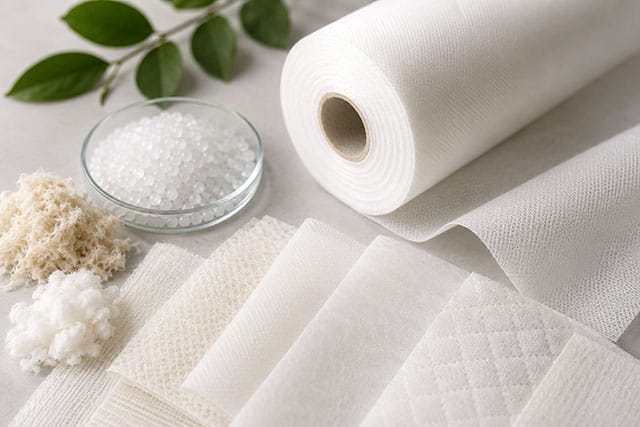
Every wet wipe begins as a roll of nonwoven fabric, but not every roll produces the same result. At SYWIPE, we’ve seen how small differences in raw materials can change the softness, absorbency, durability, and overall user experience of a finished wipe. From a manufacturer’s perspective, selecting the right substrate is not simply about choosing a fiber—it’s about engineering a product that performs consistently from production to the hands of the end user.
Walk down the personal care aisle of any supermarket, browse an online marketplace, or compare products from different private label brands, and you’ll quickly notice that wet wipes often look remarkably similar. Their packaging may vary, fragrances may differ, and marketing claims may emphasize everything from sensitive skin to eco-friendliness, yet the most important difference is often hidden beneath the surface.
That difference is the material.
At SYWIPE, as an experienced wet wipes manufacturer, we have spent years developing private label wet wipes for brands across multiple industries, including baby care, personal hygiene, healthcare, household cleaning, hospitality, and industrial applications. One lesson has remained consistent throughout every project: the quality of a wet wipe is determined long before the liquid formula is added or the package is sealed.
It begins with the substrate.
Many first-time buyers believe that all wet wipes are essentially the same fabric saturated with different solutions. In reality, two wipes containing similar ingredients can perform completely differently because of the raw materials selected during manufacturing. One may feel silky smooth against the skin, while another feels rough after only a few uses. One remains strong when fully saturated, while another tears apart during cleaning. Some wipes retain moisture for months, while others dry out surprisingly quickly after opening.
These differences rarely happen by accident. They are the direct result of engineering decisions made long before production begins.
Understanding wet wipes raw materials is therefore not just a technical topic reserved for manufacturers. It is valuable knowledge for brand owners, purchasing managers, distributors, and product developers who want to build products that customers genuinely appreciate. Choosing the right substrate affects consumer experience, production efficiency, transportation costs, environmental performance, regulatory compliance, and ultimately, the reputation of the brand itself.
Rather than simply introducing different fibers, this guide explains how manufacturers evaluate raw materials, why certain fabrics perform better than others, and what brands should understand before developing their next wet wipes product.
Every Great Wet Wipe Starts Long Before Production
One of the most common conversations we have with new customers begins with a simple request.
“We need a soft wet wipe.”
Although that sounds straightforward, softness is only one small piece of a much larger puzzle.
A wipe that feels exceptionally soft may not have enough strength for household cleaning. A highly durable industrial wipe may feel too rough for facial care. An environmentally friendly substrate may increase production costs beyond a brand’s target price. Every material represents a balance between performance, manufacturing efficiency, sustainability, and commercial objectives.
This is why experienced manufacturers rarely recommend a material immediately. Instead, they begin by asking questions.
• Who will use the product?
• Will the wipe be used on babies, adults, pets, medical equipment, or kitchen surfaces?
• Will customers expect a luxury feel, maximum cleaning power, or environmentally responsible materials?
• Will the product be sold in supermarkets, pharmacies, hotels, or online marketplaces?
Only after understanding these details can engineers begin selecting the most appropriate substrate.
At SYWIPE, material selection is viewed as part of product development rather than a purchasing decision. The objective is not simply to buy fabric. It is to create a complete user experience that aligns with a customer’s expectations while maintaining efficient manufacturing and competitive costs.
Brands developing their first private label wet wipes project should evaluate material selection together with formulation, packaging, and regulatory requirements instead of treating these decisions separately. Decisions made during product development are closely connected, and considering them as a whole often leads to better product performance and a smoother manufacturing process.
What Exactly Is a Wet Wipes Raw Material?
When consumers hear the phrase “raw material,” they often imagine individual fibers such as bamboo, cotton, or wood pulp. While fibers are certainly important, manufacturers use the term more broadly.
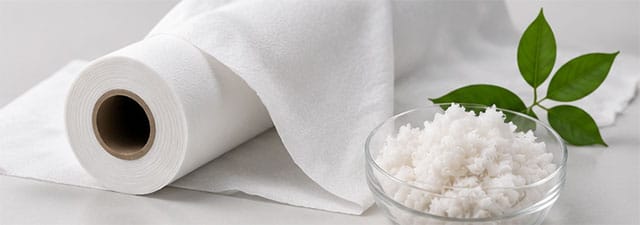
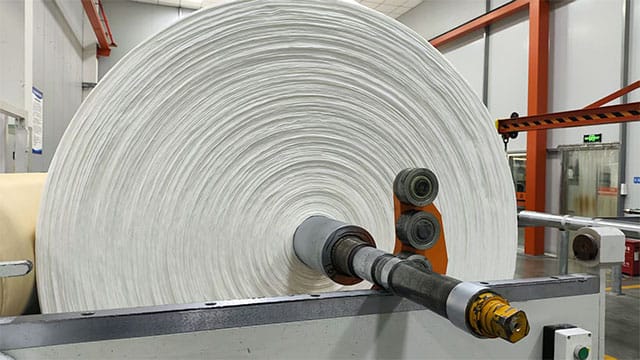
A wet wipe substrate is an engineered nonwoven fabric created by combining carefully selected fibers with specialized manufacturing technologies. The finished material is designed to achieve specific characteristics, including softness, absorbency, tensile strength, liquid retention, flexibility, and durability.
Unlike woven textiles, nonwoven materials are not produced by weaving yarn together. Instead, fibers are bonded through mechanical, thermal, or hydro-entanglement processes that create a lightweight yet durable fabric suitable for disposable hygiene products.
This manufacturing approach allows engineers to adjust countless variables during production. Fiber composition, fabric weight, fiber orientation, bonding methods, and finishing treatments all influence the final performance of the wipe.
For this reason, two substrates described as “viscose wipes” may perform entirely differently despite using the same primary fiber. Manufacturing technology often matters just as much as the raw material itself.
Understanding this distinction helps explain why experienced manufacturers focus on overall substrate performance rather than simply advertising individual fiber names.
Before selecting a substrate, it also helps to understand the complete wet wipes manufacturing process. Different production technologies—including fiber blending, hydroentanglement, lotion saturation, converting, and packaging—can significantly influence the final performance of the material. Understanding how these processes work gives brands a clearer picture of why seemingly similar raw materials can produce very different finished wipes.
Why Material Selection Shapes the Entire User Experience
Consumers rarely examine technical specifications before purchasing wet wipes. Instead, they judge quality through experience.
The first impression usually occurs the moment a wipe leaves the package.
• Does it separate easily?
• Does it unfold smoothly?
• Does it feel thick and substantial?
• Does it glide gently across the skin?
• Does it remain intact during use?
These seemingly simple experiences are heavily influenced by the substrate.
A high-quality material distributes lotion evenly throughout the fabric, preventing overly wet or dry sections. It absorbs cleaning solution efficiently while maintaining structural integrity during use. Even after prolonged rubbing, folding, or stretching, the wipe continues performing as intended.
Inferior materials often reveal themselves quickly. They may pill during cleaning, leave lint behind, lose moisture rapidly, or tear before the task is complete. Although consumers may not understand the technical reason, they immediately recognize the difference in quality.
For brands, these small details translate directly into customer satisfaction, repeat purchases, and online reviews.
Because of this, manufacturers evaluate substrates not only according to laboratory measurements but also through practical user testing. A material may meet every technical specification while still failing to provide the premium experience consumers expect.
Looking Beyond Fiber Names
Many online articles compare wet wipes materials by presenting long lists of fibers and their characteristics. While these descriptions are useful, they can unintentionally oversimplify how wet wipes are actually manufactured.
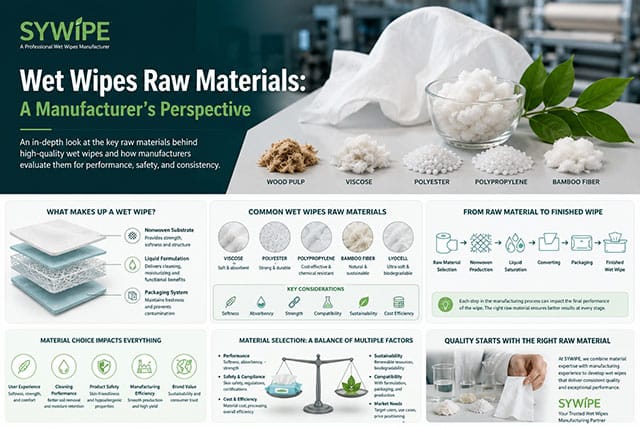
From a manufacturer’s perspective, raw materials are never evaluated in isolation. We don’t simply ask whether viscose is softer than polyester or whether bamboo is more sustainable than wood pulp. Instead, we look at how a substrate performs throughout the entire manufacturing journey—from nonwoven production and lotion saturation to converting, packaging, transportation, shelf life, and ultimately, the end-user experience.
This broader perspective explains why professional manufacturers rarely judge materials by fiber names alone. A high-quality wipe is the result of how the substrate performs as part of the entire product, not just how one individual fiber is described.
Instead, they ask a different question.
How will the finished wipe perform after converting, saturating, packaging, transporting, storing, and ultimately reaching the customer?
Answering that question requires looking beyond the fiber itself.
The proportion of blended fibers affects softness and absorbency. Fabric weight influences thickness and durability. Hydroentanglement quality determines surface texture and strength. Moisture retention impacts shelf life. Fiber uniformity affects both production stability and consumer experience.
Even packaging design influences how a substrate behaves over time because different dispensing systems expose the material to varying levels of air and evaporation.
This is why manufacturers spend significant time evaluating complete substrate performance rather than selecting fibers based solely on marketing trends.
A bamboo blend may be ideal for one premium skincare brand but completely unsuitable for a high-volume disinfecting wipe. Likewise, a synthetic blend that performs exceptionally well in industrial cleaning would never provide the skin-friendly experience expected from a baby wipe.
There is no universally “best” raw material.
There is only the material that best matches a product’s intended purpose.
Natural Fibers Are Reshaping Consumer Expectations
Over the past decade, one noticeable shift has transformed the wet wipes industry. Consumers increasingly pay attention to what their wipes are made from, not just what they contain.
Ingredients remain important, but substrates have become part of the purchasing decision.
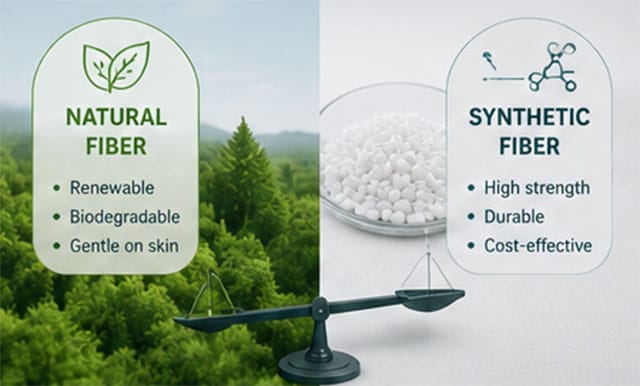
Parents often look for plant-based materials because they associate natural fibers with gentleness. Environmentally conscious consumers search for plastic-free alternatives. Retailers and private label brands increasingly request biodegradable substrates to support their sustainability commitments.
This trend has encouraged manufacturers to invest heavily in cellulose-based materials, including viscose, wood pulp, bamboo fiber, and lyocell.
These materials generally provide excellent softness and absorbency while helping brands reduce reliance on petroleum-based plastics. They also create stronger marketing stories because consumers increasingly recognize renewable fibers as part of environmentally responsible product development.
However, sustainability is more complex than replacing synthetic fibers with natural ones.
The source of the fiber, manufacturing methods, certification systems, transportation, and end-of-life disposal all influence a product’s overall environmental footprint.
For this reason, responsible manufacturers evaluate sustainability across the entire supply chain rather than focusing on a single material claim.
Material selection is never an isolated decision. It influences manufacturing efficiency, product performance, consumer satisfaction, and long-term brand success. Working with an experienced OEM wet wipes manufacturer allows brands to evaluate these factors together and develop products that meet both market expectations and business objectives.
Frequently Asked Questions About Wet Wipes Raw Materials
What is the best raw material for wet wipes?
There is no single “best” material for every type of wet wipe. The ideal substrate depends on the product’s intended use. Baby wipes often benefit from soft cellulose-based materials such as viscose or lyocell, while industrial cleaning wipes may require stronger synthetic blends for greater durability. An experienced manufacturer evaluates factors such as softness, absorbency, strength, sustainability, and cost before recommending the most suitable material.
What materials are most commonly used to manufacture wet wipes?
Most wet wipes are made from nonwoven fabrics produced using spunlace technology. Common raw materials include viscose, wood pulp, polyester, polypropylene, bamboo fiber, cotton, lyocell, and various cellulose blends. Many premium wipes combine two or more fibers to balance softness, strength, and liquid absorption.
Are bamboo wet wipes better than regular wet wipes?
Bamboo-based wipes are popular because bamboo is a renewable resource and provides a naturally soft feel. However, bamboo is not automatically superior to other materials. Product performance depends on the fiber blend, fabric quality, manufacturing process, and intended application. A well-engineered viscose or lyocell substrate may perform just as well—or even better—for certain products.
Are all biodegradable wet wipes plastic-free?
No. Biodegradable and plastic-free are not always the same. Some wipes contain blended synthetic fibers that improve strength but reduce biodegradability. If your brand is targeting environmentally conscious consumers, it’s important to confirm both the fiber composition and the relevant certifications before production.
Why do some wet wipes feel softer than others?
Softness is influenced by much more than the type of fiber. Fabric weight (GSM), fiber fineness, hydroentanglement quality, surface texture, and the wet wipes solution all contribute to the overall feel. Two wipes made from the same fiber can provide very different user experiences depending on how the substrate is manufactured.
How do manufacturers choose the right raw material for a private label wet wipes project?
Professional manufacturers usually begin by understanding the product’s target market, intended application, pricing goals, packaging format, and regulatory requirements. Based on these factors, they recommend a substrate that delivers the desired balance of performance, production efficiency, and cost rather than simply selecting the most expensive material.
Does the raw material affect how much liquid a wet wipe can hold?
Yes. Different fibers have different absorbency characteristics. Cellulose-based materials generally retain liquids more effectively than many synthetic fibers, allowing the wipe to stay evenly saturated without excessive dripping. This directly affects cleaning performance and the overall user experience.
How can brands ensure they are choosing high-quality wet wipes materials?
Beyond reviewing material specifications, brands should request substrate samples, evaluate real-world performance, review manufacturing quality systems, and work with an experienced OEM manufacturer. A reliable supplier can explain how fiber composition, fabric construction, and production technology influence the final product, helping brands make informed sourcing decisions.