How are Wet Wipes Manufactured?
A Step-by-Step Guide to the Production Process
Wet wipes have become an indispensable part of modern life—from baby care and personal hygiene to household cleaning and industrial applications. But have you ever wondered how these convenient, pre-moistened sheets are actually made?
The manufacturing of wet wipes is a fascinating blend of material science, precision engineering, and stringent quality control. In this article, we’ll take you through the complete production process, from raw materials to the finished product sitting on store shelves.
The Two Essential Components
Before diving into the manufacturing steps, it’s important to understand that every wet wipe consists of two fundamental elements:
The Substrate – The non-woven fabric that forms the wipe itself
The Solution – The liquid formulation that moistens the substrate
Let’s explore each component in detail.
Substrate Materials: The Foundation of Every Wipe
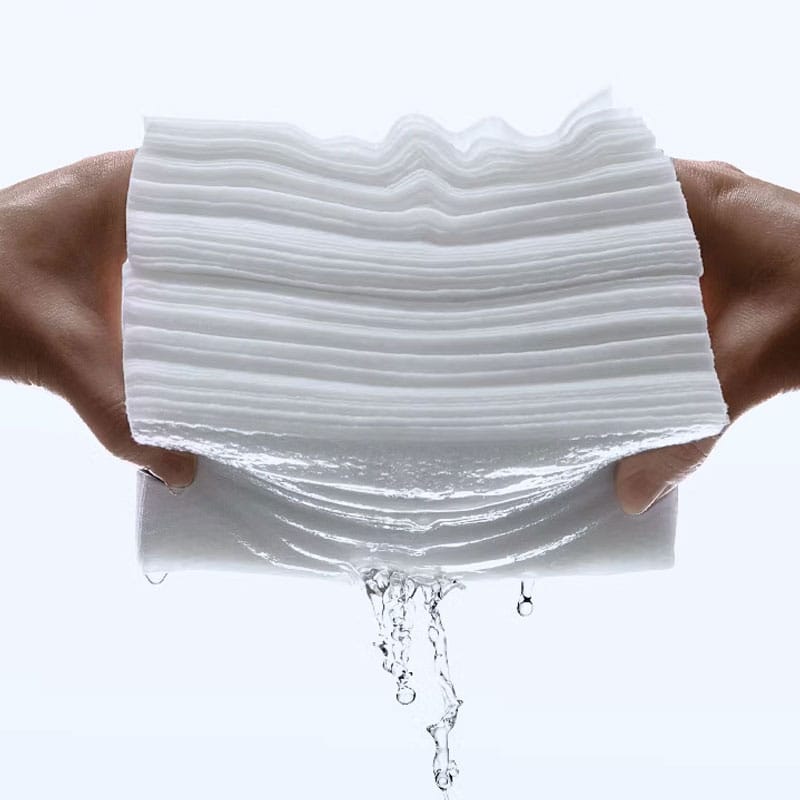
The substrate must meet specific criteria: it needs to be strong enough for cleaning tasks, highly absorbent to hold the solution, and soft enough for skin contact (depending on the application) .
Common Substrate Materials
• Material Key Properties Common Applications
• Wood Pulp Flat fiber structure, high absorbency, cost-effective General cleaning, industrial wipes
• Cotton Ultra-soft, durable, holds moisture well Baby wipes, facial wipes, sensitive skin
• Viscose Silk-like smoothness, good performance Personal care, cosmetic wipes
• Polyester Strong, tear-resistant, maintains shape Heavy-duty cleaning, disinfectant wipes
• Bamboo Fiber Sustainable, naturally antimicrobial, soft Eco-friendly brands, premium baby wipes
• Bamboo fiber has gained significant popularity in recent years due to its sustainability credentials and natural properties . • Many manufacturers now offer bamboo-based options for environmentally conscious brands.
Non-Woven Fabric Production
Unlike traditional textiles made by weaving or knitting fibers together, wet wipe substrates are non-woven fabrics. They’re produced using two primary methods:
Wet-Laid Process: Fibers are suspended in water to form a slurry, then pressed into flat sheets using rollers. This method produces softer wipes ideal for personal care.
Dry-Laid Process: Plastic pellets are melted and extruded through fine holes to create continuous filaments, which are then bonded together into sheets. This method is used for more durable, plastic-based wipes.
Spunlace technology (also called hydroentanglement) is particularly common for wet wipes. This process uses high-pressure water jets to entangle the fibers, creating a strong, fabric-like material without chemical binders.
The Solution: Chemistry Meets Function
The liquid that gives wet wipes their “wetness” is a carefully formulated solution. While water is the primary component (purified to remove contaminants), it carries several functional ingredients:
Key Solution Ingredients
Purified Water: The base of every formulation. Water undergoes extensive treatment—including sand filtration, reverse osmosis, and UV sterilization—to ensure it’s bacteriologically suitable for wet wipes .
Surfactants: Responsible for cleaning performance. For skin-contact wipes, mild amphoteric surfactants are used—gentle enough not to strip natural oils but effective at cleaning .
Humectants: Prevent the wipes from drying out and help nourish the skin. Common humectants include glycerin and aloe vera .
Preservatives: Essential for preventing microbial growth in the moist environment of the package, extending shelf life .
Emollients/Oils: Soften and condition the skin .
Fragrances: Optional additions that enhance the user experience, though unscented options remain popular for sensitive users .
Thickeners: Control the solution’s viscosity and maintain proper consistency .
The specific formulation depends entirely on the wipe’s intended use—baby wipes require gentle, hypoallergenic ingredients, while disinfectant wipes need EPA-registered antimicrobial actives .
The Manufacturing Process: Step by Step
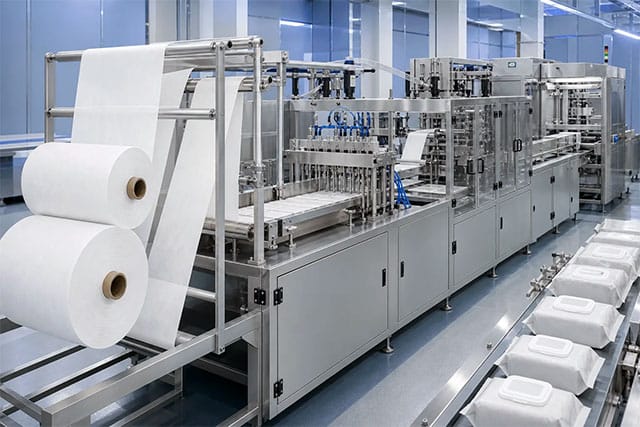
Now that we understand the components, let’s walk through the actual production process. Modern wet wipe manufacturing is highly automated, with advanced machinery capable of producing thousands of wipes per minute .
Step 1: Material Selection
The process begins with selecting the appropriate substrate based on the desired properties of the final product—durability, absorbency, softness, and intended use .
Step 2: Formula Preparation
In large batch tanks, purified water is combined with the precise blend of ingredients according to the product specification. The mixture is stirred until completely homogeneous. Advanced facilities use automated liquid distribution systems to ensure consistency across batches .
Step 3: Substrate Unwinding
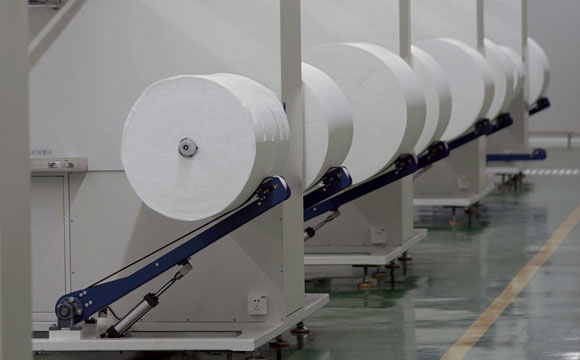
Large rolls of non-woven fabric, called master rolls, are loaded onto the production line. These rolls can be massive—some facilities convert over 2 billion square yards of fabric annually . The fabric is continuously unwound and fed into the converting equipment.
Step 4: Folding
Before the solution is applied, the dry substrate is folded into its final configuration. Different folding styles serve different purposes :
• Fold Type Description Common Use
• Z-Fold Zigzag fold where each wipe interleaves with the next Pop-up dispensing
• C-Fold Simple fold into a C-shape Standard flat packs
• Quarter-Fold Folded twice to create a compact wipe Travel packs
• Perforated Roll Continuous roll with tear points Industrial wipes
The folding process is precise and high-speed—modern machines like the Teknoweb Exige can produce 3200 wipes per minute on a four-lane production line.
Step 5: Solution Application (Impregnation)
This is where dry substrate becomes “wet” wipes. The folded sheets pass through a wetting station where the prepared solution is applied. There are two common methods :
Immersion: The substrate passes through a bath of solution, absorbing it evenly.
Spray Application: Nozzles spray the solution onto the substrate, allowing precise control over the wetness level.
The target is typically a liquid-to-substrate ratio of 2:1 to 4:1 (meaning the wipe weighs 2-4 times more wet than dry), depending on the application.
Step 6: Stacking and Accumulation
After wetting, the individual wipes are stacked to form the final stack that will go into each package. This step requires careful alignment to ensure consistent count and presentation .
Step 7: Cutting
For continuous roll products, the laminated sheets are cut at precise intervals to separate individual wipes or create perforations .
Step 8: Packaging
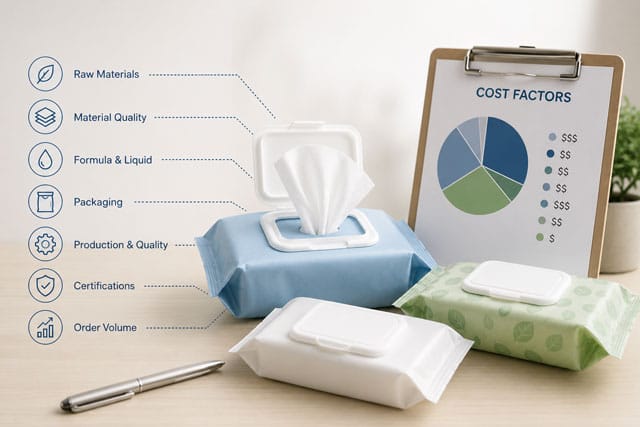
The stacked wipes are transferred to the packaging line. Packaging formats vary widely :
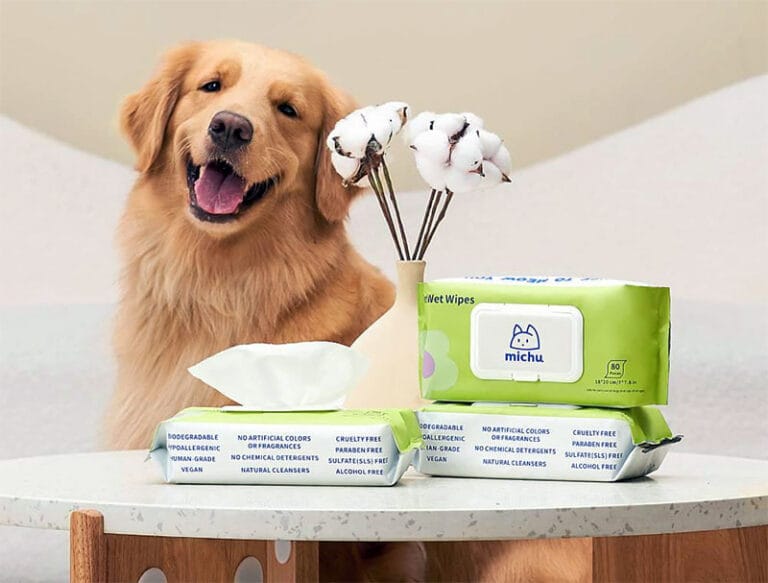
• Flow Packs: Flexible pillow packs with hermetic seals (80 packs per minute achievable on high-speed lines)
• Tubs/Canisters: Rigid plastic containers with flip-top lids
• Refill Pouches: Flexible bags for eco-conscious consumers
• Bucket Formats: Large quantities for industrial/institutional use
Lid application is a critical step for tubs and canisters. Advanced lid applicators can reach speeds of 150 packs per minute with precise placement accuracy .
Step 9: Quality Control
Throughout production, rigorous quality checks ensure product safety and consistency :
• Ingredient verification: Confirming correct weights and composition
• pH and viscosity testing: Ensuring the solution meets specifications
• Microbial testing: Verifying preservative effectiveness and sterility
• Seal integrity: Confirming packages are properly sealed to prevent leakage and contamination
• Weight checks: Ensuring correct fill levels
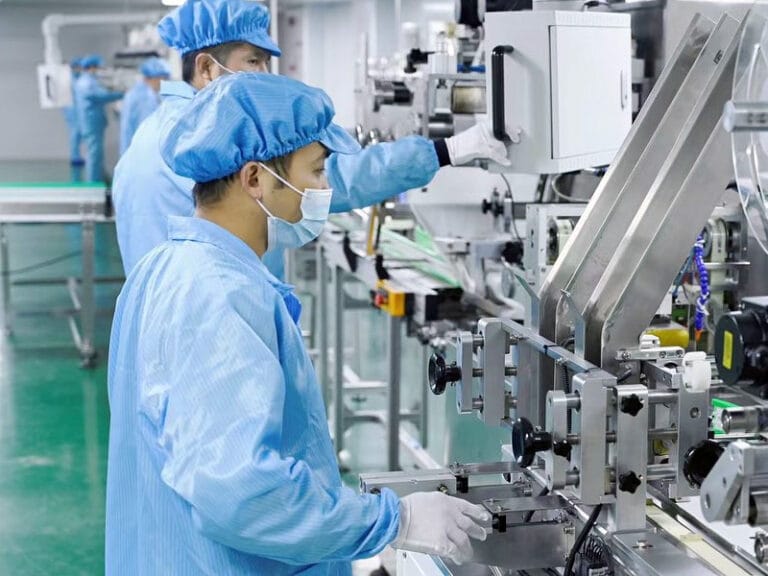
Many facilities operate under GMP (Good Manufacturing Practice) Class 100,000 cleanroom conditions, particularly for medical or baby wipes .
Step 10: Final Inspection and Distribution
Packaged wipes undergo final inspection for defects, then are boxed, palletized, and prepared for shipping. Proper storage conditions (controlled temperature and humidity) maintain product quality until they reach consumers .
Advanced Manufacturing Considerations
Production Capacity
Modern wet wipe facilities operate at impressive scales. For example, Zhejiang Ruolin Hygienic Products operates 12 highly-automated production lines across three plants, with annual output approaching 30 million packs . Some contract manufacturers can convert over 2 billion square yards of fabric annually .
Cleanroom Standards
For medical, baby, and cosmetic wipes, manufacturing often occurs in controlled environments. Class 100,000 cleanrooms (ISO 8) are common, featuring:
• HEPA-filtered air
• Positive pressure to prevent contamination
• Stainless steel equipment with smooth surfaces for easy cleaning
• Strict hygiene protocols for personnel
Sustainability Initiatives
The industry is shifting toward more sustainable practices :
Plant-based substrates: Bamboo, hemp, flax, and true cotton alternatives
Refill packaging: Pouches that use 95% less plastic than rigid tubs
Biodegradable formulations: Wipes designed to break down more quickly
Recyclable packaging materials: Moving away from mixed-material packages
Some manufacturers now offer “Tree Free” options with low carbon footprints, responding to consumer demand for environmentally responsible products .
Frequently Asked Questions (FAQ)
Are there preservatives in wet wipes? Are they safe?
Yes, most wet wipes contain preservatives. Because wipes are stored in a moist environment, preservatives are essential to prevent the growth of bacteria, mold, and yeast, ensuring product safety throughout its shelf life. Reputable manufacturers use preservatives that are approved for use in personal care products, such as phenoxyethanol or food-grade preservatives like sodium benzoate. For sensitive applications like baby wipes, manufacturers strictly control the type and concentration of preservatives to minimize any risk of skin irritation. Always check the ingredient list if you have specific sensitivities.
What’s the difference between “flushable” wipes and regular wipes?
“Flushable” wipes are designed to break down after being flushed. However, the manufacturing process for these wipes is distinct—they use specialized fibers and a hydroentanglement process that allows the wipe to disperse in water. It’s important to note that even wipes labeled as “flushable” can sometimes cause sewer system blockages. Regular wipes, made with stronger materials like polyester, are designed for durability and should always be disposed of in the trash.
How should I store wet wipes to keep them from drying out?
To prevent your wipes from drying out, always keep the packaging tightly sealed. For canisters or tubs, ensure the flip-top lid is completely closed. For flow packs (soft packs), press out excess air and reseal the adhesive flap securely. Store wipes away from direct sunlight and heat sources, as high temperatures can accelerate the evaporation of the solution.
Are there eco-friendly options in wet wipe manufacturing?
Yes, sustainability is a growing focus in the industry. Eco-friendly options are typically created in two ways:
By Material: Using plant-based, biodegradable substrates like bamboo, viscose from sustainably managed forests, or cotton.
By Packaging: Using refill pouches that use significantly less plastic than rigid tubs, or opting for recyclable packaging materials.
If environmental impact is a priority for you, look for brands that specify their substrate material and packaging choices.
How do manufacturers ensure the wipes are not contaminated?
Quality control is a critical part of the manufacturing process. Reputable manufacturers follow strict protocols, including:
Water Purification: Using reverse osmosis and UV sterilization to ensure the base water is free of contaminants.
Cleanroom Environments: Manufacturing baby wipes, medical wipes, and cosmetic wipes in Class 100,000 (ISO 8) cleanrooms with HEPA-filtered air.
Microbial Testing: Regularly testing the finished solution and final products to verify the effectiveness of the preservative system and ensure no harmful microorganisms are present.
From Concept to Consumer: The Big Picture
Wet wipe manufacturing is a sophisticated process that combines material science, chemical engineering, and high-speed automation. Whether it’s a gentle baby wipe or a heavy-duty industrial cleaner, each product represents careful formulation and precise manufacturing.
For brands looking to enter the wet wipes market, understanding this process is essential—from selecting the right substrate and formulation to choosing a manufacturing partner with the right capabilities and quality standards.