How to Evaluate Biodegradable Wet Wipes?
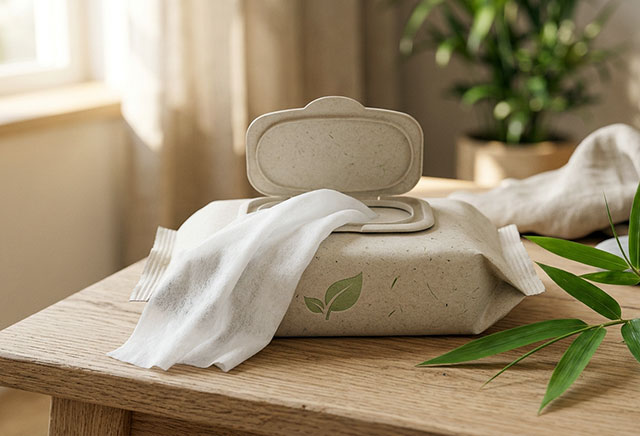
Biodegradable wet wipes are becoming an important product category for brands looking to meet growing demand for more sustainable hygiene products. However, choosing an environmentally responsible wipe involves more than selecting a fabric labeled natural, bamboo, or plant-based. The finished product, material composition, manufacturing process, and disposal conditions all influence its environmental performance.
For brands, retailers, and distributors developing eco-friendly product lines, understanding these factors is essential. SYWIPE provides customized biodegradable wet wipes solutions using different plant-based substrates, helping businesses develop products that balance cleansing performance, material requirements, and sustainability goals.
What Makes a Wet Wipe Biodegradable?
A biodegradable wet wipe is designed to break down through the action of microorganisms under suitable environmental conditions. The speed and extent of decomposition depend on the material composition and the environment in which the product is disposed of.
Traditional wet wipes may contain synthetic fibers such as polyester and polypropylene. These materials provide durability and strength but do not readily biodegrade under ordinary environmental conditions.
Biodegradable alternatives can use cellulose-based or other plant-derived fibers, including bamboo, wood pulp, cotton, and viscose. However, the presence of natural fibers alone does not automatically establish that an entire wet wipe is biodegradable.
For an accurate environmental assessment, brands should consider the complete product rather than focusing exclusively on its main fabric.
Which Materials Are Used in Biodegradable Wet Wipes?
The substrate is one of the most important decisions when developing biodegradable wet wipes. Different fibers provide different levels of softness, absorbency, strength, and suitability for specific applications.
Bamboo Fiber
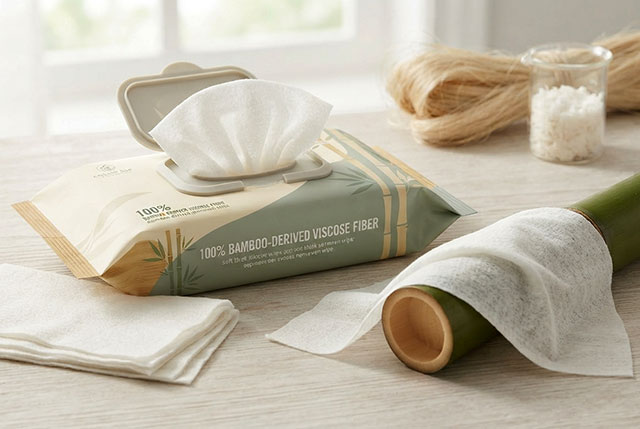
Bamboo is a rapidly renewable plant resource and is widely used in sustainable hygiene product development. Bamboo-derived fibers can provide softness, absorbency, and a comfortable texture for personal care applications.
Bamboo-based wipes are commonly considered for baby care, facial cleansing, and everyday hygiene products. Their environmental performance still depends on fiber processing, additional materials, and the finished product composition.
Wood Pulp
Wood pulp is a cellulose-based material used in various disposable hygiene products. It can provide absorbency and is particularly relevant to tissue and certain flushable wipe applications.
For brands developing moist toilet tissue or other specialized products, wood pulp can be an important substrate option. The finished construction must still meet the performance requirements of its intended application.
Viscose Fiber
Viscose is a regenerated cellulose fiber produced from plant-derived cellulose. It is valued for its softness, liquid absorption, and versatility.
Depending on the manufacturing process and substrate construction, viscose can be used in biodegradable personal care and hygiene wipes. Brands should verify the actual fiber composition and supporting environmental documentation.
Cotton Fiber
Cotton is a natural cellulose fiber known for its softness and absorbency. It can be used in premium facial wipes, baby care products, and other personal hygiene applications.
Its suitability depends on the desired sheet strength, cost, and finished product specifications.
Brands comparing these substrates can review SYWIPE’s wet wipes materials and packaging options to understand the available fabric choices and customization possibilities.
How to Verify Biodegradable Claims
Not every product marketed as eco-friendly is necessarily biodegradable. Environmental claims should be supported by evidence rather than relying on marketing descriptions.
When evaluating biodegradable wet wipes, buyers should consider several factors.
Check the complete material composition
Request detailed substrate specifications, including fiber percentages and information about binders, coatings, and other relevant components. A fabric described as plant-based may still contain synthetic components.
Request biodegradation test evidence
Ask suppliers for relevant test reports identifying the testing method, test conditions, and results. The evidence should relate to the material or finished product covered by the environmental claim.
Distinguish biodegradable from compostable
Biodegradable and compostable are not interchangeable terms. Compostability requires additional criteria and testing under specified conditions. A biodegradable wipe should not automatically be marketed as suitable for home or industrial composting.
Evaluate the finished product
A wet wipe includes more than its dry substrate. The liquid formulation, material treatments, and other components should be considered when assessing the finished product’s environmental claims.
Review packaging separately
Even when the wipe substrate is biodegradable, conventional plastic packaging may remain part of the product’s environmental footprint. Brands should consider refill packs, recyclable packaging options, and opportunities to reduce unnecessary packaging materials.
Are Biodegradable Wet Wipes the Same as Flushable Wipes?
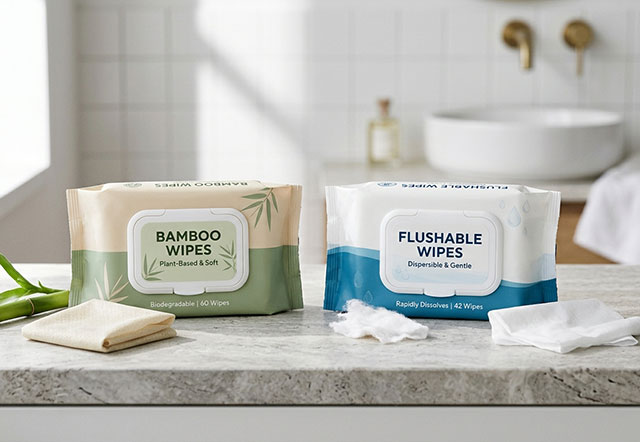
No. Biodegradability and flushability describe different product characteristics.
Biodegradability refers to the ability of a material to break down through biological processes under specific conditions. Flushability concerns whether a finished wipe is suitable for disposal through toilets and wastewater systems under relevant testing criteria.
A biodegradable wipe is not necessarily flushable. Similarly, a product made from plant-based fibers should not automatically carry a flushable claim.
For brands developing moist toilet tissue or flushable hygiene products, the substrate construction and finished-product performance must be evaluated against the applicable testing requirements.
Two industry references commonly considered in this area are INDA/EDANA GD4 and the IWSFG flushability specifications. These address flushability performance rather than serving as general proof of biodegradability.
For a more detailed explanation, see our guide to biodegradable vs. flushable wipes.
How to Choose the Right Biodegradable Wet Wipes for Your Brand
Selecting a suitable biodegradable wipe requires balancing environmental objectives with product performance, consumer expectations, and commercial requirements.
Define the intended application.
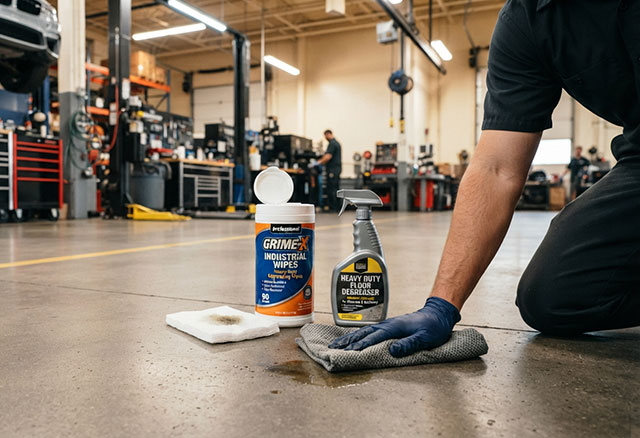
Baby wipes, facial wipes, adult hygiene wipes, and household cleaning wipes have different requirements. Identify the target application before selecting the substrate.
Compare material performance.
Evaluate softness, absorbency, wet strength, sheet thickness, and texture. A sustainable material must also perform reliably during normal product use.
Consider formulation compatibility.
The liquid solution should work with the selected nonwoven substrate. Formula stability, preservation, moisture retention, and material compatibility all influence the final product quality.
Select suitable packaging.
Packaging affects product protection, moisture retention, convenience, and environmental positioning. Flow packs, refill packs, sachets, and canisters can be considered according to the product category and sales channel.
Verify product documentation.
Before approving mass production, request relevant material specifications, test reports, and supporting documents for any environmental claims used on the packaging or in marketing.
What Is the Role of Manufacturers in Sustainable Wet Wipes Development?
A reliable manufacturer helps brands translate sustainability goals into practical product specifications.
This involves evaluating suitable fibers, developing compatible formulas, selecting packaging structures, and maintaining consistent manufacturing quality.
At SYWIPE, biodegradable wet wipes development can be customized according to material composition, sheet dimensions, liquid formulation, and packaging requirements.
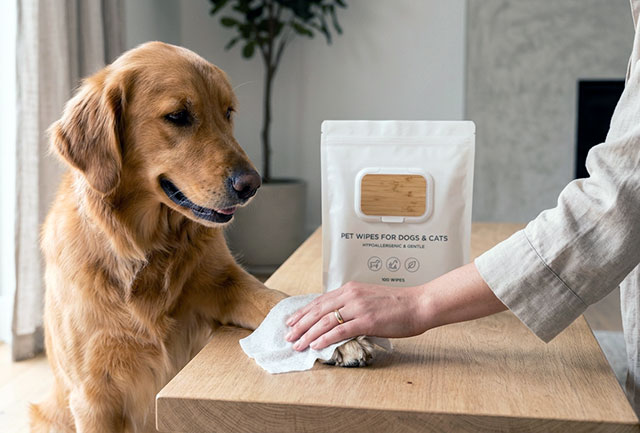
Our manufacturing support covers different product applications, including baby care, personal hygiene, pet care, and specialized cleaning products. Brands can work with our team to assess material options, review samples, and finalize product specifications before mass production.
The development process should focus on the performance and documentation of the actual finished product, ensuring that environmental claims are consistent with its composition and supporting evidence.
Biodegradable Materials and Responsible Disposal
The environmental performance of biodegradable wet wipes depends on more than the fiber used in the nonwoven substrate. Material composition, lotion ingredients, processing treatments, and packaging can all influence the product’s overall environmental profile.
Bamboo-derived cellulose, wood pulp, viscose, and cotton are common plant-derived material options for wet wipes. However, biodegradable does not automatically mean compostable or suitable for use as flushable wet wipes. Each claim requires appropriate testing under relevant conditions.
Biodegradability and compostability should be supported by appropriate testing under clearly defined conditions. Brands should also consider how their products are likely to be disposed of in their target markets.
In most cases, used wet wipes should go into a waste bin unless the product is specifically designed and tested for flushability and local wastewater guidance permits flushing.
A responsible product development strategy considers substrate selection, formulation, packaging, and end-of-life disposal together.
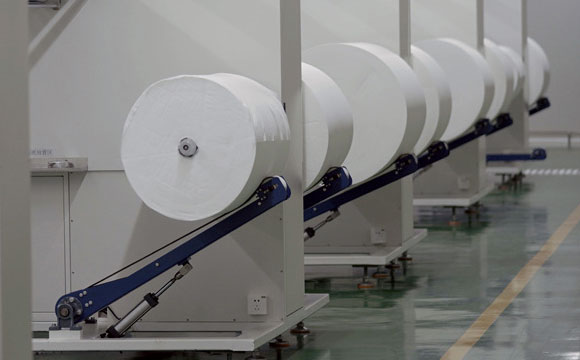
For brands developing biodegradable products, understanding the wet wipes manufacturing process is equally important. Substrate selection, formulation, converting methods, and quality control all influence the finished product.
Frequently Asked Questions About Biodegradable Wet Wipes
Are all plant-based wet wipes biodegradable?
Not automatically. Plant-based describes the origin of a material, while biodegradability describes how it breaks down under particular environmental conditions. The finished product should be assessed using appropriate evidence.
How long does it take biodegradable wet wipes to decompose?
There is no universal decomposition period. The time depends on fiber composition, processing, moisture, temperature, oxygen availability, and microbial activity. Buyers should refer to test results under specified conditions rather than relying on a general timeframe.
Are biodegradable wet wipes suitable for sensitive skin?
They can be developed for sensitive skin, but biodegradability does not guarantee skin compatibility. Brands should also evaluate the liquid formulation, ingredients, pH, preservation system, and relevant product safety testing.
Can biodegradable wet wipes be customized for private label brands?
Yes. Brands can customize substrate materials, sheet dimensions, formulations, packaging formats, and branding according to their product positioning and target market. SYWIPE supports OEM and private label development for different wet wipe applications.
Develop Your Eco-Friendly Wet Wipes with SYWIPE
Building a successful biodegradable wipes product requires the right combination of materials, formulation, packaging, and manufacturing expertise.
SYWIPE supports brands, retailers, and distributors with customized biodegradable wet wipes development, from substrate selection and product sampling to packaging and mass production.
If you are planning to launch or expand an eco-friendly wipes product line, contact our team to discuss your specifications and develop a suitable solution for your market.
Request a Quote for Your Biodegradable Wet Wipes Project.